












































As the United States hurtles toward the midterm elections, the political discourse has shifted from traditional battlegrounds like inflation and border security to a far more visceral concern: the safety of the dinner table. A summer defined by a series of high-profile foodborne illness outbreaks and sweeping recalls has transformed grocery shopping from a mundane task into a source of national anxiety, creating a potent new wedge issue for voters and political strategists alike.
The Summer of Contamination: A National Crisis
The season began with what would become the largest recorded outbreak of Cyclospora—a parasite that triggers debilitating gastrointestinal distress. Between May and August, the Centers for Disease Control and Prevention (CDC) documented nearly 20,000 laboratory-confirmed cases, a staggering leap from the 1,180 cases recorded during the same period in 2025.
The scale of the outbreak, combined with the involvement of major national chains, turned the issue into a cultural flashpoint. Taco Bell, Chipotle, and other prominent restaurant chains were forced to pull lettuce, jalapeños, and other fresh produce from their menus to quell public fear. Late-night talk show hosts turned the graphic symptoms of the illness into a recurring punchline, but for thousands of Americans, the reality was far from funny.
“One of the reasons food safety is in the news this year, and people have been rightfully concerned, is the combination of high-profile restaurant names and the absolute colossal number of illnesses,” says Teresa Murray, consumer watchdog director at the U.S. Public Interest Research Group (PIRG). “It’s thousands of people. It makes it more real.”
Chronology of a Political Food Fight
The political fallout was swift. Recognizing the public’s palpable unease, Democratic lawmakers launched a sustained offensive against the Trump administration’s management of the Department of Health and Human Services (HHS) and the Food and Drug Administration (FDA).
- Late Spring 2026: Initial reports of Cyclospora infections begin to spike across 21 states.
- Early Summer 2026: Public confidence in the food supply begins to crater. Surveys from the University of Illinois and Purdue University show the percentage of consumers who strongly agree that the U.S. food system is safe drops from 40% in November 2025 to 30% by August 2026.
- August 2026: The Trump administration announces a shift in policy, proposing the deregulation of small-scale livestock slaughtering and signaling an intent to increase beef imports from Brazil and Argentina—nations that have faced international scrutiny for their safety standards.
- September 2026: The Democratic National Committee (DNC) escalates its rhetoric, labeling HHS Secretary Robert F. Kennedy Jr. a “complete disaster” and demanding his resignation as they circulate lists of recent food recalls on social media.
The Data Dilemma: Recalls vs. Reality
The political debate is fueled by conflicting interpretations of data. According to PIRG, there have been approximately 200 food recalls so far in 2026, a figure largely on par with 2025. However, a broader view reveals an upward trend: the number of food recalls increased by 21% between 2021 and 2025, according to analysis from Trace One, with Class I recalls—those involving the highest risk of serious illness or death—accounting for a significant portion of that growth.
The administration, however, has pushed back aggressively. The FDA recently asserted on social media that fiscal year 2026 recalls are among the lowest in a decade, citing a drop from nearly 4,000 in 2013 to 1,836 in 2026. “Don’t believe the fake news,” the agency declared in a statement that prompted immediate backlash from food safety experts.
Critics, including Susan Mayne, former director of the FDA’s Center for Food Safety and Applied Nutrition, argue that the administration is engaging in statistical manipulation. Mayne noted that the FDA’s total tally includes non-food items like drugs and medical devices. By inflating the baseline with non-food recalls, the administration masks potential trends in food-specific contamination.
Official Responses and the "Safety Crusader" Paradox
The administration’s defense relies on the argument that its response to outbreaks has been robust and efficient. HHS spokesperson Grace Davis Jamison maintains that no FDA investigators were impacted by recent budget cuts or staffing shifts, insisting that the government remains fully equipped to monitor the supply chain.
"The Trump Administration has mounted a robust response to each outbreak, working closely with health departments in all 50 states and leading the public health response by promptly identifying known sources," Jamison stated.
However, advocates like Sarah Sorscher, regulatory affairs director at the Center for Science in the Public Interest, argue that the rhetoric rings hollow. "There’s a level of hypocrisy from the administration when they promise to make our food safer and then eviscerate the agencies and programs that detect and prevent outbreaks," Sorscher says.
The political tension is heightened by the administration’s specific policy decisions, which many experts view as antithetical to public safety. The withdrawal of a Biden-era rule aimed at curbing Salmonella in poultry, combined with the decision to delay traceability requirements for grocery supply chains until 2028, has led to accusations that the administration is prioritizing industry speed over consumer health.
Implications: The Consumer and the Ballot Box
The long-term implications of this politicized food environment are profound. When government oversight is viewed through a partisan lens, the fundamental trust required for a safe food market erodes.
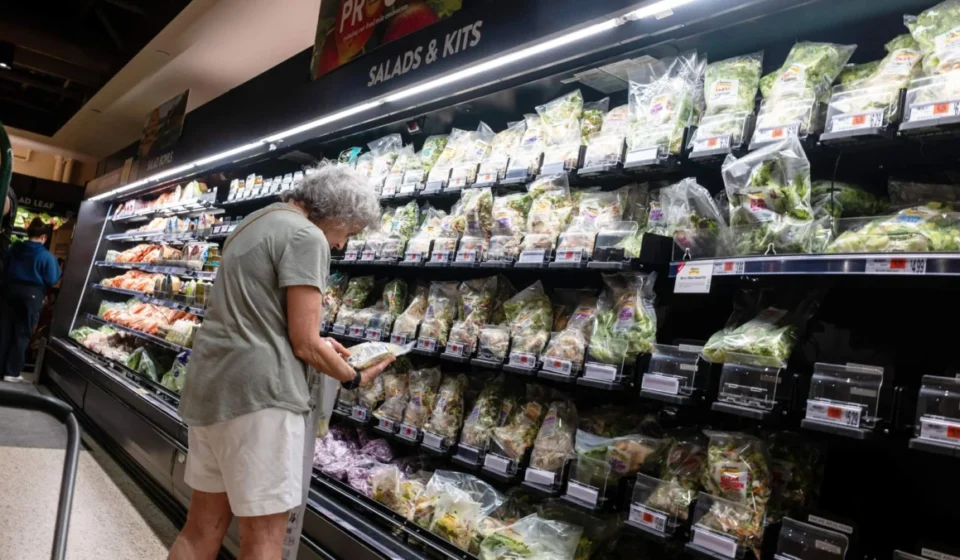
A survey by Quinnipiac University found that a majority of registered voters lack confidence in government food safety oversight, with Democrats showing significantly higher levels of skepticism than Republicans. This lack of confidence is not just a statistical anomaly; it is changing consumer behavior. Nearly half of all consumers have modified their grocery shopping habits, and 40% have changed their restaurant dining patterns in the last month alone due to fears of contamination.
The economic impact is also becoming clear. As Sandra Eskin, CEO of the nonprofit Stop Foodborne Illness, points out, the consequences are felt all the way down to the farm gate. "If you want people to eat real food, fresh fruits and vegetables, they have to be safe," Eskin says. "Instead, we have had farmers plowing under fields because people aren’t buying lettuce."
Looking Ahead
The 1993 E. coli outbreak at Jack in the Box outlets once served as a catalyst for bipartisan reform, leading to a new era of preventive safety standards. Today, however, the environment is far more polarized. With the midterm elections looming, food safety has become a test of institutional trust.
As voters head to the polls, they are faced with a stark choice. One side paints the current administration as a danger to public health, highlighting a trail of deregulation and underfunded surveillance. The other portrays itself as a champion of efficient, lean government, dismissing safety concerns as politically motivated fearmongering.
Ultimately, the issue of food safety has moved beyond the laboratory and into the political arena. Whether this will lead to a new, more rigorous framework for protecting the nation’s food supply or continue to be a tool for partisan recruitment remains to be seen. What is certain is that for the American voter, the question of "Is this safe to eat?" has become inextricably linked with "Who is in charge?"