
























































For years, the narrative surrounding autism therapy in the United States has been dominated by a singular, persistent "gold standard": Applied Behavior Analysis (ABA). Marketed as the only viable path to a "normal" life, ABA has ballooned into a multi-billion-dollar juggernaut. However, a sweeping investigation by The 74—utilizing a massive, newly released federal dataset of 275 million Medicaid records—reveals that this industry is not merely a medical success story. Instead, it has become a lucrative playground for private equity firms, extracting $7 billion in taxpayer funds while often prioritizing profit over the well-being of the children it claims to serve.
The Mirage of Efficiency and the Reality of Fraud
In February, the U.S. Department of Government Efficiency (DOGE) released an unprecedented portal containing hundreds of millions of billing records, ostensibly to allow the public to crowdsource the identification of healthcare fraud. While Elon Musk heralded this as a "state of mind" rather than a formal department, the data within tells a darker story.
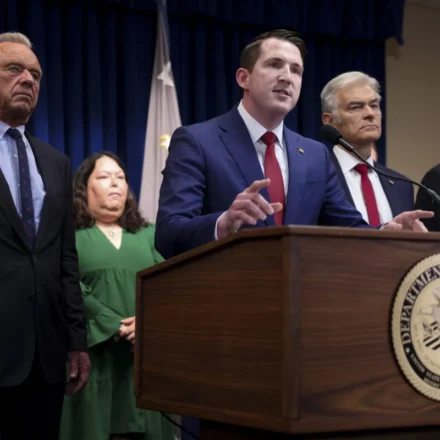
The Trump administration has frequently framed the crisis in autism therapy through a lens of xenophobia and political retribution, raiding centers and blaming "lawless immigrants" and "welfare cheats." Yet, federal audits conducted during the Biden administration—across both red and blue states—paint a much more systemic picture of failure. The audits found that fraud is rampant, not because of individual bad actors on the fringes, but because the industry is fundamentally built on a model of excessive, poorly regulated billing that incentivizes volume over quality.
Chronology of a Financial Land Grab
The rapid expansion of the ABA industry did not happen in a vacuum. It was the result of a coordinated, decades-long lobbying effort.
- 2005–2007: Lorri Unumb, a law professor whose son was autistic, drafted "Ryan’s Law" in South Carolina. After years of paying $70,000 annually for ABA, she mobilized parents to demand that insurers cover the therapy. This grassroots victory sparked a national movement.
- 2014: The Obama administration clarified that the Affordable Care Act required Medicaid and other publicly subsidized plans to cover autism treatments. This opened the federal floodgates.
- 2015–2024: Recognizing a captive market with guaranteed, recurring federal revenue, private equity firms began a frantic consolidation of the industry. Researchers at Brown University identified 574 ABA sites acquired by private equity firms during this window.
- 2019–2024: Medicaid claims for the six most common autism therapy billing codes surged by 381%, rising from $400 million to nearly $2 billion annually.
- 2022–2026: Federal audits revealed widespread "improper" and "potentially inappropriate" billing in states like Colorado, Indiana, Maine, and Wisconsin, totaling hundreds of millions of dollars in questionable payments.
Supporting Data: The Cost of Compliance
The financial data is staggering. Over a six-year period, $7 billion in Medicaid payments flowed into ABA providers. To put this in perspective, this is $1 billion more than the United States has spent in two decades on the Autism CARES Act, which is intended to fund research and services to improve the actual quality of life for autistic individuals.
The profit motive has led to a standard prescription of up to 40 hours of therapy per week, regardless of a child’s individual needs. Experts like Ari Ne’Eman, a professor at Harvard’s T.H. Chan School of Public Health, argue that this is not evidence-based care; it is a business model. "Forty hours a week of therapy is a full-time job for a 3-year-old," Ne’Eman notes. "It’s harmful for kids and families first and foremost, but I also think it’s a poor use of public funds."

Furthermore, the data shows that children are often kept in these centers for years, effectively missing out on their right to a public education. In some cases, Medicaid pays for full-time therapy until a child is 16, with the billing reaching as high as $144,000 per year for a single patient.
The Dark Roots of a "Gold Standard"
The trauma associated with ABA is deeply personal for many in the autistic community. The therapy was pioneered in the 1960s by Ole Ivar Lovaas at UCLA, who utilized the same techniques of "extinguishing" behaviors to develop LGBTQ conversion therapy—a practice now widely condemned as abusive.
Recent historical research has uncovered that Lovaas, along with Dr. Hans Asperger, had ties to the Nazi regime in Europe, where the eugenics movement sought to eliminate autistic people as a "burden." While modern proponents argue that today’s ABA is a "kinder, gentler" version, the fundamental goal—the suppression of autistic traits—remains. Independent research, including a study from the University of Wisconsin-Madison, indicates that those who underwent ABA before age 18 were 30% more likely to experience mental health hospitalizations in adulthood.
Official Responses and Corporate Shielding
Private equity firms typically operate through a "leveraged buyout" structure. They acquire an ABA provider, load the business with debt, and then extract cash as dividends for investors. When the company fails or is caught in a scandal, the investors are insulated.
Take the case of the Center for Autism and Related Disorders (CARD). Once a titan in the industry, it was purchased by Blackstone in 2018 for $700 million. By 2023, after closing hundreds of locations and facing accusations of prioritizing high-hour patients to boost revenue, the company filed for bankruptcy. Blackstone, in a statement to The 74, claimed it was never involved in clinical decisions and blamed a "perfect storm" of economic factors.
Similarly, Centria Healthcare, the largest Medicaid biller in the country, has faced multiple allegations of abuse and improper billing. Despite investigations and lawsuits, the company continues to operate, shielded by a corporate structure that separates the investment managers from the clinical realities on the ground. When asked about these issues, leadership at these firms often emphasizes their commitment to "clinical quality" while declining to discuss the financial mechanics that lead to the very problems they claim to abhor.

Implications: A System in Need of Reckoning
The current trajectory of autism therapy is unsustainable and, for many children, actively detrimental. The focus on "cures" and "normalization"—promoted by figures like Robert F. Kennedy Jr.—risks diverting even more federal resources away from proven, humane, and school-based interventions like occupational therapy.
Legislative efforts, such as those recently passed in Colorado, attempt to create licensing boards for ABA. However, critics argue these boards are "captured" by the industry, granting licenses to people already credentialed by the ABA industry itself, thereby cementing the status quo rather than providing independent oversight.
As long as states and the federal government continue to allow an unregulated, profit-driven industry to dictate the terms of care for vulnerable children, the "autism profit machine" will continue to thrive. The question remains whether lawmakers will finally prioritize the rights of autistic children to grow and learn as they are, or if they will continue to bankroll a system designed to suppress them for the sake of quarterly dividends.
The evidence is clear: the current model is not just a fiscal failure; it is a human rights crisis. Without a fundamental shift toward independent, person-centered support, the next generation of autistic children will continue to pay the price for a system that values compliance over humanity.