























































The Changing Face of American Aesthetics: Weight Loss Medications and Facial Rejuvenation Redefine Plastic Surgery Landscape

The landscape of cosmetic medicine in the United States is undergoing a profound transformation. While foundational procedures like liposuction and neuromodulator injections retain their dominant market positions, shifting consumer motivations—most notably the rise of GLP-1 weight loss medications and an aging population seeking targeted facial rejuvenation—are reshaping clinical demand.
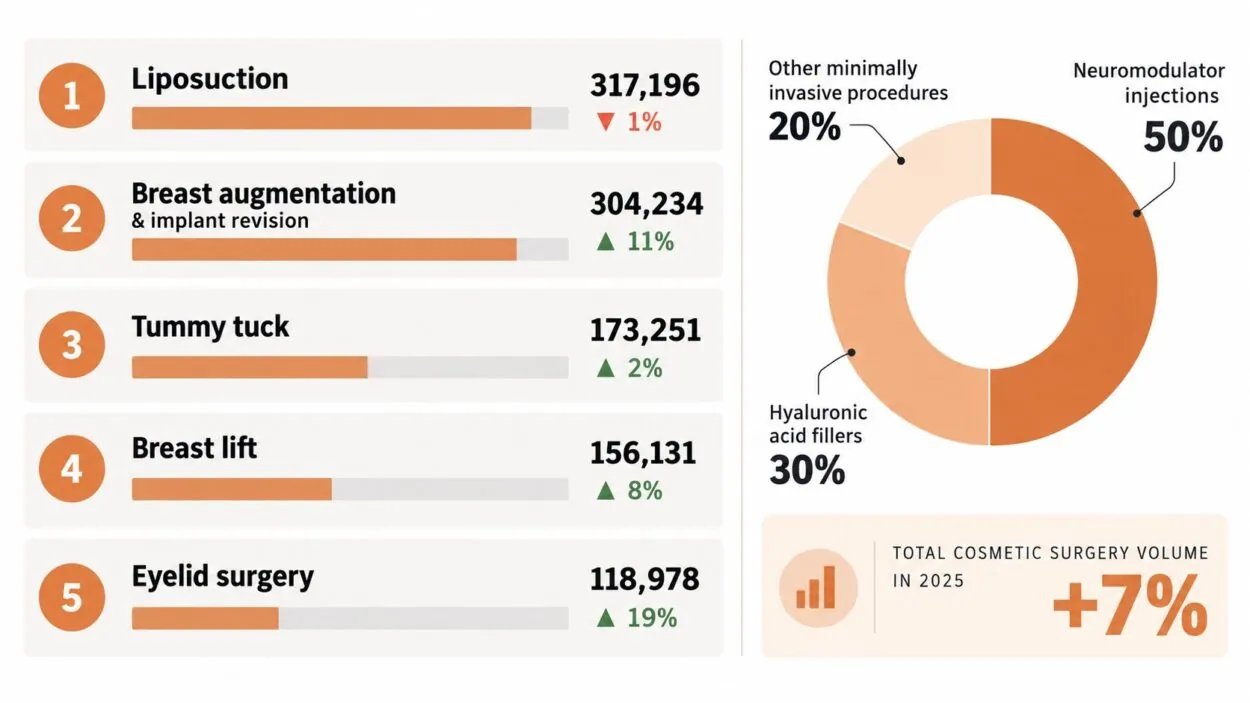
According to the latest national data released in September 2026 by the American Society of Plastic Surgeons (ASPS), which tracks procedures performed throughout 2025, the total volume of cosmetic surgeries rose by 7% year-over-year. This growth was not driven by a single dominant trend, but rather by a multifaceted shift: a resurgence in breast procedures, a dramatic spike in eyelid surgeries, and an unprecedented wave of body-contouring consultations directly linked to massive medical weight loss.
1. Main Facts: The Pillars of the Aesthetic Market
The 2025 ASPS statistical report highlights a highly active market where surgical and minimally invasive procedures coexist as complementary avenues of care. Despite the proliferation of new technologies, traditional interventions remain the financial and clinical bedrock of the industry.
- Surgical Leadership: Liposuction defended its title as the most frequently performed cosmetic surgery in the United States, recording 317,196 procedures. Despite a nominal 1% decrease from the previous year, it edged out breast augmentation to remain the top surgical choice.
- Minimally Invasive Dominance: Non-surgical treatments continue to dwarf surgical volumes. Neuromodulators (such as Botox, Dysport, and Xeomin) accounted for approximately 50% of all minimally invasive procedures. Hyaluronic acid-based dermal fillers secured the second spot, representing roughly 30% of the non-surgical market. Together, these two injectables comprise four out of every five minimally invasive cosmetic interventions in the country.
- The Facelift and Blepharoplasty Resurgence: Facial rejuvenation experienced some of the sharpest percentage increases in the dataset. Blepharoplasty (eyelid surgery) grew by an impressive 19% year-over-year, securing its position in the top five surgical procedures with 118,978 cases.
- The "GLP-1 Effect": The widespread adoption of GLP-1 receptor agonists (such as semaglutide and tirzepatide) has introduced a massive new cohort of patients to plastic surgery clinics. An overwhelming 82% of ASPS-member surgeons reported that patients are seeking consultations specifically to address the physical aftermath of rapid, substantial weight loss, such as redundant skin and facial volume depletion.
2. Chronology: From the "Zoom Boom" to the GLP-1 Revolution
To understand the 2025 data, one must trace the trajectory of the aesthetic market over the first half of the decade.
[2020–2022: The "Zoom Boom"]
  ──> Focus on eyes, forehead, and rapid recovery treatments due to remote work.

[2023–2024: The GLP-1 Influx]
  ──> Mass adoption of medical weight loss; initial wave of facial volume loss.

[2025: The Rejuvenation & Contouring Boom]
  ──> 19% spike in eyelid surgery; surge in body lifts, tummy tucks, and fat grafting.

[September 2026: ASPS Report Release]
  ──> Comprehensive data confirms structural shifts toward skin-tightening and natural proportions.
The Pandemic Era (2020–2022)
During the height of the COVID-19 pandemic and its immediate aftermath, the market experienced what clinicians termed the "Zoom Boom." Constant self-observation on video conferencing platforms drove a sudden surge in facial procedures, particularly non-surgical injectables and upper-face interventions.
The Rise of Medical Weight Loss (2023–2024)
By 2023, the cultural and clinical conversation shifted dramatically toward GLP-1 receptor agonists. As millions of Americans achieved rapid weight loss, the limitations of skin elasticity became apparent. Clinicians began seeing an influx of patients presenting with "Ozempic face"—a term coined to describe the premature aging and hollowed appearance resulting from rapid facial fat loss.
The Year of Reconstruction and Proportion (2025)
The 2025 data reflects the maturity of this trend. Patients who began their weight loss journeys in 2023 and 2024 reached stable target weights by 2025, making them eligible for surgical body-contouring and facial fat grafting. This shift turned temporary weight-management success into a long-term driver for surgical intervention, culminating in the 7% overall increase in surgical volume documented in the September 2026 report.
3. Supporting Data: The 2025 Aesthetic Statistics
The statistical breakdown provided by the ASPS showcases the precise distribution of procedures and highlights the areas of fastest growth.
Table 1: Leading Cosmetic Procedures in the United States (2025 Data)
| Procedure | Category | Volume or Market Share | Change From Previous Year |
|---|---|---|---|
| Liposuction | Surgical | 317,196 | Down 1% |
| Breast Augmentation & Implant Revision | Surgical | 304,234 | Up 11% |
| Tummy Tuck (Abdominoplasty) | Surgical | 173,251 | Up 2% |
| Breast Lift (Mastopexy) | Surgical | 156,131 | Up 8% |
| Eyelid Surgery (Blepharoplasty) | Surgical | 118,978 | Up 19% |
| Neuromodulator Injections | Minimally Invasive | ~50% of non-surgical volume | Leading category |
| Hyaluronic Acid Fillers | Minimally Invasive | ~30% of non-surgical volume | Second-largest category |
Surgical Trends: Shifting Preferences in the Operating Room
While liposuction remained the volume leader, breast augmentation and implant revision experienced an 11% rebound, reaching 304,234 procedures. Crucially, ASPS member surgeons noted a qualitative shift within this category: patients increasingly requested smaller, more anatomically proportionate implants, moving away from the highly exaggerated silhouettes of previous decades.
Breast lifts (mastopexy) also saw steady growth, rising 8% to 156,131 procedures. This procedure is frequently paired with breast autologous fat grafting or smaller implants to restore shape and youthful positioning without adding excessive volume.
4. Official Responses and Regulatory Warnings
As cosmetic procedures become increasingly normalized, medical boards and federal regulatory agencies are stepping up efforts to educate the public on safety, emphasizing that "minimally invasive" does not mean "risk-free."
The FDA on Dermal Filler Risks
The U.S. Food and Drug Administration (FDA) has issued updated guidance warning consumers about the serious risks associated with dermal fillers. While temporary swelling, bruising, and redness are common, the FDA emphasizes the risk of rare but catastrophic complications, such as accidental injection into a blood vessel.
[Accidental Vascular Injection]
       │
       ├─► Tissue Necrosis (Skin death due to blocked blood supply)
       ├─► Embolization to the Ophthalmic Artery (Permanent blindness)
       └─► Cerebral Embolism (Stroke)
To mitigate these risks, federal agencies and professional societies urge patients to avoid purchasing fillers online or seeking treatment from unlicensed individuals using non-FDA-approved devices (such as needle-free hyaluron pens).
Boxed Warnings on Neuromodulators
The FDA maintains a strict boxed warning on all botulinum toxin products. The warning highlights the risk of the toxin spreading from the injection site to other areas of the body, potentially causing symptoms consistent with botulism, including swallowing and breathing difficulties. The ASPS emphasizes that while these complications are exceedingly rare when the drug is administered at clinical doses by a qualified professional, they underscore the necessity of choosing credentialed, board-certified providers.
The ASPS on the "Trivialization" of Cosmetic Surgery
In response to the 2025 data, leadership from the American Society of Plastic Surgeons issued statements warning against the trivialization of cosmetic surgeries on social media platforms.
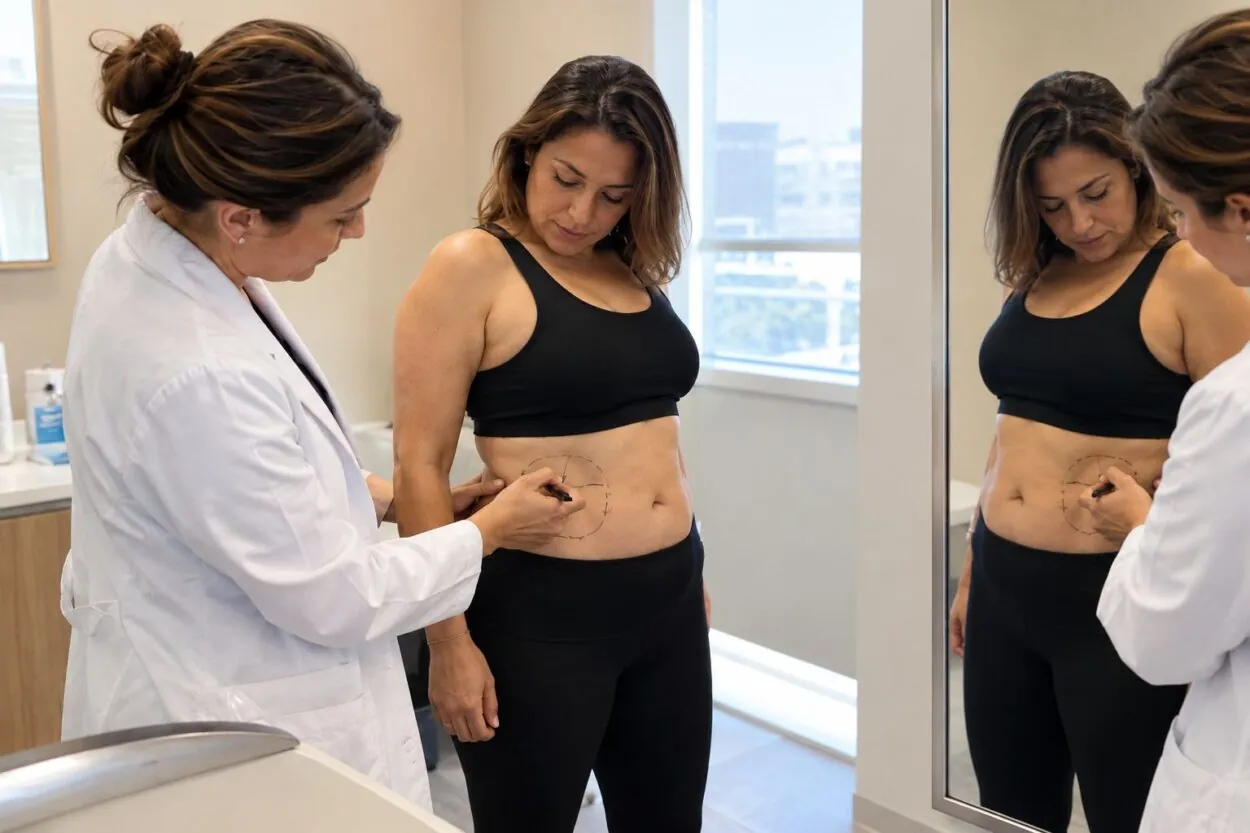
"A abdominoplasty or a comprehensive body lift is a major surgical event requiring general anesthesia, meticulous sterile technique, and a dedicated recovery period," noted the society in its commentary. "Comparing these complex reconstructive surgeries to quick, lunchtime office treatments misleads patients and compromises safety. Patient selection, pre-operative optimization, and post-operative care remain the cornerstones of successful outcomes."
5. Implications: The GLP-1 Era and the Future of Cosmetic Care
The trends captured in the late-2026 report carry profound implications for the future of healthcare, medical training, and societal beauty standards.
The Reconstructive Nature of Post-GLP-1 Surgery
The massive influx of patients seeking skin excision after medical weight loss is blurring the line between purely aesthetic and reconstructive plastic surgery. When a patient loses 50, 100, or more pounds, the remaining redundant skin is not merely a cosmetic concern; it can cause chronic intertrigo (skin rashes), mobility issues, and hygiene challenges.
Consequently, procedures like panniculectomies, thigh lifts, and arm lifts (brachioplasty) are seeing unprecedented demand. Surgeons must now approach these cases with a highly specialized understanding of massive weight loss physiology, which often involves altered tissue quality and nutritional deficiencies that can impact wound healing.
The Rise of Autologous Fat Grafting
As patients seek to restore volume lost during rapid weight loss without relying entirely on synthetic materials, autologous fat grafting (transferring a patient’s own fat from areas like the abdomen or thighs to the face or breasts) has emerged as a major growth sector. This technique addresses two concerns simultaneously: removing unwanted localized fat and restoring natural, soft-tissue volume to areas affected by rapid deflation.

A Cultural Shift Toward Natural Proportions
The 2025 data suggests that the era of highly conspicuous cosmetic enhancements is giving way to a preference for preservation and subtle restoration. The rise in blepharoplasty, the shift toward smaller breast implants, and the steady demand for precisely targeted neuromodulators all point to a consumer base that values looking rested and healthy over looking "worked on."
Conclusion
The ASPS data released in September 2026 reveals an industry operating at peak demand, driven by technological innovation, pharmaceutical breakthroughs, and evolving cultural values. As the medical community continues to navigate the long-term impacts of the GLP-1 weight loss revolution, the focus of plastic surgery is shifting firmly toward structural integrity, patient safety, and natural-looking rejuvenation.