
















































The Silent Glow: Why Advocates are Calling for a "Dark Sky" Standard for America’s Growing Data Center Fleet

As the rapid expansion of artificial intelligence and cloud computing infrastructure transforms the American landscape, a new environmental concern is emerging from the shadows. While policymakers and local communities grapple with the massive water and electricity demands of modern data centers, a quieter, more pervasive issue is being brought to the forefront: light pollution.
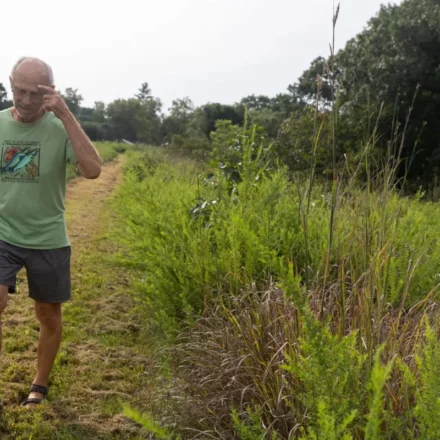
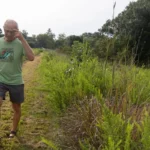
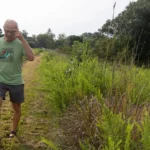
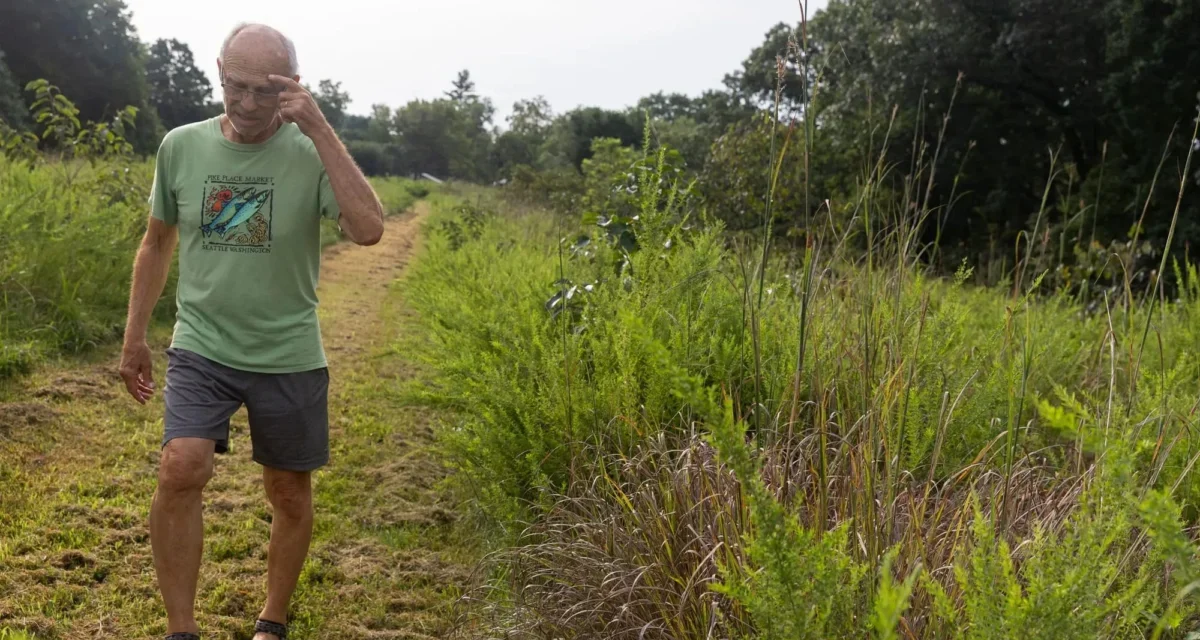
Vayujeet Gokhale, a physics professor at Truman State University and a board member for DarkSky Missouri, believes the solution to this growing problem is as simple as it is necessary. "If you are going to have lights on at night, then let’s do it in a responsible way," Gokhale asserts. His mission is to ensure that as the digital infrastructure of the 21st century blankets the country, it does not do so at the expense of the natural night.
The Digital Gold Rush and the Night Sky
The United States currently leads the world in data center capacity, housing more than 3,000 active facilities. This "digital gold rush," fueled by the insatiable demand for AI processing power and large-scale data storage, is increasingly centered in the American South and Midwest. According to data from the Pew Research Center, roughly three-quarters of new facility planning is concentrated in these regions, turning rural landscapes into hubs of high-tech infrastructure.
Missouri alone hosts 95 active data centers. Recent high-profile projects, such as Google’s $15 billion investment in Montgomery County, are often celebrated by state officials as major economic boons. During the project’s announcement in May, Governor Mike Kehoe characterized the move as an "investment in Missouri families, communities, and long-term opportunity."
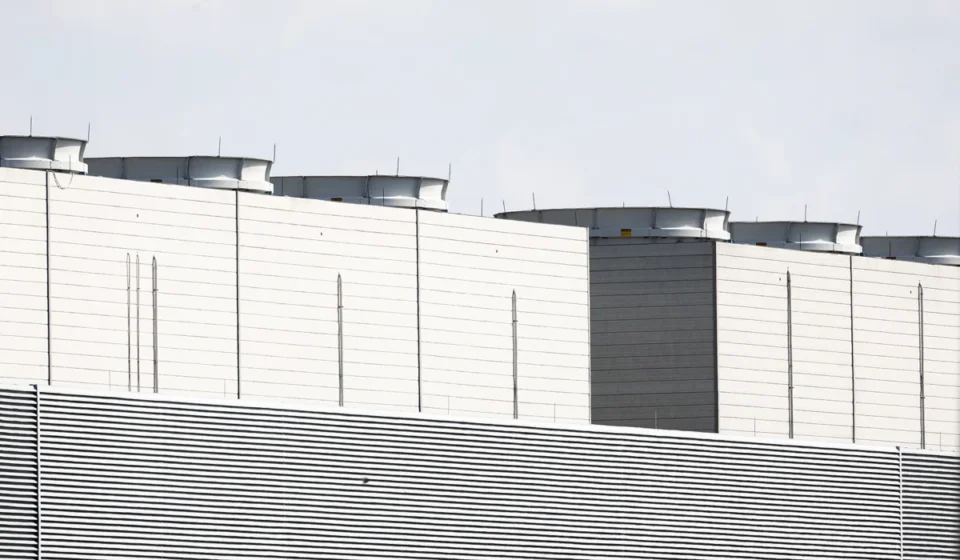
However, as these massive, windowless, and constantly humming structures rise—often covering footprints several times larger than a typical big-box warehouse—they introduce a constant, intense glow that disrupts the surrounding environment. For Gokhale, this is an avoidable tragedy. Unlike the complex challenges associated with managing a data center’s massive water consumption or its strain on the local electrical grid, he argues that lighting is a low-hanging fruit for environmental stewardship.
"You don’t need to light up the place for these computers and memory banks to work," Gokhale explains. "They’ll still work even if it’s completely dark. You need light for certain other things, like security, but you can minimize the pollution without affecting the quality of the data center product. You can’t make that same case with water and energy."
A Pragmatic Approach: The "Win-Win" Solution
Gokhale and his colleagues at DarkSky Missouri are advocating for the adoption of universal "responsible outdoor lighting" principles. These guidelines, endorsed by the broader international DarkSky organization, are designed to balance security needs with ecological preservation. The recommendations include:

- Directional Lighting: Installing fixtures that point strictly downward, preventing "light trespass" into the sky or onto neighboring properties.
- Smart Automation: Utilizing motion sensors to ensure that high-intensity lighting is only activated when human activity is detected, rather than keeping the entire perimeter illuminated 24/7.
- Warm-Spectrum Lighting: Replacing harsh blue-white LEDs with warmer, amber-toned lights that are less disruptive to biological rhythms and cause less skyglow.
Gokhale stresses that these measures are not a zero-sum game. "Many times, in these environmental issues, it’s a zero-sum game. You have to give up something in order to gain something. Not so with light pollution. It’s a win-win." By reducing unnecessary light, companies can cut electricity costs and improve site security, as excessive brightness often creates deep, impenetrable shadows that actually hinder visibility for security cameras and personnel.
Ecological Cascades: From Pollinators to Migratory Birds
The consequences of artificial light at night (ALAN) extend far beyond the aesthetic loss of a starry sky. The issue is a critical one for biodiversity, particularly in the Mississippi River Basin, which serves as a vital corridor for nearly half of all North American bird species.
"A lot of the pollinators are actually active at night," Gokhale notes. "If you have too much artificial light, they get confused or disoriented."
The importance of these nocturnal workers is often underestimated. Nicole Flowers-Kimmerle, a horticulture educator at the University of Illinois Urbana-Champaign Extension, points out that one out of every three bites of food consumed in the U.S. depends on animal or insect pollinators. "If we see that we’re having a declining number of moths, then that’s going to affect pollination, but it also affects the food web," she warns. Moths and other night-flying insects are a foundational food source for bats and various bird species.
The problem is compounded for migratory birds, which rely on the stars to navigate thousands of miles. Murry Burgess, an assistant professor at Mississippi State University specializing in ornithology and urban ecology, explains that light pollution "obscures the stars and throws them off course, making them expend more energy circling around trying to find where they’re supposed to go." This disorientation frequently leads to window collisions and increased mortality rates. "It’s really important to preserve dark sky areas, the same way that you would have a wildlife refuge," she adds. "The sky is part of their habitat."
The Legislative Labyrinth
While the environmental argument is clear, the political reality remains fragmented. Across the Midwest, communities are struggling to find a balance between the tax revenue promised by data centers and the preservation of local character and resources.
In St. Charles County, Missouri, officials recently enacted a six-month moratorium on large-scale data center projects, reflecting a growing hesitation among local governments. Meanwhile, in the city of Independence, a bitter political fallout occurred after city council members were recalled by voters, largely due to their support for a data center project that included significant tax breaks.

State-level efforts to regulate the industry have struggled to gain traction. House Bill 3362, introduced by Rep. Colin Wellenkamp, attempted to address the industry’s massive footprint by requiring data centers to pay for grid upgrades and mandating state permits for high-water usage. While these concerns are pressing, the legislation failed to advance, and environmental concerns like light pollution were left entirely off the table.
As Gokhale points out, the fundamental problem is that most state agencies do not even have a standard definition for a "data center," making it difficult to apply specific regulations. "At the most fundamental level, we need to define what these things are, what their purpose is," he says.
The Path Forward
The pressure is mounting. As more data centers are planned, the cumulative impact on local ecosystems—from water tables to the nocturnal environment—is becoming impossible for local councils and state legislatures to ignore.
The advocates for dark skies argue that the time to act is now, before the next wave of construction is finalized. They argue that if communities demand better lighting standards as a prerequisite for land-use permits, it would cost the industry very little but offer significant long-term benefits for the local environment and public well-being.
"This has to be done by the people, by council members, by politicians, and effectively enacted into some sort of policy," Gokhale concludes.
The struggle for the night sky is, in many ways, a struggle for the soul of the landscape. As the digital world continues to expand its physical footprint, the question remains whether that growth will continue to disregard the natural world, or if it will evolve to exist in harmony with the environment it occupies. For now, the glow from the server farms remains a silent, artificial constant, but the voices calling for the lights to be dimmed are growing louder, echoing from the halls of universities to the local town halls of the Mississippi River Basin.
This story is a product of the Mississippi River Basin Ag & Water Desk, an independent reporting network based at the University of Missouri in partnership with Report for America, with major funding from the Walton Family Foundation.