

























































In a move that has sent shockwaves through both the tech industry and the corridors of Washington D.C., the Trump administration has officially pivoted away from the term "artificial intelligence." Following a high-profile summit at the White House this week, the government has mandated that the sector now be referred to exclusively as "super intelligence."
This linguistic shift, formalized through an executive order, serves as the centerpiece of a broader, albeit controversial, administration strategy regarding the future of the technology. While the move aims to project a sense of national progress and control, analysts, industry insiders, and critics are questioning whether this is a genuine policy shift or merely an exercise in political theater.
The Summit: A Meeting of the Minds (and Megaphones)
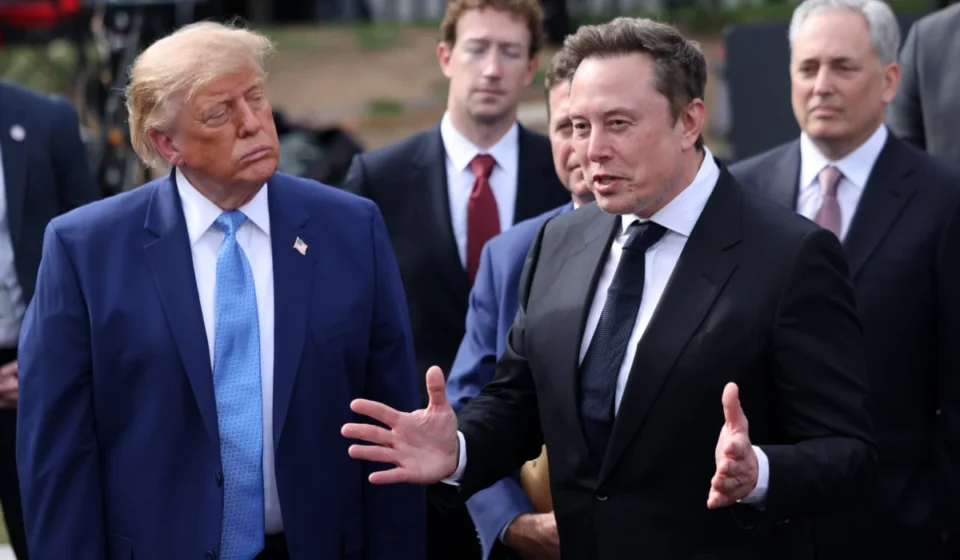
The White House summit served as the backdrop for the "Joint Commitment on Frontier Responsibilities," a document signed by the titans of the tech world. Attendees included a veritable "who’s who" of the sector, featuring Mark Zuckerberg of Meta, Jeff Bezos of Amazon, Elon Musk, and Anthropic CEO Dario Amodei.
The gathering was as notable for its optics as for its content. For many observers, the sight of these industry leaders—who have historically been at odds with the current administration—standing in unison with President Trump was a striking departure from recent political tensions. However, the substance of the event has been met with skepticism. Despite the gravity of the setting, the document itself has been criticized for being "deeply non-binding," a point reinforced when eagle-eyed observers noticed that the official pledge misspelled "United States."
Chronology of a Pivot: From Skepticism to Solidarity
The path to this summit was anything but linear. Just weeks ago, President Trump publicly dismissed concerns regarding AI regulation, labeling those who voiced fears about the technology’s dangers as "Democratic plants." The administration’s stance was, until very recently, one of unfettered acceleration—an insistence that the U.S. must lead the global AI race without the burden of government oversight.
The Anthropic Thaw
The catalyst for the current state of affairs appears to be a rapid thaw in the icy relationship between the White House and Anthropic. Earlier this year, the artificial intelligence firm was effectively in the "doghouse" of the administration, with the Department of Defense (DoD) publicly branding the company a "national security risk" due to its safety-first constraints on technology.
The turning point occurred during a quiet, late-night dinner between President Trump and Anthropic CEO Dario Amodei. Following this 10 p.m. meeting, the rhetoric shifted. Within days, the White House shifted its focus from disparaging tech firms to convening them. However, internal friction remains. While figures like the Treasury Secretary have expressed enthusiasm for engaging with companies like Anthropic, the DoD remains staunchly critical. This internal discord suggests that while the "super intelligence" rebrand is the public face of the policy, the underlying bureaucratic battle for control continues.
Decoding the Rebranding: Why "Super Intelligence"?
The most striking element of the administration’s new policy is the mandatory terminology change. As Anthony Ha of TechCrunch noted, federal representatives are now officially barred from using the term "artificial intelligence" in an official capacity.
Kirsten Korosec, a veteran analyst of the tech landscape, posits that this is a calculated psychological operation. By discarding the term "artificial intelligence"—which has become inextricably linked with fears of job displacement, existential threats, and societal disruption—the administration is attempting to strip away the baggage of public anxiety.
"The message is clear," Korosec explained. "AI is perceived as dangerous, as something that will take our jobs and potentially kill us. By rebranding it as ‘super intelligence,’ the administration is attempting to frame the technology as a triumphant, manageable, and inevitable tool of national dominance rather than a looming threat."
The Legal and Ethical Landscape
The "Joint Commitment on Frontier Responsibilities" has been described by participants and observers alike as a voluntary pact. When asked about the lack of legal teeth behind the agreement, President Trump opted for a unique justification, calling it "morally binding."
For legal scholars, this term is unprecedented in administrative law. A "morally binding" agreement carries no weight in court, providing no enforcement mechanism for the safety protocols that these tech giants are supposedly adhering to. This leaves the industry in a state of regulatory limbo. While the administration is pushing for a "Super Intelligence Force," there is currently no federal legislative framework that dictates what that entails or how it might constrain the behavior of private entities.
Implications for the Tech Industry
What does this mean for the future of the industry? The implications are twofold:
1. Market Perception and Investment
The rebranding exercise is likely designed to bolster investor confidence. By distancing the sector from the "scary" narratives of the last two years, the administration is signaling that it will act as a facilitator of growth rather than a regulator. This could lead to a surge in venture capital and internal R&D spending, as companies feel emboldened to push for more aggressive development cycles without the fear of immediate government crackdown.
2. Internal Disarray and Bureaucratic Conflict
While the executive branch is pushing for a unified front, the reality is far more fractured. The ongoing, public criticism of Anthropic by government officials—even as the CEO sits at the president’s table—highlights a lack of consensus on what "safety" actually means. If the "Super Intelligence Force" is to have any real-world impact, it must reconcile these internal divisions. As it stands, the policy appears to be a "top-down" directive that has not yet permeated the lower echelons of the federal bureaucracy.
Supporting Data and Observations
- The Spelling Error: The misspelling of "United States" on the official pact has been widely interpreted as a symptom of a hurried process, reinforcing the idea that the summit was put together in record time to address political optics rather than long-term policy development.
- The "Super Intelligence" Directive: The mandate is absolute for federal representatives. Any mention of "AI" in official documentation or public statements is now considered non-compliant with the new executive order.
- The Social Media Presence: The juxtaposition of serious geopolitical strategy with the "funny, awkward behavior" observed during the post-summit press conference has fueled a viral meme cycle, which critics argue undermines the perceived seriousness of the administration’s pivot.
Conclusion: A Shift in Tone, Not in Reality?
The transition from "artificial intelligence" to "super intelligence" is a masterclass in political framing. By controlling the language, the Trump administration is attempting to control the narrative. However, as the industry continues to navigate the complexities of development and safety, the underlying issues remain unchanged.
Whether this rebranding will ultimately lead to a safer, more robust technological future or simply serve as a temporary distraction from the industry’s deeper challenges remains to be seen. What is certain, however, is that the government has placed its chips on the table. The shift from "artificial" to "super" may be an attempt to change the perception of the technology, but it does not change the inherent risks—or the incredible potential—that these systems represent for the future of the human race.
For now, the tech world is in a wait-and-see mode, watching to see if the "Super Intelligence Force" will become a legitimate regulatory body or if it will fade into the background as the latest example of political rebranding. One thing is clear: in the race to define the future of technology, the administration has decided that if you cannot win the argument, you should simply change the dictionary.