




















































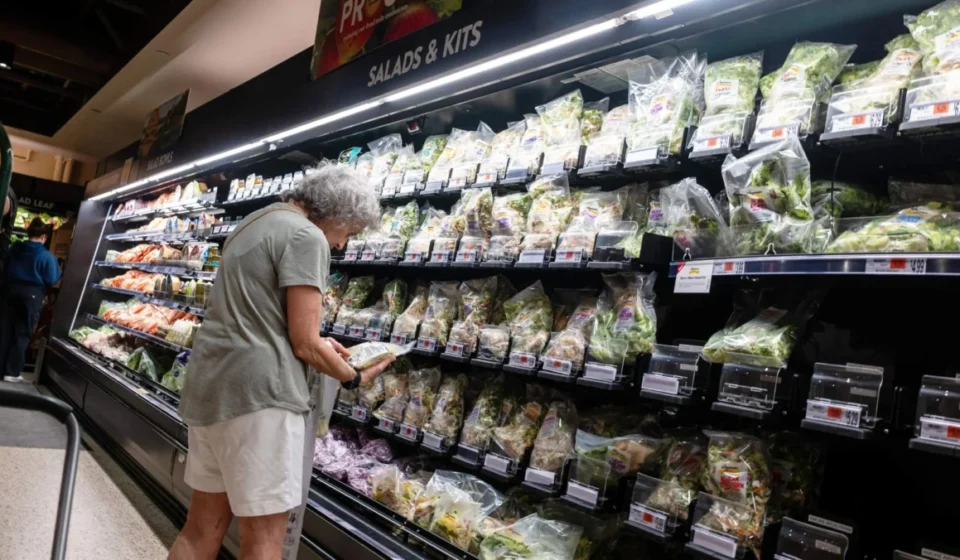

As the United States barrels toward the midterm elections, the national political discourse has shifted from the traditional battlegrounds of inflation and foreign policy to an unlikely, visceral arena: the kitchen table. A grueling summer characterized by high-profile foodborne illness outbreaks and widespread product recalls has transformed the safety of the American food supply into a potent, partisan wedge issue.
For millions of voters, the routine act of grocery shopping or ordering a salad at a favorite chain restaurant has become a source of anxiety. With political parties weaponizing these public health failures, the "food fight" currently unfolding in Washington is as much about ideological control over federal agencies as it is about the bacteria lurking in the produce aisle.
The Summer of Sickness: A Crisis in Context
The political tension is rooted in a reality that many Americans found difficult to ignore this past summer. The Centers for Disease Control and Prevention (CDC) reported a massive surge in cyclosporiasis cases linked to contaminated lettuce, resulting in nearly 20,000 laboratory-confirmed illnesses between May and August. To put this in perspective, there were only 1,180 such cases during the same period in 2025. This explosion of illness, the largest recorded outbreak of the parasite in history, prompted a cascading series of menu changes at major restaurant chains like Chipotle and Taco Bell, which pulled produce from their supply chains as a precautionary measure.
Late-night talk shows and social media feeds were quickly flooded with memes and jokes regarding the symptoms—often graphic in nature—associated with the outbreaks. However, for public health officials and the families of those affected, the situation was far from humorous. The high-profile nature of the restaurants involved, combined with the sheer volume of people falling ill, made the threat feel localized and personal, turning abstract concerns about federal oversight into a tangible campaign issue.
A Chronology of Conflict
The roots of the current food safety anxiety stretch back to broader administrative shifts in federal oversight. While the Biden administration had proposed stricter regulations regarding salmonella in poultry and enhanced traceability for supply chain contamination, the current administration has taken a starkly different approach.
- Early 2026: Regulatory bodies, including the FDA and USDA, reported a steady, if not dramatic, volume of recalls, largely consistent with previous years. However, public confidence in these agencies began to crater.
- May–August 2026: The cyclosporiasis outbreak hits its peak. During this time, the Democratic National Committee and various lawmakers began linking the outbreak to budget cuts and leadership shifts at the Department of Health and Human Services (HHS).
- Late August 2026: The administration announces intentions to ease restrictions on small-scale livestock slaughter, a move framed as a "deregulation victory" for ranchers but decried by food safety advocates as a risk to the meat supply.
- September 2026: Senator Elizabeth Warren (D-Mass.) and other Democratic figures escalate their rhetoric, demanding investigations into the administration’s handling of food safety and calling for the resignation of HHS Secretary Robert F. Kennedy Jr.
- Late September 2026: The administration releases data attempting to show that recalls are at a decade-long low, a claim that is almost immediately challenged by independent analysts and former agency officials.
Supporting Data: Why the Numbers Are Contested
The political battle is fueled by conflicting interpretations of recall data. According to the U.S. Public Interest Research Group (PIRG), there have been roughly 200 food recalls so far in 2026, a figure that is largely on par with 2025. However, a deeper analysis by firms like Trace One shows that total recalls grew by 21% between 2021 and 2025, with an alarming increase in "Class I" recalls—the most severe category, involving products that could cause death or serious illness.
The administration’s defense relies on a dataset showing a decline in total recalls to roughly 1,836 in fiscal year 2026, down from nearly 4,000 in 2013. Yet, experts—including former FDA officials like Susan Mayne—have called these numbers misleading. Mayne and others point out that the administration’s tally aggregates food recalls with those of drugs and medical devices, obscuring the specific risks posed by the food supply. By mixing these categories, critics argue, the administration is attempting to mask a decline in safety standards with "fake news" statistics.
Consumer sentiment surveys reflect this deepening distrust. A July Quinnipiac University poll found that a vast majority of registered voters lack confidence in government food safety oversight. Furthermore, a study by the University of Illinois and Purdue University revealed that the percentage of consumers who believe the U.S. food system produces safe food plummeted from 40% in November to just 30% by August.
Official Responses and Administrative Stance
The administration has maintained a posture of defiance, labeling the criticism as "scaremongering." HHS spokesperson Grace Davis Jamison stated in an email that the agency’s response to outbreaks has been "robust," noting that no FDA investigators were affected by the recent rounds of staffing cuts. The administration argues that they are prioritizing efficiency and reducing the burden of "over-regulation" on farmers and suppliers.
Regarding the delay in implementing traceability rules—which were pushed from January 2026 to July 2028—the administration contends that these measures were necessary to address stakeholder concerns regarding compliance timeframes. Similarly, the decision to import more beef from Brazil and Argentina is framed as a strategic economic move, despite the fact that the European Union has maintained a ban on Brazilian beef due to concerns over safety protocols and antibiotic use.
The administration’s messaging, echoed by figures like Calley Means, insists that Democratic criticisms are merely "craven, disingenuous attacks" from influencers who are threatened by the administration’s successful efforts to modernize federal agencies.
Implications for the Future of Public Health
The long-term implications of this politicization are profound. Historically, food safety has been a bipartisan concern. In 1993, a devastating E. coli outbreak prompted President Bill Clinton to make food safety a central pillar of his Cabinet meetings, resulting in a systemic overhaul that significantly reduced infections. Today, the climate is drastically different. Instead of a unified approach, we see a fractured landscape where public health agencies are treated as political battlegrounds.
The most concerning fallout, according to experts like Sandra Eskin of Stop Foodborne Illness, is the potential for these trends to discourage healthy eating. If the public loses faith in the safety of fresh fruits and vegetables, they may opt for processed alternatives, leading to long-term health consequences that extend far beyond a single outbreak. We are already seeing evidence of this: 40% of consumers have modified their restaurant habits, and many are actively avoiding certain produce sections due to fears of contamination.
As we approach the midterm elections, the debate over food safety serves as a microcosm of a larger national struggle. It is a conflict between the philosophy of aggressive deregulation and the necessity of robust, science-backed federal oversight. For the voter standing in the supermarket aisle, the issue is not just about the quality of the food in their cart—it is a referendum on whether the government still functions as an effective steward of public health. Whether the electorate chooses to "oust" those responsible for the current climate or reward the administration’s deregulatory agenda will likely define the regulatory landscape for the next decade.
Ultimately, the goal of a safe food system remains a universal one, yet the path to achieving it has never looked more uncertain. As long as the data is weaponized and the agencies remain embroiled in political firestorms, the American consumer is left to navigate a marketplace where the risk of the next "food fight" is always on the menu.