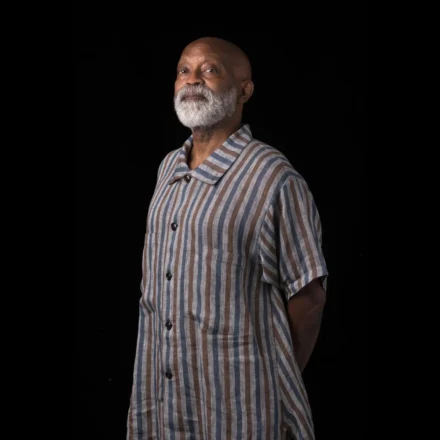


























































DES MOINES, Iowa — For Paul Grinvalds, a 68-year-old veteran of 114 marathons across all 50 states, the rhythmic pounding of pavement is a lifelong passion. Yet, as global temperatures climb, Grinvalds finds himself increasingly at odds with the sport he loves. Even with his vast experience, he admits that once the thermometer creeps beyond 60 degrees Fahrenheit (15.5 degrees Celsius), his performance plateaus and his physical comfort evaporates.
"One thing about marathoners is that we’re typically quite stubborn," Grinvalds says from his home in West Des Moines. "If we have a goal and it’s hot, we’re still going to try to achieve it. But that is often just foolish. You’re almost guaranteed to have a painful, potentially dangerous experience."
Grinvalds is not alone. Across the United States, the marathon community is grappling with a new, volatile reality: the climate crisis is no longer a distant theoretical threat but an active participant in every race. As record-breaking heat waves become the new norm, the sport of endurance running is undergoing a fundamental transformation, forcing organizers to rethink race logistics, safety protocols, and the very viability of traditional event schedules.
The Physiology of Heat: Why Running is Getting Harder
At the core of the crisis is basic human biology. When a runner pushes their body over 26.2 miles, they generate significant internal heat. To prevent overheating, the body must shunt blood away from the working muscles to the skin, where it can be cooled via sweat and evaporation.

"As you reach warmer temperatures, you encounter a physiological tug-of-war," explains Dr. Chris Minson, a physiology expert. "Your body has to decide between supplying blood to the muscles to keep you moving or pumping blood to the skin for thermal regulation. It is a competition the runner rarely wins in high heat."
The math of exertion is unforgiving. Only about 25% of the energy produced by a human runner is used for forward movement. The remaining 75% is converted into heat. When the ambient temperature rises—and when humidity prevents sweat from evaporating—this thermal load becomes insurmountable. High humidity is particularly lethal, as it renders the body’s primary cooling mechanism useless, leading to rapid rises in core temperature, heat exhaustion, and in extreme cases, heatstroke.
A Chronology of Climate-Driven Disruptions
The shift in how marathons are managed didn’t happen overnight; it is the result of years of mounting weather-related crises.
- 2023: The Twin Cities Marathon in Minneapolis-St. Paul was forced into a historic, last-minute cancellation. Record-shattering heat and humidity levels made the course unsafe for tens of thousands of participants, a decision described by race director Ed Whetham as "devastating" for both the organization and the running community.
- 2024: The Sioux Falls Marathon in South Dakota followed a similar path, canceling its event due to extreme heat, prompting organizers to permanently shift the race date from August to September.
- 2025: The Los Angeles Marathon, faced with unseasonably warm conditions, introduced a controversial but pragmatic safety measure: an "early finish" option at the 18-mile mark, allowing participants to receive a finisher’s medal without completing the full distance.
- 2027 and Beyond: The Twin Cities Marathon will officially move its race date from the first Sunday in October to later in the month, a strategic decision born from an exhaustive analysis of shifting weather patterns.
These adjustments are not isolated incidents but part of a nationwide trend. Races in Dayton, Ohio; Little Rock, Arkansas; and Long Beach, California, have all moved start times to the pre-dawn hours to capitalize on the few moments of the day when the air is still cool.

The Data: A Warming World and the Future of Sport
The concern is backed by sobering data. The contiguous United States experienced its warmest July ever recorded, and 2024 stands as the hottest year on record globally. Projections from the World Meteorological Organization suggest that between 2025 and 2030, the Earth’s average global temperature is likely to exceed the 1.5-degree Celsius (2.7-degree Fahrenheit) threshold compared to the pre-industrial era.
A comprehensive study of 221 marathons by the climate research group Climate Central paints a grim picture for the future of the sport. By 2045, the "optimal" running conditions—typically defined as temperatures in the low 40s Fahrenheit (6–7 degrees Celsius)—will become a rarity. Out of 51 major U.S. marathons analyzed, 46 will likely see their historical window for cool-weather racing vanish.
"The ability to go outside, to exercise, and to push the human body to its limits is something that is being fundamentally challenged by climate change," says Andy Pershing, who led the Climate Central research.
Official Responses and Safety Measures
The response from race organizers has been a mix of innovation and necessary compromise. In Los Angeles, despite some online criticism regarding the "early finish" option, organizers stood by their decision.

"We welcome the feedback, but when we grade ourselves on the event, it comes down to how safe our runners were," said Meg Treat, a spokesperson for the Los Angeles Marathon. "We are very happy with the outcome—only 14 people out of 27,000 required medical attention, and all were released the same day."
For the Twin Cities Marathon, the move to later in October carries its own risks, including the possibility of unseasonably cold temperatures or early snow. Yet, for director Ed Whetham, the tradeoff is clear: "We’ll take a 39-degree start over a 70-degree start every single time. It is a matter of prioritizing human life over tradition."
Experts like Douglas Casa, a kinesiology professor and head of the Korey Stringer Institute, argue that these changes are not just prudent but essential. "The problem is that runners are often locked into their goals," Casa notes. "They want to hit a specific time, like a 6:30 mile, regardless of the heat. If they were willing to adjust their pace based on the ambient temperature, they might be safer, but that requires a level of discipline that defies the competitive spirit."
The Societal Implications: Beyond the Finish Line
The implications of this warming trend extend far beyond the marathon circuit. Jessica Murfree, who leads a research lab at the University of North Carolina-Chapel Hill, studies how climate change is impacting everything from college football to local youth sports.

"If we can’t walk, if we can’t exercise or go for runs because it’s too hot, what happens to public health?" Murfree asks. "We are reaching a point where we have to ask: can we stay physically active while remaining cool?"
This shift is already forcing a change in training habits. Some elite athletes, like John Seals, have begun incorporating extreme acclimation strategies—including training in midday heat and utilizing post-run saunas—to prepare for the grueling conditions of events like the 135-mile Badwater Ultramarathon in Death Valley.
However, for the average recreational runner, these methods are neither feasible nor recommended. The broader public is increasingly turning toward indoor facilities or water-based activities to maintain fitness, a retreat that represents a loss of the communal, outdoor nature that has defined the running movement for decades.
As the planet continues to warm, the marathon—a sport that prides itself on conquering the elements—is learning a humbling lesson. Whether it is moving dates, starting in the dark, or shortening courses, the running community is discovering that when it comes to the climate, the only way to win is to adapt. For runners like Paul Grinvalds, the goal remains the same, but the path to the finish line has become a complex negotiation with a changing, and warming, world.