
















































The High-Octane Culture War: How Transportation Policy Became the New Frontline of American Masculinity

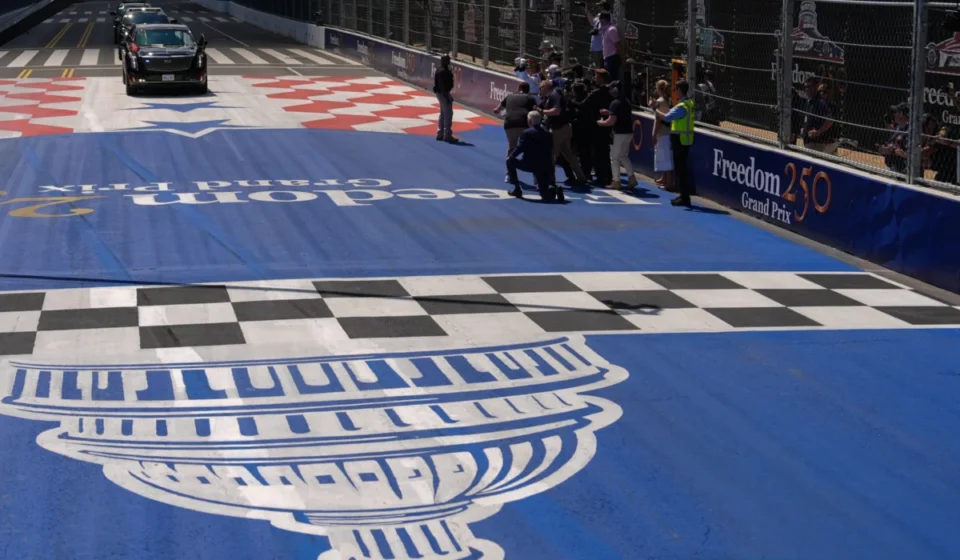
In the summer of 2026, the intersection of Pennsylvania Avenue and the National Mall in Washington, D.C., was transformed into a high-speed circuit for the inaugural "Freedom 250 Grand Prix." As engines roared past the monuments of American democracy, the event served as more than just a sporting spectacle; it was a potent symbol of a shifting political paradigm. With the slogan "Freedom doesn’t ring, it revs," the race underscored a calculated effort by the current administration to rebrand American transportation policy as a bastion of traditional masculinity, patriotism, and automotive dominance.
This event is the latest chapter in a burgeoning "culture war" over infrastructure, one that pits the sprawling, fossil-fuel-dependent car culture against the sustainable, community-oriented visions championed by previous administrations. As Transportation Secretary Sean Duffy leads the charge to dismantle what he terms "DEI bike lanes," the debate has moved far beyond simple urban planning. It has become a contest over what it means to be a man in America, and whose vision of the country—the suburban, car-bound traditionalist or the urban, transit-oriented modernizer—should dictate the future of our streets.
The Rise of "Petro-Masculinity" and Political Theater
The Freedom 250 Grand Prix did not emerge in a vacuum. It follows a series of high-profile "fitness face-offs" and displays of physical prowess among Cabinet officials, including Defense Secretary Pete Hegseth and Health and Human Services Secretary Robert F. Kennedy Jr. These displays of "macho" posturing are designed to resonate with a base that views modern progressive politics as an affront to traditional masculine values.
Transportation Secretary Sean Duffy, a former reality television star turned political heavyweight, has become the chief architect of this new automotive ideology. Duffy’s public persona—defined by his role as a father of nine and his recent corporate-sponsored cross-country road trip—aligns perfectly with the administration’s focus on the nuclear family and the rugged, independent American traveler. By turning the National Mall into a racetrack, Duffy successfully fused the aesthetics of speed, power, and industrial might with a specific brand of political nostalgia.
The ideological roots of this movement are what scholar Cara Daggett describes as "petro-masculinity." Coined in 2018, the term captures the sentiment that traditional manhood is inextricably linked to fossil fuels, the dominance of the environment, and a bygone era of breadwinner-housewife gender roles. According to Daggett, the backlash against sustainable transit is a "reactionary defense" of the status quo, where the personal freedom to drive a large, fast vehicle is viewed as a fundamental American right.
Chronology of a Shifted Policy
The pivot in transportation policy began almost immediately following the 2024 election. The Biden administration, which had focused heavily on climate change, decarbonization, and urban equity, had positioned public transit and bike infrastructure as hallmarks of a sustainable future. Secretary Pete Buttigieg’s propensity for commuting by bicycle became a lightning rod for conservative criticism, framed by opponents as a symbol of "out-of-touch" elite liberalism.

By January 2025, the new administration moved to reverse these priorities. Secretary Duffy issued a directive requiring transportation grants to prioritize communities with higher marriage and birth rates—a policy move that critics, including the Urban Institute, argue disproportionately favors affluent, White suburban enclaves while starving urban centers of essential infrastructure funding.
The subsequent months saw a systematic dismantling of federal support for non-automotive transit:
- February 2025: Initial guidance issued by the Department of Transportation (DOT) to prioritize suburban-style infrastructure.
- July 2025: Secretary Duffy labels bike lanes as "DEI infrastructure" in a series of viral social media posts, declaring that the era of federal funding for such projects was "OVER."
- Late 2025 – Early 2026: Multiple ongoing grants for street safety and pedestrian pathways are canceled, with the DOT citing that these projects are "hostile to vehicles" and impede traffic flow.
- August 2026: The Freedom 250 Grand Prix marks the culmination of this cultural push, cementing the car as the centerpiece of federal transportation messaging.
Supporting Data: Safety, Equity, and the Reality of Road Use
While the administration frames its policies as a return to "common sense" and economic efficiency, the data presents a more complex picture of American transit. The push for larger, more powerful vehicles—symbolized by the rise of the Cybertruck and the proliferation of heavy SUVs—has coincided with a grim trend.
According to investigations by the New York Times and data from the League of American Bicyclists, pedestrian and cyclist fatalities have skyrocketed by over 75% since 2009. Experts attribute this, in part, to the increased size and height of modern vehicles, which make it more difficult for drivers to spot children and vulnerable road users. Furthermore, despite the political rhetoric, a 2025 YouGov survey found that 75% of Americans support bike lanes in their communities, suggesting that the administration’s anti-bike lane stance may be more aligned with a specific subset of the electorate than the general public.
Tara Goddard, an assistant professor at California Polytechnic State University, notes that the assault on green infrastructure is essentially "punishing care." By pathologizing sustainable transport, the current political discourse frames the act of caring for the environment or protecting pedestrians as an inherently "weak" or "unmanly" endeavor.
Official Responses and Administrative Rationale
The Department of Transportation has maintained that its redirection of funds is a necessary correction. A spokesperson for the DOT argued that previous investments in bike lanes failed to account for traffic congestion, negative impacts on small business accessibility, and a lack of rigorous economic analysis. The administration asserts that by focusing on roads and bridges, they are prioritizing the needs of the "average" American worker who relies on a vehicle for their livelihood.

However, researchers like Nicole Roach of Women in Urbanism, Canada, point out that the opposition to bike lanes is not rooted in traffic data, but in identity politics. "Any effort to restrict access to vehicles is seen as an affront to personal freedoms," Roach explains. This sentiment is amplified by influencers in the "manosphere," who view fast cars as essential tools for asserting dominance in a rapidly changing social landscape.
Implications: The Future of the American Street
The implications of this shift are profound. By tying transportation policy to the "culture wars," the administration has effectively signaled that urban design will be used as a tool for ideological signaling. The push to defund bike lanes and prioritize car-centric infrastructure is not merely about road capacity; it is about reinforcing a physical environment that supports a specific, gendered vision of American life.
In contrast, local leaders like New York City Mayor Zohran Mamdani are moving in the opposite direction. By implementing bike boulevards and championing pedestrian-first planning, they are attempting to build cities that accommodate all citizens, regardless of their mode of transport or their stance on the "manly" virtue of combustion engines.
Yet, as the federal government continues to leverage its massive budget to promote car culture—as evidenced by the $1.7 billion injection into road projects following the cancellation of bike grants—the divide between the federal vision and the reality of local needs will likely widen. The "Freedom 250" may have been a spectacle, but the road it paves is one that leads to a deeply polarized landscape, where the way you get to work is no longer just a logistical choice, but a declaration of your place in the American social order.
As the nation looks toward the future, the tension between the "revving" freedom of the open road and the quiet, equitable accessibility of the bike path remains unresolved. For now, the administration’s focus remains clear: in the battle for the American identity, the car, the truck, and the internal combustion engine are the chosen symbols of power, and any alternative is, by definition, a retreat from the masculine ideal.