
















































A Lifeline in Limbo: Wisconsin’s 988 Crisis Service Faces Uncertain Future Amid Soaring Demand

For millions of Americans, the three-digit number 988 has become a beacon of hope, replacing the daunting prospect of traditional emergency services with a direct line to compassionate, specialized mental health support. Since the launch of the National Suicide and Crisis Lifeline in July 2022, the service has become an indispensable safety net for those in their darkest moments.
However, in Wisconsin, this lifeline is navigating a precarious existence. Despite a proven track record of saving lives and a surge in demand that has far outpaced initial projections, the state’s 988 infrastructure remains tethered to the volatile nature of federal grants and biennial budget cycles. As advocates and young leaders push for a more stable, permanent funding model—modeled after the well-established 911 system—the question remains: Will the state act before the current safety net begins to fray?
The Human Impact: A Firsthand Perspective
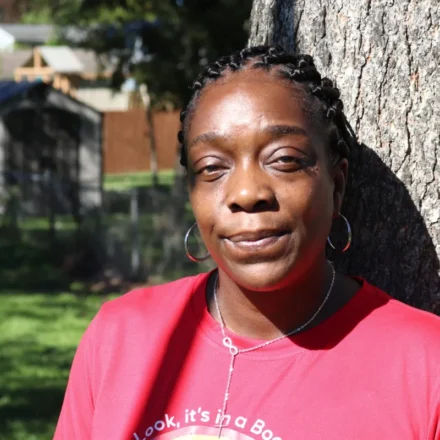
Cadence Van Beek, a student at the University of Wisconsin-Whitewater, knows the value of 988 not from a policy brief, but from personal experience. As a sophomore at Melrose-Mindoro High School, Van Beek found herself in the throes of a mental health crisis. Fearing she would be dismissed, waitlisted, or treated as a clinical number, she hesitated to reach out.
Instead, she found a lifeline. A counselor at the other end of the line did not rush her. They patiently helped her de-escalate her emotions and, crucially, provided her with local resources in Jackson County tailored to her specific needs.

“It didn’t feel rushed… She took her time with me, and she was very kind—just a kind soul,” Van Beek recalls. Her experience is one of over 345,000 interactions—calls, texts, and chats—initiated by Wisconsinites since the service’s inception. For Van Beek, the lifeline is not merely a bureaucratic service; it is an essential public utility.
Chronology of a Crisis Service
The evolution of the 988 lifeline in Wisconsin has been defined by rapid, unexpected growth:
- July 2022: The national 988 number officially launches, providing 24/7, free, and confidential support. Family Services of Northeast Wisconsin begins operating the state’s primary hub.
- 2024: A 24/7 text and chat feature is introduced, significantly increasing accessibility for younger generations who prefer digital communication over voice calls.
- May 2026: Advocates, including Van Beek and representatives from the Office of Children’s Mental Health, descend upon the state Capitol in Madison to lobby for permanent, sustainable funding.
- Present Day: The system struggles to maintain consistent in-state response rates as call volumes continue to shatter all initial forecasting models.
Supporting Data: By the Numbers
The efficacy of the 988 system is no longer a matter of speculation. A recent study published in the JAMA Network revealed that in the first two and a half years of the program, suicide rates among individuals aged 15 to 34 were 11% lower than statistical expectations. This represents approximately 4,400 fewer deaths—a profound testament to the power of accessible mental health intervention.
However, Wisconsin’s internal data highlights a growing operational disparity. In July, Wisconsin saw over 11,200 requests for help. While the state responded to 9,000 of those calls in-house, the remaining volume was routed to national backup centers. This leads to longer wait times and, more importantly, a lack of connection to the specific local resources that counselors in Green Bay are equipped to provide.

Currently, Wisconsin ranks in the bottom tier of states for in-state call response, achieving an 81% rate. By contrast, states like Illinois and Minnesota, which have successfully implemented dedicated telecommunications fees for 988, hit 90% in the same period.
The Call for Structural Funding
The primary obstacle to Wisconsin’s 988 success is financial sustainability. Unlike the 911 system, which is supported by a modest, consistent fee on monthly phone bills (currently 75 cents in Wisconsin), 988 is forced to rely on a patchwork of federal grants and intermittent state budget allocations.
"The demand from Wisconsinites for this service has surpassed every model of projection that was available to us," says Tana Koss, Senior Vice President at Family Services of Northeast Wisconsin. Koss notes that while her team has successfully ramped up recruitment, the administrative burden of operating on "hope and grants" is immense.
In the 2025-27 state budget, Governor Tony Evers recommended $12.2 million for the lifeline, but the final approved appropriation was just $7 million. This shortfall leaves the organization facing a projected $6.195 million deficit by 2028. Attempts to pass legislation to secure more robust support—such as Assembly Bill 303—have failed, often due to a lack of attached funding or political deadlock.

Official Responses and Political Implications
The political landscape regarding 988 is complex. While legislators from both sides of the aisle acknowledge the life-saving nature of the service, the mechanism for funding remains a point of contention.
State Rep. Ben Franklin (R-De Pere) has been a vocal proponent of the program’s value, arguing that it is a "vital service we should be funding." However, critics, including his political opponent Brandy Tollefson, point out that legislative efforts have often been "hollow," lacking the necessary revenue-generating provisions to ensure the service survives long-term. Tollefson, who has personal experience with the tragedy of suicide, has called for a bipartisan approach to establish a dedicated, permanent funding stream.
Advocacy groups, such as the National Alliance on Mental Illness (NAMI) Wisconsin, are actively lobbying for a shift in strategy. Julia Polk, NAMI’s advocacy coordinator, emphasizes that the state cannot continue to rely on the "trust and hope" model regarding federal grants, which have recently been subject to bureaucratic delays.
Implications: The New Frontier of Mental Health
As society grapples with the integration of Artificial Intelligence, a new challenge has emerged. Reports of generative AI chatbots failing to provide adequate support to individuals expressing suicidal ideation have prompted legislators in states like Illinois to propose strict regulations. These proposals include fining AI companies for negligence and diverting those penalties into 988 trust funds.

Experts like Megan Zimmerman of NAMI Fox Valley warn that the convenience of AI cannot replace human connection. "I always really encourage people to instead think about 988… because then you’re getting a real live human being," she says.
For the youth of Wisconsin, 988 is a lifeline that has been integrated into their understanding of safety. Cadence Van Beek, now a college student, continues to advocate for the service that once supported her. She remains firm in the belief that mental health infrastructure is not a luxury to be debated every two years, but a necessity to be secured for the next generation.
"We always kind of assume that it’ll be there," Van Beek says. "The possibility that there might not be enough counselors on the line because of funding… just makes me a little worried."
As Wisconsin heads into the next legislative session, the message from advocates, providers, and those who have used the service is unified: the 988 lifeline is a success story, but its future depends entirely on whether the state is willing to treat it with the same financial commitment as the emergency services that preceded it. The cost of inaction—in human lives and lost potential—is a price the state can no longer afford to pay.