





















































Guardians of the Earth: Why Indigenous Governance is the Frontline of Climate Resilience

From the melting permafrost of the Canadian Arctic to the flood-ravaged riverbanks of the Ecuadorian Amazon and the drought-stricken highlands of Nepal, the world’s Indigenous communities are currently bearing the heaviest burden of the global climate crisis. Yet, a transformative new report released by the global nonprofit Land Is Life suggests that these same communities are not merely passive victims of environmental degradation—they are the architects of the world’s most effective, time-tested climate adaptation strategies.
The report, which synthesizes data from 46 countries and over 200 field surveys, posits a stark reality: the global community has spent years fetishizing "Indigenous knowledge" while systematically ignoring the "Indigenous governance" that makes such knowledge actionable. As the climate crisis accelerates into a state of "polycrisis"—where storms, fires, and floods hit in rapid, overlapping succession—the failure to empower Indigenous sovereignty is no longer just a human rights issue; it is a critical failure in global disaster risk reduction.
The Reality of the Polycrisis: A Chronology of Escalation
Climate change has moved past the era of isolated, predictable weather events. Today, Indigenous nations face a "cascading crisis" model. In 2019, the Kichwa People of Sarayaku in the Ecuadorian Amazon were hit by catastrophic flooding on the Bobonaza River. The disaster was not a single event but a systemic shock that destroyed crops, compromised water safety, and threatened food sovereignty for a population of 1,600 people living across 500 square miles.
The timeline of these disasters is becoming increasingly compressed. Data from the Land Is Life report indicates that more than 80 percent of respondents are now managing two or more climate-driven crises simultaneously, with 90 percent reporting a sharp, measurable increase in the frequency of these disasters over the last decade.
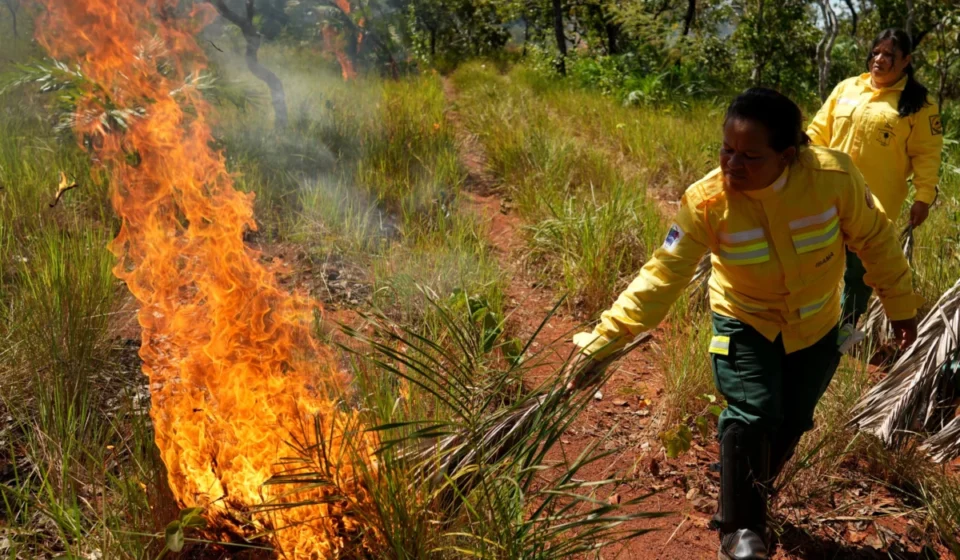
This escalation is not merely anecdotal. In Kenya, Indigenous Endorois and Tugen women have been forced to adapt their agricultural cycles to prolonged, multi-year droughts. Their response—cultivating drought-resistant varieties of sorghum and millet—has served as the primary buffer against total famine in their regions. Similarly, in Brazil, the Coordination of Indigenous Organizations of the Brazilian Amazon (COIAB) has transformed from a political advocacy group into a sophisticated disaster response network, managing fire prevention, training community brigades, and mobilizing rapid-response teams in the face of escalating wildfires.
Data-Driven Resilience: Why Local Governance Matters
The Land Is Life study is one of the most comprehensive of its kind, spanning six distinct ecosystems: forests, mountains, drylands, freshwater systems, grasslands, and coastal zones. The data reveals a consistent correlation: communities with strong, recognized, and autonomous governance structures are significantly more resilient to climate-related shocks than those under centralized, top-down state management.
The effectiveness of these strategies relies on a cycle of "Observation-Decision-Action." For instance, elders in the Sarayaku community observed subtle changes in rain and lightning patterns at the headwaters of their river system. Because the community maintains a robust, autonomous governance structure, they were able to act on this traditional ecological knowledge (TEK) immediately—issuing warnings and mobilizing resources before the floods reached their peaks.

This decision-making is often guided by the principle of minga—a Kichwa term denoting collective responsibility and solidarity. In practice, this means clear, pre-existing communication channels for emergency updates, established protocols for housing displaced families, and dedicated representatives to manage external relations with governmental agencies.
However, the report highlights a massive "Implementation Gap." While the world celebrates the results of Indigenous land stewardship, the structures—legal land titles, financial autonomy, and political recognition—are routinely denied. Without legal recognition, Indigenous nations are often excluded from state-led emergency alert systems, or worse, their cultural practices and languages are criminalized during periods of crisis, actively hindering their ability to survive.
Official Responses and the Funding Paradox
The global climate financing landscape is, according to the report, fundamentally broken. While billions of dollars are pledged annually at events like New York Climate Week to combat climate change, only a fraction of this capital ever reaches the grassroots level.
"It’s always the lack of resources and the lack of access to funding that makes it so difficult for us to work," says Anisha Buda, a program officer at the National Indigenous Women Forum in Nepal. "There are so many projects that are supposed to be for Indigenous peoples, but they are implemented by non-Indigenous organizations and non-Indigenous people."
This "funding capture" by large international NGOs and government agencies creates a paradox where billions are spent on top-down climate solutions that fail to address the specific, localized needs of Indigenous territories. Luisa Castañeda Quintana, executive director of Land Is Life, argues that the solution is not to build new, complex international bureaucracies, but to redirect existing resources directly to the communities already doing the work.
"When it comes to adaptation, we don’t really need to create new structures or systems," Quintana explains. "We just need to see what is working."
The Implications: A Call for Structural Reform
The implications of the Land Is Life report are clear: if the world wants to avoid the most catastrophic outcomes of the climate crisis, it must pivot from a "charity-based" model to an "empowerment-based" model.

1. Legal Recognition as Climate Defense
The report calls for the urgent legal recognition of Indigenous lands. Without secure land tenure, communities cannot engage in long-term fire management, water protection, or agricultural adaptation. Legal security is the foundation upon which all other climate resilience is built.
2. Direct Financing
Philanthropists and government donors must move beyond the current trend of funneling climate funds through massive, external intermediaries. Flexible, direct, and multi-year funding is required to allow Indigenous governments to maintain their own administrative capacity, which is the "nervous system" of their disaster response.
3. Integration of Knowledge Systems
Western science and Indigenous knowledge are not mutually exclusive. In Peru’s Ausangate Regional Conservation Area, Quechua communities have successfully integrated Indigenous monitoring indicators with Western climate data. This hybrid approach has allowed for more precise environmental management and has proven that collaborative, respectful partnerships yield better results than colonial-style resource management.
4. Moving Beyond Short-Termism
Much of the current international climate policy focuses on short-term "mitigation" projects that offer quick, quantifiable metrics to donors. However, true climate resilience requires a long-term focus on the health of ecosystems and the strength of the communities that inhabit them. The report argues that rejecting Indigenous self-governance in favor of "external authority" is a major contributor to the failure of global climate initiatives.
Conclusion: The Future is Already Here
As the world experiences increasing volatility, the wisdom held by Indigenous nations becomes a roadmap for the rest of the planet. "What they are seeing in the territories, we’re going to see it also in the future," says Gisela Hurtado, the author of the report.
The crisis is not just about the weather; it is about who holds the power to make decisions when the storm hits. By ignoring the governance and self-determination of Indigenous peoples, global powers are intentionally stripping the world of its most capable defenders. As we look toward an increasingly unstable future, the most rational policy is to stop treating Indigenous communities as beneficiaries of a failing system and start treating them as the essential, sovereign leaders of a sustainable future.
The tools, the knowledge, and the commitment are already there. The only thing missing is the political will to trust the people who have been protecting the earth since time immemorial.