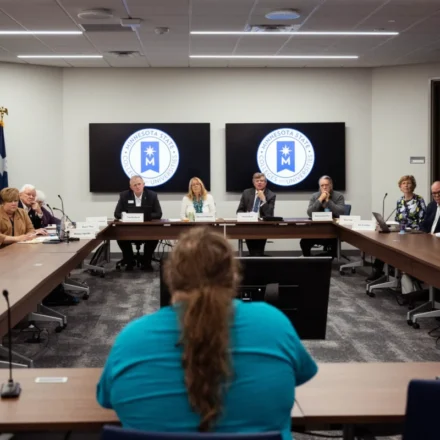















































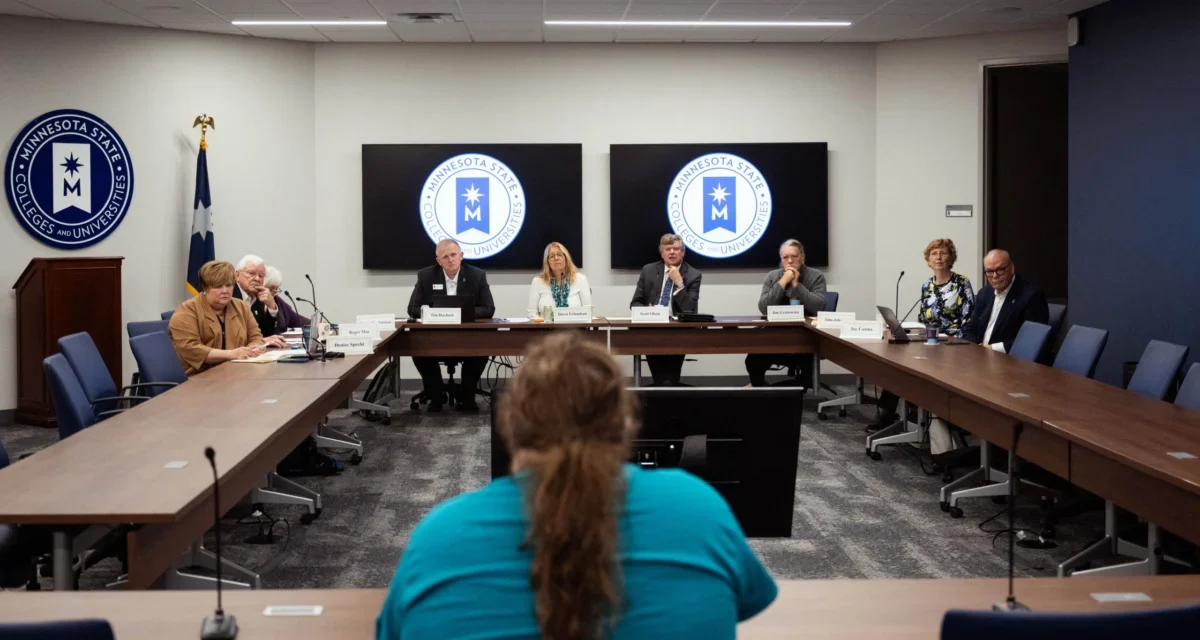




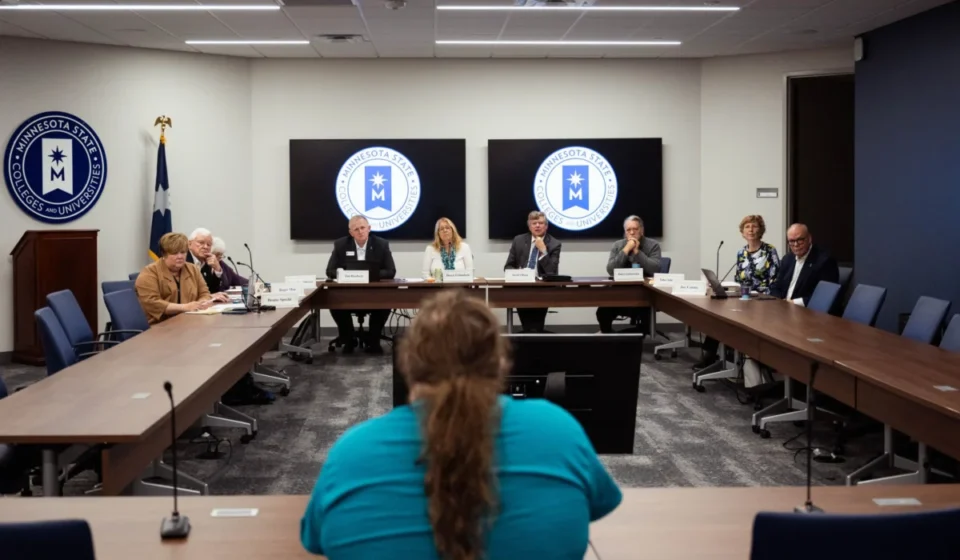

In a move that underscores the deepening financial crisis facing Minnesota’s public higher education infrastructure, the Minnesota State Board of Trustees voted on Wednesday to approve a controversial plan to redistribute millions of dollars across its system. Over the next four years, up to $25 million will be transferred annually from healthy or stable campuses—primarily two-year community and technical colleges—to prop up two universities currently facing existential financial threats: St. Cloud State University and Bemidji State University.
The decision, while described by officials as a necessary "bridge" to prevent collapse, has sparked intense debate regarding the equitable distribution of resources and the long-term sustainability of a system that serves 26 colleges and seven universities. As the system stares down a projected $100 million budget shortfall by the summer of 2028, the board’s vote represents a desperate, "lesser-of-two-evils" strategy in the absence of a significant legislative bailout.
The Anatomy of the Crisis: A Chronology of Decline
The current financial emergency did not occur overnight. It is the culmination of over a decade of shifting demographics, inflationary pressures, and persistent underfunding.
- 2014–2024 (The Decade of Attrition): St. Cloud State University began a long, painful decline characterized by a 40% reduction in its total workforce. As enrollment numbers dipped across the state, the university attempted to stay afloat by suspending nearly 200 academic majors, minors, and certificate programs since 2023.
- 2023 (Initial Warnings): The system began taking emergency measures, including a $2 million loan provided by the system office to St. Cloud State, as its internal reserve fund—once holding nearly $19 million a decade ago—faced total depletion.
- September 2026 (The Policy Shift): Facing an impending fiscal cliff for the 2028 fiscal year, Minnesota State officials proposed an emergency redistribution model. After intense pushback from community college leaders, the proposal was refined to include safeguards for the most cash-strapped institutions.
- October 2026 (The Vote): The Board of Trustees officially approved the redistribution of funds, mandating that all institutions contribute between $121,000 and $1.8 million to the emergency pool during the first year alone.
Supporting Data: Where the Money Goes and Who Pays
The fiscal year 2028 plan mandates that $10 million be directed to St. Cloud State University and $4.8 million to Bemidji State University. This infusion of capital is designed to prevent insolvency, but it comes at a direct cost to the rest of the system.
Under the approved model, the burden of funding is distributed based on institutional size and capacity. Minnesota State University-Mankato, a larger institution, is slated to contribute $1.8 million, the largest individual contribution in the system. Conversely, smaller, more vulnerable colleges will be required to provide smaller amounts, though the impact remains significant.
For instance, Dakota County Technical College and Inver Hills Community College—led by President Michael Berndt—will contribute a combined $747,533. With a combined enrollment of approximately 6,600 students, these institutions are already managing their own austerity measures. The removal of these funds, Berndt argued, is not a simple accounting adjustment; it is a direct blow to the student experience.
Beyond the cash transfers, the board also approved a separate, long-term austerity measure: a $24.3 million raid on the equipment budgets of all institutions through 2032. This money will be specifically earmarked for the demolition of "unnecessary" campus buildings that are currently siphoning off funds through high utility costs and deferred maintenance.
Official Responses: A Divided Leadership
The meeting on Wednesday served as a theater for the tensions between survival and fairness.
Michael Berndt, representing a coalition of community college presidents, delivered a candid assessment of the morale crisis created by the vote. "It’s frankly demoralizing to our employees to see the outcome of our work significantly reduced by seeing our allocation dollars reduced," Berndt stated. He emphasized that the community colleges in his care have spent years operating under frozen budgets and deferred maintenance, and that this new tax on their remaining resources feels like a punishment for their fiscal discipline.

However, Edward Inch, president of Minnesota State University-Mankato, argued that the system is now operating in a reality where there are no "good" choices. "It’s not a choice that gets made between a good idea or a bad idea," Inch noted. "It’s competing choices of things that are damaging or less damaging." For Inch and the proponents of the plan, the stabilization of St. Cloud and Bemidji is not just about those two schools; it is about preserving the structural integrity of the entire Minnesota State brand.
Trustee Roger Moe, in a moment of somber pragmatism, summarized the board’s stance: "We take the tough medicine, and hopefully we can get this thing corrected over the years coming ahead."
The Legislative Angle: A Cry for Help
System leadership is acutely aware that internal redistribution is a stopgap, not a solution. Bill Maki, the system’s vice chancellor for facilities and finance, was blunt during the meeting: "It really indicates that we have a situation where we have significant financial challenges at a couple institutions, and we don’t have a lot of levers to deal with it."
Maki admitted that the "ideal" path forward involves direct intervention from the Minnesota Legislature. To that end, the board is preparing a $65 million one-time budget request for the next legislative session. This request aims to cover the immediate $25 million needed for struggling schools, as well as broader costs associated with the system’s massive infrastructure backlog.
The core of the problem remains a "triple threat": declining student enrollment, stagnant or "constrained" state funding, and the relentless creep of inflation. Without a significant influx of state capital, the system’s internal redistribution model may prove to be the only thing keeping the lights on at some of Minnesota’s most historic campuses.
Implications: The Future of the System
The decision to cannibalize funds from one sector of the university system to save another sets a precarious precedent. For students at the contributing colleges, the implications are tangible: larger class sizes, fewer elective course options, and less investment in laboratory or instructional equipment.
Looking ahead, the administration has signaled that the next phase of the "recovery" will involve much harder conversations. Among the options being weighed are:
- Consolidation and Closures: Merging campuses or shutting down satellite locations to streamline operations.
- Asset Liquidation: Aggressively reducing the physical footprint of the system by razing redundant buildings.
- Centralized Services: The total consolidation of IT, cybersecurity, and administrative functions to reduce overhead.
- Formula Redesign: A complete overhaul of how state funding is distributed, potentially moving away from enrollment-based metrics if they continue to disadvantage rural and smaller campuses.
The "tough medicine" prescribed by the Board of Trustees is designed to stabilize the ship, but many faculty and staff fear that in the process of saving the system’s universities, the system may be eroding the very foundation that makes Minnesota State an accessible, affordable option for the average student. As the 2028 deadline approaches, the eyes of the academic community turn toward the State Capitol, where the fate of the $65 million request will likely determine whether this is a successful rescue mission or merely a prelude to further contraction.