








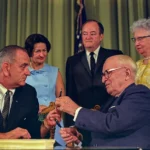










































NEW ULM, Minn. – Two decades ago, in Minnesota’s largely rural and staunchly Republican 1st Congressional District, a political novice with a classroom background dared to challenge an entrenched Republican incumbent. That challenger, then a history teacher and football coach, was Tim Walz, and his improbable victory in 2006 over former Rep. Gil Gutknecht sent ripples through state and national politics. Walz’s success paved the way for his eventual rise to the governorship, demonstrating that even in a district seemingly locked down by the GOP, a compelling challenger could emerge from unexpected quarters.
Now, the echoes of that historic upset resonate once more across southern Minnesota. Another teacher, Jake Johnson, 42, a high school math instructor new to the political arena, is running as a Democrat to unseat the current Republican incumbent, Rep. Brad Finstad. Johnson’s burgeoning campaign, marked by an impressive ability to connect with voters and raise significant funds, has already captured the attention—and support—of the national Democratic Party, placing him on their coveted "Red to Blue" list for promising challengers.
However, the political landscape of Minnesota’s 1st District, and indeed American politics as a whole, has undergone profound transformations since Walz’s breakthrough. The district has shifted further to the right, heavily influenced by redistricting, the national polarization of rural areas, and the enduring sway of former President Donald Trump. While Johnson and Walz share fundamental similarities in their origins and campaign strategies, the challenges Johnson faces are arguably more formidable than those Walz navigated two decades ago.
A Familiar Blueprint: The Teacher-Candidate Returns
The parallel between Walz and Johnson is striking and foundational to the narrative of this race. Both men leveraged their years as dedicated educators within the district, building a natural network of support among former students, parents, and the politically influential teachers’ unions. Their classrooms provided not just a livelihood but a training ground for communication, empathy, and community engagement—skills proving invaluable on the campaign trail.
Tim Walz, then a moderate Democrat, successfully appealed to a broad swath of voters in 2006, carefully distinguishing himself from the more liberal wing of his party. His ability to connect with the district’s rural, often conservative electorate, coupled with his reputation as a pragmatic problem-solver, allowed him to overcome Gutknecht’s significant incumbency advantage. Walz’s platform focused on local issues and economic fairness, a strategy that resonated deeply with constituents weary of partisan gridlock.
Fast forward to 2026, and Jake Johnson is employing a remarkably similar approach. He, too, is campaigning as a centrist, meticulously positioning himself as a fiscal conservative. Johnson has publicly pledged to vote against any legislation that would increase the federal government’s borrowing authority until Congress commits to balancing its budget. "Members of both parties are not taking this seriously," he stated, referring to the nation’s nearly $40 trillion national debt, a figure he frequently cites on the campaign trail. This fiscal prudence is designed to appeal to independent and even some moderate Republican voters in a district where economic responsibility is a deeply held value.
Yet, like Walz, Johnson also firmly aligns with mainstream Democratic principles regarding the social safety net. He has committed to shoring up critical federal programs that protect vulnerable populations. This dual approach—fiscal conservatism combined with a commitment to social welfare—reflects a strategic effort to bridge the ideological divides prevalent in the district. Walz, as governor, similarly prioritized expanding social welfare programs, notably championing universal school breakfasts and lunches and a generous paid family leave program, demonstrating a consistent focus on direct support for families.
Roots in Resilience: Shared Experiences of Hardship
A poignant commonality between the two teacher-candidates lies in their personal histories of economic hardship. Both men grew up in families that, at various points, relied on social welfare programs, experiences that profoundly shaped their worldviews and political convictions.

Johnson, a high school math teacher from Stewartville, recalls a childhood shared with ten siblings. His father worked as a garbage collector, and his mother read meters door-to-door. The family often found itself in need of assistance, not just from their church and neighbors, but also from government programs. "I was a SNAP (food stamp) kid," Johnson openly shares, "We were a Medicaid family." This lived experience provides him with a powerful, authentic narrative when discussing the importance of these programs, allowing him to connect with constituents who may have faced similar struggles.
Walz’s youth also bore the marks of adversity. Following his father’s untimely death, his mother and younger brother depended on Social Security survivor benefits to make ends meet. These formative experiences instilled in both men a deep understanding of the crucial role government can play in providing a safety net, an understanding they now bring to their political campaigns. Their ability to speak from personal experience on these issues lends an authenticity that resonates with voters who often feel overlooked by career politicians.
Navigating a Shifting Political Landscape
Despite the strategic similarities and shared personal narratives, the political terrain Johnson traverses in 2026 is vastly different from Walz’s path in 2006. The 1st District, stretching across southern Minnesota, has undergone significant changes that make a Democratic victory an even steeper uphill climb.
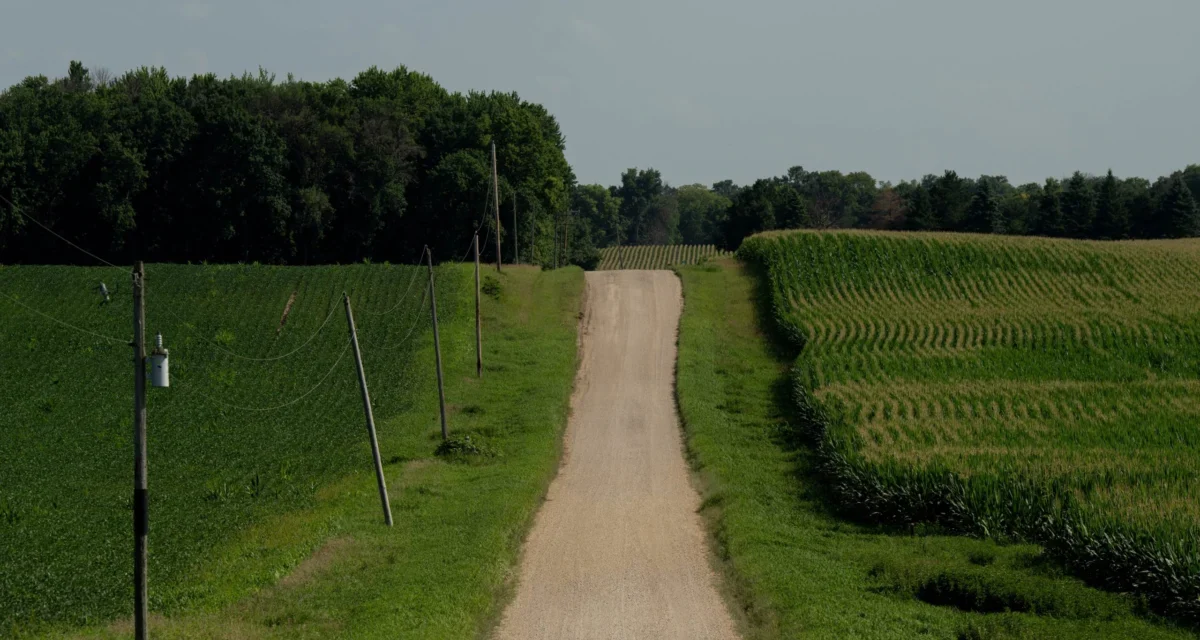
The Conservative Drift: Political science professors Kevin Parsneau of Minnesota State University in Mankato and Kate Knutson of Gustavus Adolphus College both underscore the district’s pronounced shift to the right. "It’s gotten a lot more conservative," Knutson observes. This hardening of the district’s political identity is partly due to redistricting following the latest Census, which saw the 1st District absorb additional rural territory along the Mississippi River, further amplifying its agricultural and conservative character.
Beyond cartographic changes, the district mirrors a national trend: rural areas of the United States have become increasingly Republican. Residents in these communities often express concerns that their core cultural values—faith, family, and freedom from government overreach—are under threat from a rapidly changing nation. Social scientists have highlighted a growing sentiment among many rural residents that the Democratic Party is dominated by urban elites who dismiss rural lifestyles and prioritize the concerns of metropolitan or immigrant populations over those of the rural working class. This perception has led to a significant "peeling off" of the "farmer" component of Minnesota’s Democratic-Farmer-Labor (DFL) Party, as Knutson notes.
The Trump Factor: The most significant difference from Walz’s era is the pervasive influence of Donald Trump. In 2024, the 1st District overwhelmingly supported Trump, giving him 55% of the vote over former Vice President Kamala Harris. Rep. Brad Finstad, unlike Walz’s moderate predecessor Gutknecht, has closely aligned himself with Trump and his policies. This alignment serves as both a strength and a potential vulnerability for Finstad. While it energizes his base, it also ties him to policies that have, at times, created friction within the district, particularly among the agricultural community.
Finstad’s Incumbency and Strategy
Rep. Brad Finstad, 50, a New Ulm resident, enjoys the significant advantages of incumbency: heightened name recognition, an established fundraising apparatus, and a tested campaign infrastructure. Since winning a special election for the 1st District seat in 2022, Finstad has deftly fended off Democratic challengers, solidifying his position in a district rated "likely Republican" by the Cook Political Report.
Finstad’s confidence appears high, leading Professor Parsneau to suggest, "He’s certainly acting like internal (campaign) polls are telling him he has a wide lead." This confidence seems to inform his campaign strategy: he largely avoids acknowledging his challenger and prefers to engage in official business events within the district—meeting with police officers, farm groups, and local companies—rather than participating in unscripted town halls or debates that might elevate Johnson’s profile. "He’s speaking to his base," Parsneau concludes, "He does not want to be in an unscripted situation."

However, this approach has drawn criticism from some constituents. Pat Booker, a military veteran and retired probation officer from New Ulm, has closely followed both Walz’s and Johnson’s campaigns. She praises Johnson’s directness and willingness to engage, echoing her positive experience with Walz. Conversely, Booker recounts eight months of failed attempts to get facetime with Finstad regarding concerns about potential SNAP and Medicaid cuts, receiving only "one pat letter saying thank you for your concerns." This perceived inaccessibility could be a point of vulnerability for Finstad, particularly in a district where community engagement and direct communication are highly valued.
Finstad, for his part, maintains he is accessible. "I travel all over southern Minnesota," he told MinnPost. "I’m always listening and communicating with constituents who agree and don’t agree with me. I’m having those conversations and I would say reach out to me, reach out to our office. I’m more than willing to have a conversation and answer questions." He also frames his service in deeply personal and faith-based terms: "It’s an honor of a lifetime to serve the 1st District’s 750,000 residents, but my goal is heaven, not Congress. When November comes, the voters of southern Minnesota will decide, but no one is going to outwork me."
New Ulm: A Microcosm of Tradition and Transition
Finstad’s hometown of New Ulm offers a fascinating glimpse into the district’s character. The city fiercely guards its German heritage, proudly displaying a towering statue of the ancient Germanic hero Hermann, a daily chiming glockenspiel downtown, and popular Oktoberfest and Bock Fest events at August Schell’s brewery. German names flavor local bakeries, restaurants, and businesses, and groups like the Junior Pioneers of New Ulm and Vicinity celebrate the direct descendants of the city’s 1854 founders.
In such a historically rich and tradition-bound community, locals note that newcomers can sometimes struggle to shed the "auslander" (German for "outsider") label. While Pat Booker acknowledges the community has become more open-minded over decades, New Ulm remains undeniably conservative, the county seat of Brown County, which strongly backed Trump in 2024.
Despite this deeply ingrained conservatism, Johnson has made a point of taking his campaign directly to Finstad’s home turf. He participated in New Ulm’s Bavarian Blast festival parade in July and plans to hold a town hall in the city in August, a strategic move to demonstrate his commitment to engaging all parts of the district, regardless of their political leanings.
An Underdog in Trump Territory: The Red to Blue Lifeline
There is no doubt that Jake Johnson is the underdog in this race. The district’s strong Republican lean, Trump’s 2024 performance, and Finstad’s successful track record since 2022 present a formidable challenge. However, Johnson has recently received a crucial boost from the national Democratic Party.
Recognizing his campaigning skills—including a commitment to holding town halls in each of the district’s 21 counties—and particularly his fundraising prowess, the Democratic Congressional Campaign Committee (DCCC) has placed Johnson on its "Red to Blue" list. This designation is reserved for Democratic candidates challenging Republican-held seats who are deemed viable and worthy of national party support. The "Red to Blue" status grants candidates access to enhanced fundraising support, strategic guidance, and campaign training, providing Johnson with resources essential for competing in a tough district.
Johnson has already proven himself to be a strong fundraiser, amassing nearly $1.9 million in campaign funds as of June 30, according to Federal Election Commission reports. Finstad, meanwhile, has raised nearly $2 million, indicating a competitive financial battle, a rarity for challengers in such districts.

Democrats nationally are hopeful that a combination of factors—Trump’s sometimes volatile approval ratings, an energized Democratic base, and the historical advantage the party out of power in the White House often holds in midterm elections—could allow them to regain control of the U.S. House from the GOP. To achieve this, they need to win in swing districts and chip away at Republican majorities in places like the 1st District, even those rated "likely Republican."
Exploiting Vulnerabilities: The Farmers’ Frustration
While the district leans heavily Republican, Professor Knutson suggests Johnson might be able to subtly depress enthusiasm for the GOP among farmers by consistently highlighting how certain Trump policies, embraced by Finstad, have negatively impacted their livelihoods. "Farmers are frustrated by tariff and immigration sweeps that are hurting the meat packing industry in southern Minnesota," Knutson states. The district’s economy is heavily reliant on agriculture, making these issues particularly salient.
Furthermore, global events like Iran’s shutdown of the Strait of Hormuz, which has disrupted significant deliveries of oil and fertilizer, have dramatically raised the cost of farm inputs, taking a severe toll on farm country. These economic pressures, coupled with a sense of being caught in the crossfire of international trade disputes, could create an opening for Johnson to appeal to an otherwise staunchly Republican demographic.
Finstad, however, has largely dismissed criticisms of Trump’s agricultural policies, instead deflecting blame onto the Biden administration. "We’re heading in the right direction," he told MinnPost after a veterans’ issues roundtable in Mankato. "We have come out of some tough times where the inputs have been really crippling for the last six years, and then on top of that we’ve had that stale market because of that lack of trade." This narrative, blaming the current Democratic administration for economic woes, is a common strategy among Republicans seeking to rally their base.
Implications and the Road Ahead
The Minnesota 1st Congressional District race is more than just a local contest; it’s a microcosm of the national political struggle. For Democrats, Jake Johnson’s campaign represents a test of their ability to reclaim ground in increasingly conservative rural areas, leveraging authentic, community-rooted candidates. A victory for Johnson would be a significant moral boost for the party and a concrete step towards shifting the balance of power in Washington. It would also validate the "Red to Blue" strategy and the belief that a compelling narrative and tireless campaigning can still overcome structural disadvantages.
For Republicans, holding the 1st District is crucial for maintaining their House majority and reaffirming their dominance in rural America. A Finstad victory would underscore the effectiveness of aligning with the Trump brand in these areas and the difficulty Democrats face in penetrating deeply conservative territory.
The parallels to Tim Walz’s 2006 upset are undeniable and inspiring for Johnson’s campaign. Yet, the current political environment, marked by heightened polarization and a transformed electorate, presents a challenge that is both familiar in its underlying dynamics and uniquely formidable in its contemporary context. As the election draws closer, all eyes will be on southern Minnesota to see if history can indeed repeat itself, or if the district’s conservative evolution will prove too great an obstacle for another teacher with political aspirations.