
























































For over a century, the city of Rochester, Minnesota, has enjoyed a geological luxury that most large American municipalities can only envy: a virtually inexhaustible supply of high-quality, naturally filtered groundwater. Siphoned from the massive, sponge-like Jordan aquifer—a subterranean formation stretching across seven states—the city’s water has long been a point of civic pride. It is a system that has allowed Rochester to grow into a bustling medical and industrial hub without the need for the massive, capital-intensive surface water treatment facilities that define the infrastructure of most major cities.
However, that era of easy access is coming to an abrupt end. As population growth accelerates and environmental regulators tighten the reins on water appropriations, Rochester finds itself at a critical turning point. The city is now forced to grapple with a future where its primary lifeblood—the aquifer—may no longer be able to sustain its ambitions.
The Impending Limit: Why the Taps Are Tightening
The crisis is not one of sudden depletion, but of regulatory reality. In 2024, the Minnesota Department of Natural Resources (DNR) delivered a sobering notice to Rochester Public Utilities (RPU): the city could no longer drill additional groundwater wells within its municipal limits.

The DNR’s mandate is clear: further withdrawals threaten to imperil the delicate balance of the regional ecosystem. The aquifer does not exist in isolation; it supports surface streams, popular trout-fishing waters, and rare, sensitive wetlands known as fens. These fens are not merely swamps; they are complex, groundwater-fed ecosystems that provide critical habitats for endangered species. When the city pumps too much, the water table drops, the fens dry up, and the streams lose the cold, clean baseflow necessary for aquatic life.
For a city with 125,000 residents consuming 4.8 billion gallons of water annually—a figure projected to nearly double by 2065—this limitation is a direct challenge to its economic development. RPU is fast approaching its state-permitted cap of 5.7 billion gallons per year, a threshold it expects to hit within five years.
A Chronology of Dependency and Development
To understand how Rochester reached this juncture, one must look at the historical trajectory of the city’s water management:

- 1900s–2020: Rochester establishes a reliable, low-cost model centered on groundwater. By drilling into the Jordan aquifer—typically 400 to 1,000 feet deep—the city avoids the high costs of surface water treatment.
- 2013: A cautionary tale unfolds nearby. In White Bear Lake, aggressive groundwater pumping causes the lake level to plummet to record lows, resulting in a landmark legal battle and increased scrutiny of municipal water use across the state.
- 2020–2023: As data centers and industrial expansion put unprecedented pressure on regional infrastructure, the DNR begins monitoring Rochester’s neighboring cities, such as Woodbury, to ensure that local growth does not cannibalize the surrounding environment.
- 2024: The DNR formally notifies RPU that no further wells will be permitted within city limits, citing the potential for irreparable damage to fens and regional streams.
- 2026: RPU commissions a comprehensive, multi-year study to evaluate the feasibility of alternative water sources, with findings expected by October.
- Early 2027 (Projected): The city plans to reach a formal decision on its long-term water infrastructure path.
The Dilemma of Infrastructure: Groundwater vs. Surface Water
The debate over what comes next for Rochester is deeply divided between tradition and necessity.
The Case for Groundwater
Many local leaders, including City Council member Patrick Keane, are reluctant to abandon the groundwater model. There is a palpable sense of pride in the fact that Rochester has avoided the "major treatment center" path. To many, the current system is a symbol of the city’s self-sufficiency and the quality of its natural resources.
RPU officials are currently investigating the possibility of drawing from deeper geological formations, such as the Wonewoc and Mt. Simon aquifers. However, this is a contentious solution. Geologists describe this as "water mining." The water found in the Mt. Simon aquifer is "fossil water"—some of it upwards of 60,000 years old. It is a non-renewable resource that, once extracted, will not be replenished within any human-relevant timeframe.

The Case for Surface Water
The alternative is a pivot to surface water, likely from the Zumbro River or potentially a pipeline to the Mississippi River, located some 40 miles away. This would require the construction of a state-of-the-art water treatment facility, a project likely to run into the hundreds of millions of dollars. The logistical hurdles of such a project, combined with the astronomical price tag, make it a daunting prospect for city planners and taxpayers alike.
Voices from the Field: Perspectives on Sustainability
The conversation has drawn in experts who warn that Rochester is merely the first of many cities that will have to face these harsh realities.
Carrie Jennings, a geologist and research director for the nonprofit Freshwater, notes that Minnesota has long been "spoiled" by its water abundance. "But things are changing," she warns. "There is going to be more climate stress, different styles of rain events, and different needs for water use."

John Meyer, a local farmer who practices regenerative agriculture in the surrounding area, provides a perspective rooted in the land. By utilizing cover crops and soil-health-focused practices, Meyer aims to increase water infiltration and retention on his farm. He is highly critical of the proposal to drill into deeper, ancient aquifers.
"It’s just delaying the inevitable," Meyer says. "The smart thing to do is correct what we’re doing up here on top."
Implications: A New Era of Conservation
The brewing water crisis in Rochester is part of a larger, state-wide shift. The Minnesota Management and Budget office is currently conducting an exhaustive study on water stressors through the year 2100. This study reflects a growing realization that the state’s historical management of water—often based on the assumption of infinite supply—is no longer viable.

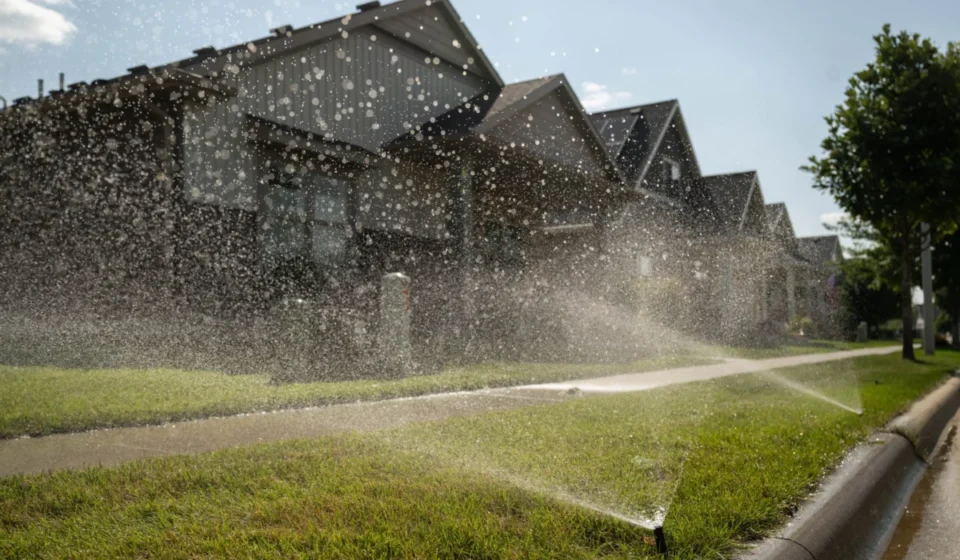
For Rochester, the immediate path forward remains uncertain. While RPU encourages water conservation through efficient appliances and smarter landscaping, these measures remain voluntary. The city has yet to implement the mandatory, stringent watering restrictions seen in other parts of the state during recent drought years.
As the city council and utility managers await the October study results, the tension between growth and sustainability continues to simmer. Councilmember Keane remains optimistic that the city can find a solution without "duress," framing the current study as a proactive step in responsible stewardship.
However, the reality remains: the "spoiled" days of limitless, free-flowing groundwater are ending. Whether Rochester chooses to build massive infrastructure to tap surface water or risks the depletion of non-renewable fossil water, the era of easy, invisible water is coming to a close. The decisions made in the next six months will determine the city’s viability for the next century, serving as a template—or a warning—for other growing cities across the Mississippi River Basin.

As climate change accelerates and industrial demand continues to mount, Rochester is no longer just managing a utility; it is navigating a fundamental change in its relationship with the land and the finite resources beneath it. The water that has defined the city for a century is now the very thing testing its ability to adapt.