




















































Education Under Siege: Minnesota Districts Sue to Restore ‘Sensitive Locations’ Policy Amidst Federal Enforcement Surge

By [Your Name/Editorial Desk]
A coalition of Minnesota school districts and the state’s largest teachers union, Education Minnesota, filed a landmark lawsuit in U.S. District Court on Wednesday, challenging the federal government’s recent shift in immigration enforcement tactics. The litigation seeks a judicial mandate to reinstate a decades-old “sensitive locations” policy—a federal directive that historically prohibited immigration enforcement activities near schools, churches, and medical facilities.
The lawsuit, which names Homeland Security Secretary Kristi Noem, the Department of Homeland Security (DHS), Immigration and Customs Enforcement (ICE), and Customs and Border Protection (CBP) as defendants, argues that the current federal strategy of targeting school zones violates the Administrative Procedure Act and fundamental constitutional protections. By rescinding the longstanding guidance that protected educational environments, plaintiffs contend that the administration has created an environment of terror that has effectively dismantled the public education system in parts of Minnesota.
The Policy Shift: A New Era of Enforcement
The legal conflict stems from a pivotal administrative change enacted on January 20, 2025—the day of President Donald Trump’s second inauguration. On that date, the administration formally repealed the sensitive locations policy, a framework that had been in place since 1993.
The Department of Homeland Security justified the move with a clear, aggressive stance. “Criminals will no longer be able to hide in America’s schools and churches to avoid arrest,” a DHS press release stated at the time. “The Trump Administration will not tie the hands of our brave law enforcement, and instead trusts them to use common sense.”
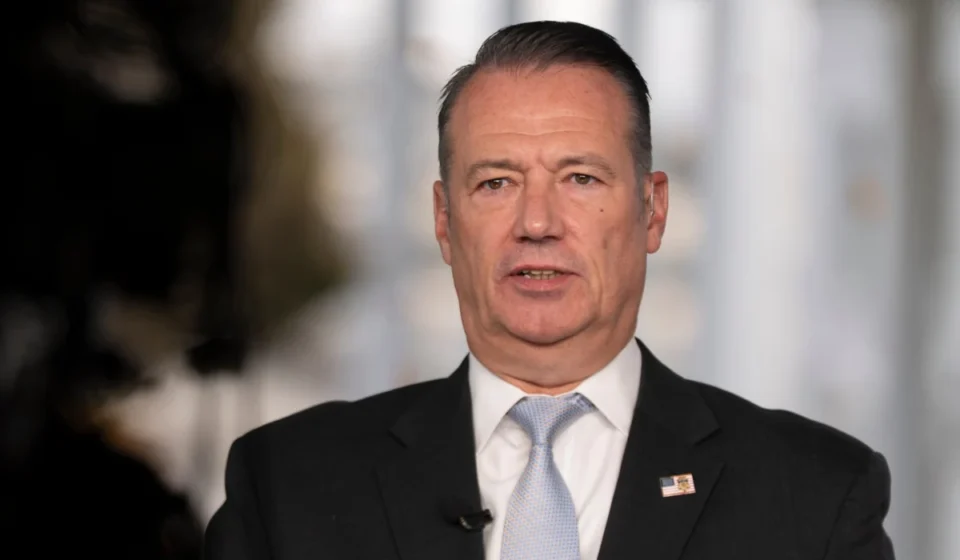
For the current administration, the repeal was not a loss of restraint, but an empowerment of agency personnel. At a press conference in Nogales, Arizona, on Wednesday, ICE Director Todd Lyons, who is named as a defendant in the Minnesota lawsuit, doubled down on this philosophy. “We didn’t need any new laws,” Lyons asserted. “We just need the ability to enforce the ones we have.”
A Chronology of Escalation
The atmosphere in Minnesota’s classrooms has darkened significantly since the policy change. Educators and district leaders report that the proximity of federal agents to school grounds has transformed once-safe havens into sites of anxiety and potential confrontation.
- January 20, 2025: The federal sensitive locations policy is rescinded, allowing ICE and CBP to conduct enforcement operations on or near school properties.
- Late January 2026: Reports emerge of federal agents conducting aggressive surveillance in school parking lots, including incidents of chasing staff, detaining individuals at bus stops, and disrupting school transportation.
- February 1, 2026: Five-year-old Liam Conejo Ramos, whose detainment in a knit bunny hat became an international symbol of the immigration crisis, is released from a Texas facility and returned to his home in Columbia Heights, Minnesota, following intervention by Rep. Joaquin Castro.
- February 2, 2026: The morning after the child’s return, ICE agents are reported stationed in the parking lot of a Columbia Heights school. The district subsequently receives a bomb threat, forcing a lockdown.
- February 4, 2026: A coalition of Minnesota districts and Education Minnesota files suit in U.S. District Court, seeking to force the reinstatement of the sensitive locations policy.
Data and Impact: The Cost of Absenteeism
The consequences of these enforcement actions are quantifiable and devastating. In many districts, school enrollment—the lifeblood of state education funding—has seen sharp, precipitous drops. Because Minnesota ties per-pupil funding directly to daily attendance, the current environment threatens the fiscal solvency of school systems already struggling to manage the crisis.
In Rochester, Minnesota, Superintendent Kent Pekel reported that January absenteeism was 42% higher than the previous December. Among students receiving English learner services, absenteeism skyrocketed by 116%, while among Latino students, the rate climbed by 108%. Of the district’s 15,500 students, more than 200 have fled to the district’s virtual-only programs, while an average of 550 students were absent on any given school day throughout January.
The financial burden extends beyond lost funding. Duluth Public Schools has already spent over $500,000 on security planning and emergency response measures. Superintendent John Magas noted that for the past two months, half of his administrative team’s time has been diverted from academic instruction to crisis management.
“We know students can’t learn unless they feel safe,” Magas said. “Right now, there is a great sense of lack of safety, especially among our historically underserved students, based on what we are seeing.”
The Legal Argument: Beyond the Classroom
The lawsuit argues that the Department of Homeland Security failed to perform a "reasoned analysis" when it abandoned the sensitive locations policy. The plaintiffs rely on the precedent set by a 2007 guidance memo, which stated, “It is important to emphasize that great care and forethought be applied before undertaking any investigative or enforcement type action at or near schools.”
Furthermore, in 2021, then-DHS Secretary Alejandro Mayorkas reaffirmed that the agency could fulfill its mission without denying "children access to their schools." The plaintiffs argue that by reversing this without sufficient justification or consideration of the community impact, the current administration has violated the Administrative Procedure Act.
The complaint details a litany of disturbing allegations: agents tackling and tear-gassing staff and students, pulling day care workers from their vehicles, and hovering at school bus stops. These actions have forced districts, including Fridley Public Schools—which has been forced to cancel classes twice due to federal activity—to pivot to online-only models. Even for non-immigrant students, the environment has become untenable as families avoid leaving their homes, leading to a phenomenon where students simply “disappear” from the school system.
Official Responses and the "De-escalation" Rhetoric
While White House border czar Tom Homan has publicly insisted that immigration agents have "de-escalated" their actions and promised that 700 agents will soon exit Minnesota, local leaders remain skeptical. They point out that even with the promised reduction, the number of federal agents remaining in the state would still exceed the 2,000 agents present when Renee Good, a Minneapolis mother, was killed during an ICE operation just one month ago.
The Department of Homeland Security has maintained a wall of silence regarding the lawsuit. As of press time, the agency had not responded to requests for comment from The 74 or other media outlets covering the case.
Long-term Implications: A Broken Foundation
The lawsuit is not merely a request for a policy reversal; it is a challenge to the very definition of a school as a "safe harbor." As Superintendent Pekel of Rochester noted, while his district has not yet been the direct site of an on-campus raid, the fear is pervasive.
"One incident could wipe that out," Pekel warned, referring to the fragile attendance levels.
The case highlights a growing divide between federal immigration enforcement priorities and the local responsibility to provide a universal education. By dragging the judiciary into the middle of this conflict, the Minnesota coalition hopes to re-establish the bright-line rules that once separated the enforcement of border policy from the daily lives of school children.
For now, the educators, parents, and students of Minnesota are left in a state of suspended animation. With informal networks of community members delivering food and providing transportation to ensure children can reach school safely, the burden of maintaining normalcy has shifted to the community. Whether the court will intervene to restore the protections that previously shielded these schools remains the central question of the term.
"The budget negotiations going on in Congress right now, we’ve heard a lot of things about body cams and things like that," Superintendent Magas observed. "I haven’t heard a lot about a return to protected status."
As the litigation proceeds, the nation will be watching to see whether the courts agree that the classroom must remain a space defined by education rather than enforcement.