



















































A Pillar of the Press Retires: Jane Kirtley’s Legacy and the Uncertain Future of Journalism

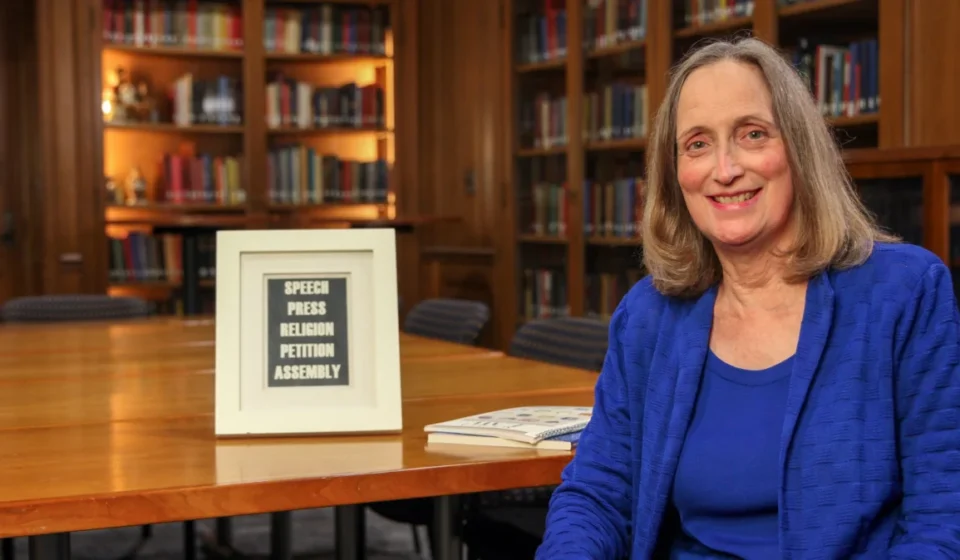
After more than two decades of shaping the next generation of media legal experts, Jane E. Kirtley, the Silha Professor of Media Ethics and Law at the University of Minnesota’s Hubbard School of Journalism and Mass Communication, will retire on May 25. Her departure marks the end of an era for the Silha Center for the Study of Media Ethics and Law, an institution she has led with a fierce commitment to First Amendment principles and the transparency of the American government.
For decades, Kirtley has been the definitive voice on media law, a scholar whose expertise has been sought by journalists and policymakers from across the globe. As she prepares to step away from academia, she leaves behind a profession currently navigating a volatile intersection of political weaponization, corporate consolidation, and the disruptive influence of artificial intelligence.
A Lifetime in Defense of the First Amendment
Kirtley’s career has been defined by her unwavering defense of the free press. Before joining the University of Minnesota in 1999, she served for 14 years as the executive director of The Reporters Committee for Freedom of the Press in Arlington, Virginia. That role followed a five-year tenure as an attorney at a prestigious New York and Washington, D.C., law firm.
Her transition into retirement is a decision she has deliberated for several years. She initially considered leaving in 2019, shortly after her husband, Notre Dame law professor Stephen Cribari, retired. However, the onset of the COVID-19 pandemic—which halted global travel and forced her teaching duties online—kept her anchored to the university.
"You just can’t take for granted that you can keep doing the things you care about doing," Kirtley said, citing her desire to remain active and healthy enough to continue traveling, a passion she cultivated during a five-month Fulbright teaching stint in Riga, Latvia.
She also noted the influence of her predecessor, Don Gillmor, the founding director of the Silha Center. Gillmor retired in 2009 but faced declining health soon after, passing away in 2013. For Kirtley, the timing is a conscious choice to embrace the next phase of life while she is still able to pursue the intellectual and personal explorations that have long animated her work.
The Weaponization of the Law: A New Threat
In a candid reflection on the current state of journalism, Kirtley expresses profound concern over the shift in how the government interacts with the press. While she acknowledges that tensions between the executive branch and the media are not new—noting that Presidents Nixon, Reagan, and Obama all faced criticism from journalists—she argues that the current climate is fundamentally different.
"The biggest concern I have right now is the weaponizing of the law to go after the independent media," Kirtley said. She points specifically to the second Trump Administration, noting that the current era is defined by a willingness to sue media organizations using novel, aggressive legal theories, such as consumer fraud, to bypass traditional libel protections.
The Fragility of New York Times v. Sullivan
Central to Kirtley’s anxiety is the potential erosion of New York Times v. Sullivan, the landmark 1964 Supreme Court ruling that established the "actual malice" standard for libel against public officials. This standard has served as the bedrock of American press freedom for 60 years.
"In the 1980s and ’90s, there was a lot of talk about whether the Supreme Court would overrule Sullivan, but it never happened," she noted. "Now, I think we have reason to be very concerned about the staying power of that standard. The current court has shown a willingness to reverse long-standing precedent, and whether they would do so to Sullivan is anyone’s guess."
Corporate Consolidation and the Loss of Purpose
Kirtley is equally critical of the shifting motivations within the media industry itself. She observes that many modern media owners have moved away from the traditional model of journalism as a public service.
"So many of the owners of media outlets today do not see them as vehicles for serving the public interest. They see them as means for wielding power or maximizing profit or both," she explained. While she acknowledges that profit has always been a factor in media, she laments the loss of a shared understanding among owners regarding the necessity of a free press to hold power accountable.
She contrasted current ownership—often characterized by venture capitalists and Silicon Valley interests—with historical figures like the Sulzbergers or the Grahams, who, despite their desire for profit, recognized the foundational role of journalism in a democracy.
The Credibility Gap and the Information Silo
When asked how journalists should cover an administration that frequently employs obfuscation and falsehoods, Kirtley pointed to the systematic erosion of trust in the mainstream media that has occurred over the last four decades.
"If you’re an institution that has been labeled as a liar, how credible is it for you to be calling out lies by another institution?" she asked. The rise of internet-driven information silos has made it increasingly difficult for factual reporting to penetrate public consciousness. "People isolate themselves in a particular silo and go to sources that reinforce what they already believe or want to believe," Kirtley added.
This environment has made it dangerous to perform watchdog journalism. The threat is not just to the press; it extends to universities, the judiciary, and other institutions that provide checks and balances. When these institutions are cowed by the threat of regulatory retaliation, the public loses the critical counterpoints necessary for a healthy democratic discourse.
Artificial Intelligence: The "Devil’s Tool"
Perhaps the most visceral of Kirtley’s concerns is the rapid integration of artificial intelligence into newsrooms. Her opposition to the technology is a primary reason she feels it is time to step away from the classroom.
"I hate A.I. To me, it’s the devil’s tool," she stated bluntly. She refuses to train students in its use, arguing that she would feel complicit in undermining the fundamental values of accuracy, critical thinking, and ethical integrity.
Kirtley criticized the decision of some news organizations, such as the Cleveland Plain Dealer, to utilize A.I. to rewrite stories. She argued that the loss of human copy editors—professionals who ask the hard questions like, "Who are you talking about, and how do you know this?"—is a catastrophic blow to journalistic quality. "A.I. is not going to do any of that. It’s just going to process what you feed into it, which means the product that results is going to be imperfect."
The FCC and the Specter of Political Retaliation
Kirtley also leveled sharp criticism at the current leadership of the Federal Communications Commission (FCC), particularly Chairman Brendan Carr. She characterized his recent actions—including efforts to investigate late-night entertainers and networks critical of the president—as "the most blatantly political" activity she has witnessed in her career.
While the FCC has historically regulated "indecent" content to protect children, Kirtley noted that this authority was never intended to be used as a tool for viewpoint-based censorship. The current trajectory, she warns, is a departure from the Federal Communications Act of 1934 and a direct challenge to the First Amendment.
"The difference we’re seeing now with Brendan Carr is that his regulatory activity seems motivated by trying to discourage any kind of speech, satirical or otherwise, that criticizes President Trump or the Trump administration," she said.
A Legacy of Resilience
As she departs, Kirtley remains hopeful about the next generation of journalists, even as she acknowledges the immense challenges they face. Despite the lack of financial incentive and the growing uncertainty regarding the impact of AI, she continues to see young people driven by a genuine desire to hold the powerful accountable.
"There are still many young people who want and who need to do journalism," she said. "They want to provide the public with information they need to make good, informed decisions about everything from voting to how they live their daily lives."
Jane Kirtley’s career stands as a testament to the idea that journalism is not merely a trade, but a cornerstone of democratic stability. As the media landscape undergoes a period of profound and often painful transformation, her voice will be missed—both as a scholar who defined the field and as a vigilant guardian of the principles that keep a society free.