

























































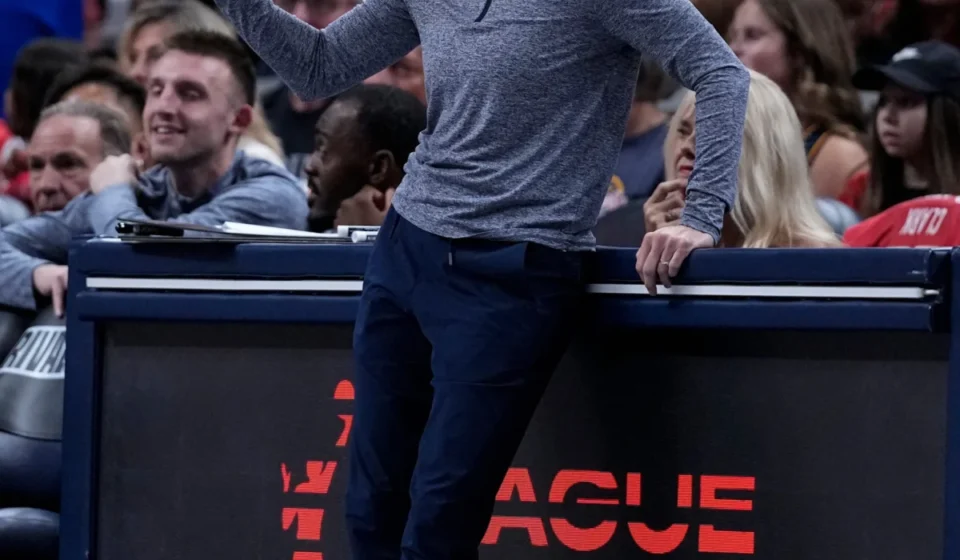

For decades, the gospel of basketball has been preached with singular, unwavering clarity: "Defense wins championships." It is a mantra that defined the golden era of the Minnesota Lynx, where head coach Cheryl Reeve built a dynasty in the 2010s on the bedrock of suffocating, disciplined defensive play. It is a philosophy that has carried the Lynx to the upper echelons of the WNBA standings for years, remaining the team’s North Star even as they chased their fifth elusive title.
However, a new reality is unfolding across the WNBA. The league is currently undergoing a seismic shift toward unprecedented offensive productivity. On any given night, it is no longer shocking to see a team—or sometimes both teams in a single matchup—eclipse the 100-point threshold. As the league enters a new era of high-octane basketball, the question arises: Is the traditional defensive blueprint still the path to glory, or has the game fundamentally changed?
The Offensive Surge: By the Numbers
The evidence of this offensive explosion is not merely anecdotal; it is deeply embedded in the record books. The Minnesota Lynx, a team historically associated with defensive grit, have already hit the century mark 11 times this season. According to research by Lynx and Timberwolves analyst Paul Swanson, this figure is more than double the previous club record and stands as the second-highest total in the league’s 30-year history.
While the Lynx are putting up numbers that would have been unimaginable a decade ago, they are not alone. The Indiana Fever have shattered all expectations, recording 18 such performances this season, a new league record. Furthermore, the efficiency of these teams is at an all-time high. The Lynx have shot 50% or better from the field 18 times this year, tying the 2014 Phoenix Mercury for the second-most in league history—a record currently held by the 2023 Las Vegas Aces at 21.
This scoring surge has fundamentally altered the pace of play. Across the league, teams are averaging 87.3 points per game (through mid-August), and overall field goal percentages have climbed to 45.3%—the highest in WNBA history.
The Catalyst: Freedom of Movement
The surge in scoring is not an accident; it is the direct result of a concerted effort by league officials, players, and coaches. Last offseason, the WNBA established a task force—which included Cheryl Reeve—to address long-standing complaints regarding excessive physicality and inconsistent officiating.
The goal was simple but impactful: return to the rulebook. By cracking down on the "clutching and grabbing" that frequently hindered perimeter players, the league effectively widened the lanes and allowed for greater freedom of movement. Initially, the adjustment period saw a spike in foul calls and extended game times, but as players and officials acclimated, the result was a more fluid, fast-paced brand of basketball.
"I think the adjustments of the freedom of movement do help," said Golden State Valkyries head coach Natalie Nakase, the reigning WNBA Coach of the Year. "You can’t hold, and as soon as you get a hold, no one wants to foul out, so they have to let the running routes go."
Reeve echoes this sentiment, noting that the "actions"—the complex, multi-layered movements designed to break down defensive schemes—are more dynamic today than they have ever been in the history of the league.

A Complex Evolution: The "Actions" of the Modern Game
The modern WNBA offense is no longer a simple game of high-post entries and isolation plays. Today’s offenses are intricate systems involving constant screens, rolls, and cuts. As Indiana Fever coach Stephanie White notes, the league is currently blessed with an influx of talent that has heightened the overall level of play.
"In the older days, you guarded two or three people and you guarded two or three actions and that was about it," White observed. "Now there’s actions that lead to actions. It’s just a fun time to be a part of the league, for sure."
The Indiana Fever serve as the primary case study for this evolution. With offensive powerhouses like Kelsey Mitchell and Caitlin Clark, the Fever became the first team in WNBA history to record six consecutive games of 100+ points. This high-octane style of play has electrified crowds, turning games like the August 2nd shootout between the Lynx and Fever—a 108-100 thriller—into must-watch spectacles.
The Defensive Counter-Narrative
Despite the offensive explosion, the old guard remains skeptical that defense has lost its relevance. While teams are scoring more, the underlying question remains: Can a team win a championship without a top-tier defense?
Coach Natalie Nakase remains a staunch defender of the defensive philosophy. When asked about the possibility of an offensive-minded team winning it all, she pointed to the most critical data point: the postseason.
"If you go look at the playoffs and see the finals, what’s the score?" Nakase asked. Her point is substantiated by recent history. When the Las Vegas Aces swept the Phoenix Mercury in the finals, not a single 100-point game occurred. The same held true for the year prior, when the New York Liberty engaged in a grueling five-game series against the Lynx.
"That’s why we hang our hat on defensive execution," Nakase added.
This philosophy is shared by Cheryl Reeve, who has seen her team’s defensive metrics fluctuate. The Lynx, who pride themselves on holding opponents under 40% shooting, have found that benchmark increasingly difficult to reach. After hitting that defensive target ten times in their first 19 games, they have only managed it once in the 20 games since June 28. This inconsistency has been a source of frustration for the coaching staff, even as the team maintains a high winning percentage.
The Reality Check: Monday Night in Minneapolis
The most recent evidence in favor of the "defense-first" theory arrived on a Monday night in late August. The Minnesota Lynx, sitting atop the standings and eyeing the No. 1 seed, hosted the Golden State Valkyries. The Valkyries, a second-year expansion team, had never defeated the Lynx, but they came into the matchup with a clear strategy: neutralize the space and stifle the flow.

The Valkyries employed a sophisticated mix of zone and woman-to-woman defense, effectively clogging the passing lanes and forcing the Lynx into uncomfortable positions. The impact was immediate. Olivia Miles, the standout rookie affectionately known as "The Spectacle," struggled significantly. She finished the night with just eight points—only the second time all season she failed to hit double digits—and committed four turnovers against five assists.
The result was a 80-66 loss for the Lynx, their lowest point total of the season. The Lynx shot a dismal 35.6% from the field and, perhaps most damningly, recorded their fewest defensive deflections of the year. It was a stark reminder that even in an era of high-scoring, the team that controls the defensive tempo often dictates the outcome.
Implications for the Postseason
As the WNBA heads toward the playoffs in late September, the league finds itself at a crossroads. We are seeing a more athletic, faster, and more skilled game than ever before. The "freedom of movement" has allowed stars to shine and offenses to thrive. Yet, the fundamental nature of the playoffs—the intensity, the reduced space, and the game-planning—often forces teams back into a defensive grind.
Stephanie White, while acknowledging the success of high-scoring teams, admits that a "middle-of-the-pack" defense might be enough to reach the summit, but it is a risky gamble. "I think you have to be solid," White said. "There are going to be days where, regardless of the highest quality shot you get, it just doesn’t fall, and you have to rely on [defense]."
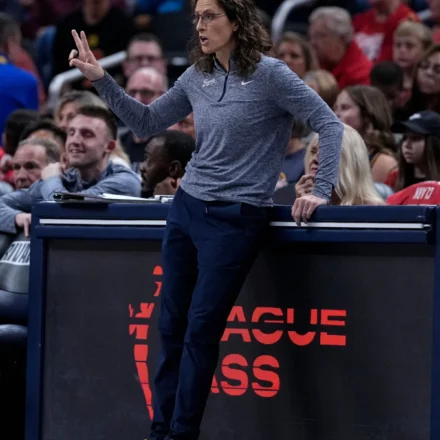
Cheryl Reeve’s assessment remains the most balanced. "I don’t know whether [defense has] become less important," she stated. "I don’t know very many coaches that think you can really get somewhere without having a team that defends. But I also think things are far more dynamic than they’ve ever been, and it’s much more challenging to be a good defensive team."
As the regular season draws to a close, the league’s top contenders will be forced to balance these two competing identities. Can the high-scoring offenses of the Indiana Fever or the high-efficiency Lynx sustain their output against the suffocating defensive adjustments that define the playoffs?
The lesson from the Monday night defeat of the league leaders is clear: the offense may draw the crowds and break the records, but when the trophy is on the line, defense is the ultimate arbiter of success. The 2026 WNBA playoffs will serve as the final test of this theory, determining whether we are witnessing the permanent end of the defensive era, or merely its most challenging evolution yet.