
























































For over 40 years, the global scientific community has sounded the alarm on paraquat, a potent herbicide that has been linked to Parkinson’s disease and other severe neurological conditions. While more than 70 countries—including Sweden, the entire European Union, and even China, the home of the pesticide’s primary manufacturer, Syngenta—have banned the chemical, the United States remains a massive outlier.
New evidence, surfacing from approximately 3,700 pages of internal corporate records recently unsealed in Pennsylvania state court, offers a damning explanation for this discrepancy. These documents suggest that while international markets were closing, Syngenta engaged in a sophisticated, multi-decade campaign to insulate its "blockbuster" product from scrutiny, often by allegedly withholding critical health risk data from the U.S. Environmental Protection Agency (EPA).
The Main Facts: A Persistent Health Concern
Paraquat, a highly toxic weed killer used on millions of acres of American farmland to treat everything from orchards to cotton fields, has long been the subject of intense litigation. Currently, more than 10,000 lawsuits are pending across the U.S., filed by individuals who allege that chronic exposure to the herbicide led to the development of Parkinson’s disease—a progressive, incurable brain disorder.

Despite the mounting body of independent scientific research establishing a link between the chemical and the disease, the EPA has maintained that there is no "clear link" between standard paraquat use and adverse neurological outcomes. However, the newly released "Paraquat Papers" suggest that the EPA’s assessment may have been based on a skewed dataset, as internal records show Syngenta frequently failed to disclose internal studies regarding the chemical’s toxicity, its absorption rates through human skin, and its potential for devastating neurological damage.
A Chronology of Concealment
The strategy to protect paraquat appears to have been meticulously planned as far back as the early 2000s.
- 1983: Sweden becomes the first nation to ban paraquat, triggering a slow but steady global movement toward prohibition.
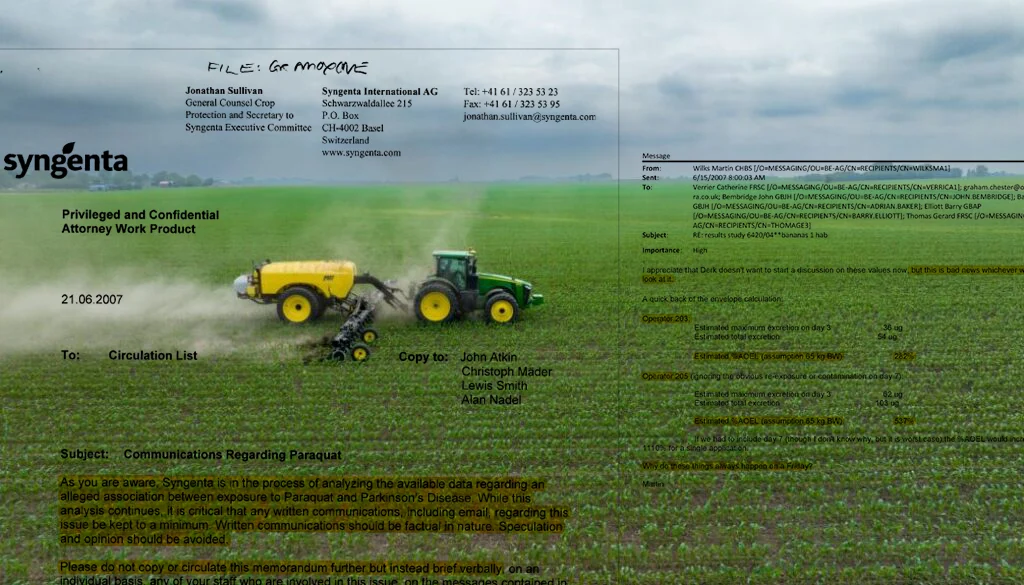
- 2001: As independent researchers began publishing studies linking paraquat to Parkinson’s, internal Syngenta communications expressed concern that such research might prompt an EPA review. A strategy document from the same year explicitly stated, "Our efforts will be to steer the focus of serious research away from paraquat and on to other agents."
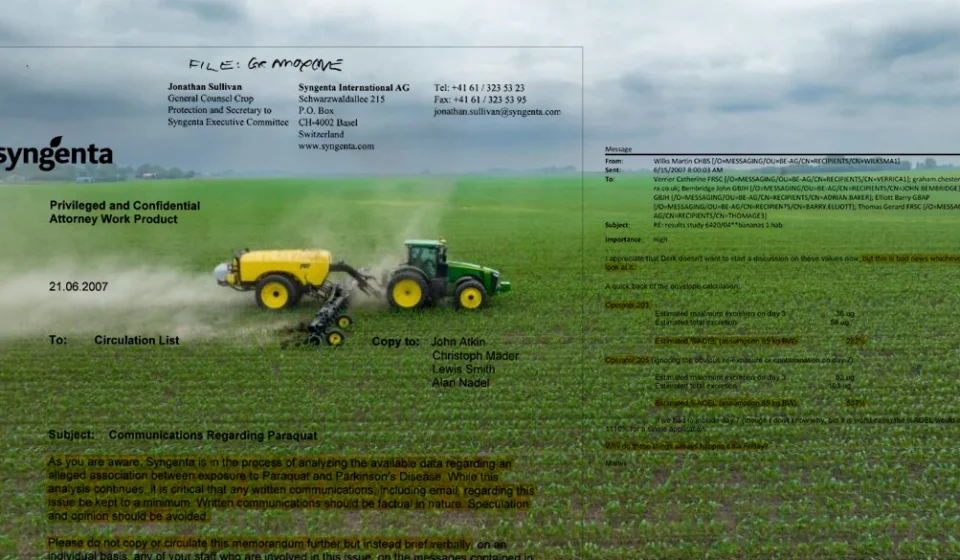
- 2007–2008: The company intensified its efforts to "brush aside" negative findings. Internal emails warned staff against putting sensitive discussions in writing, urging them to communicate "verbally" to avoid leaving a paper trail.
- 2011–2016: Syngenta engaged in the development of "independent" research. Documents show the company hired consultants to write papers that minimized the link between pesticides and Parkinson’s, often while secretly providing editorial input and financial support. A 2016 study was described by internal staff as "invaluable in supporting our work" and was published "just in time."
- 2021: Syngenta settled a batch of lawsuits for $187 million without admitting liability.
- 2026: In a significant reversal, the company announced it would cease global production of paraquat, citing market factors rather than safety concerns.
Supporting Data: The "Bad News" Files
The most striking revelations concern the data Syngenta possessed but allegedly chose not to share with the EPA. Under the Federal Insecticide, Fungicide and Rodenticide Act (FIFRA), manufacturers are legally obligated to report any "unreasonable adverse effects" discovered regarding their products.

Records indicate that Syngenta failed to report:
- Surfactant Toxicity: Since the 1970s, the company knew that mixing paraquat with surfactants—a common practice among farmers to increase the chemical’s effectiveness—significantly accelerated absorption into the bloodstream and increased toxicity.
- Skin and Nasal Absorption: Internal studies on animal models showed that the herbicide could permeate skin and membranes far more readily than previously disclosed.
- The "FAME" Study Analysis: When a government-funded study in 2011 (the Farming and Movement Evaluation, or FAME) found a strong association between paraquat and Parkinson’s, Syngenta commissioned its own secret analysis. While the analysis confirmed the "robustness" of the government’s findings, the company labeled the report "Attorney-Client Work Product" and never shared it with the EPA.
Official Responses and the Regulatory Gap
The EPA has faced severe criticism for its reliance on industry-provided data. In response to the revelations, the agency issued a statement noting that it "cannot speculate" on how the withheld information would have changed its regulatory stance. The agency emphasized that companies are legally required to report adverse effects and that "failure to comply is a direct violation of federal law."
Syngenta, for its part, maintains its innocence. A spokesperson stated that the company "has never knowingly failed to provide regulators with relevant and required information" and that the documents cited in litigation are either irrelevant to the U.S. market or have been misinterpreted by plaintiffs’ attorneys. The company insists that its internal studies on surfactants and toxicity were not submitted because they did not reach the threshold of "regulatory concern."

However, experts like Dr. Tracey Woodruff, a professor of epidemiology at Stanford University, argue that the systemic failure is clear: "When the pesticide companies know from their own studies that their pesticides are harmful and don’t tell the public or regulators, then they are knowingly contributing to people getting sick and dying."
Broader Implications: A System in Crisis
The paraquat saga serves as a haunting case study in the vulnerabilities of the American regulatory system. Critics, including Dr. Ted Schettler of the Science and Environmental Health Network, argue that the EPA’s reliance on industry data creates an inherent conflict of interest. Because the agency lacks the budget and, in some cases, the institutional capacity to conduct its own independent toxicology studies, it is forced to act as an arbiter of data that it does not fully verify.
This problem is compounded by the recent U.S. Supreme Court ruling that positions the EPA as the preemptive authority for pesticide labeling. If the EPA does not mandate a warning based on the data it possesses, individual states—like Vermont and California, which have attempted to restrict or ban the chemical—may find their hands tied by federal preemption.

Furthermore, the "stealth" nature of corporate influence, as seen in the hiring of third-party consultants to write "independent" papers, undermines the credibility of the entire agricultural science field. By manufacturing doubt and "brushing aside" legitimate science, Syngenta may have successfully extended the life of a product for decades, effectively trading public health for market share.
As lawsuits continue to wind through the courts, the legacy of paraquat remains a stark reminder of the dangers of "regulatory capture." While the chemical is finally being phased out, the thousands of people currently living with Parkinson’s disease face a life-altering reality that, according to these internal records, might have been avoided had transparency been prioritized over profit.
The story of paraquat is not merely a tale of a toxic chemical; it is a story of a system that, until the truth was forced into the light by litigation, failed to protect those it was designed to serve.