





















































By [Your Name/Journalistic Staff]
In the quiet suburbs of the Twin Cities, Century College, a two-year institution serving roughly 8,700 students, has become an unlikely frontline in a high-stakes digital war. While faculty focus on syllabi and financial aid officers manage scholarships, a dedicated portion of the college’s staff is engaged in a relentless, 60-hour-a-week battle against invisible adversaries: “ghost students.”
These are not students in any traditional sense. They are sophisticated criminal syndicates utilizing stolen or synthetic identities to exploit the federal financial aid system. By enrolling in online courses just long enough to trigger the disbursement of federal grants and loans, these actors drain millions from the public coffers before vanishing into the digital ether.
As the Minnesota State system of 26 colleges and seven universities grapples with this pervasive threat, the struggle highlights a growing tension between the open-access mission of community colleges and the harsh realities of modern cybercrime.
The Anatomy of a Scam: A Growing National Threat
The modus operandi of ghost student fraud is chillingly efficient. Criminals use dark web-purchased personal information—Social Security numbers, dates of birth, and addresses—to complete the Free Application for Federal Student Aid (FAFSA). Once the aid is approved and the “student” is enrolled, the Department of Education releases the funds to the institution. The college deducts tuition and fees, and the remaining balance—often intended for books, housing, and living expenses—is deposited directly into bank accounts controlled by the perpetrators.
This is not a localized nuisance; it is a national epidemic. The U.S. Department of Education estimates it has successfully blocked nearly $90 million in fraudulent aid attempts, yet billions more are believed to be at risk. From Detroit to North Carolina, federal prosecutors are tallying multi-million dollar fraud schemes that leverage hundreds of institutions simultaneously.

For community colleges, the vulnerability is inherent. Their mission is to be accessible, often utilizing open-enrollment policies that prioritize speed and ease of access. When the pandemic forced a rapid, mandatory pivot to online learning, the barriers to entry lowered further, providing the perfect cover for these digital interlopers.
Chronology of a Crisis: From Anecdote to Systemic Failure
The alarm was first sounded not by automated security software, but by educators in the classroom. Joe Haker, a history professor at Century College, first identified the anomaly three years ago. His suspicion was piqued when a student in his gender studies course submitted an assignment nearly identical to one turned in by a student in his history course.
“I thought, ‘Well, that’s weird. That probably could only happen if they were the same person,’” Haker recalled.
His intuition was correct. Investigations revealed that nine students were, in fact, the same individual. By this past summer, Haker estimated that up to a third of his 90 online students were potentially fraudulent. “It’s so maddening,” he said. “You can’t help but feel very, very strange when you realize that this student you’re devoting time to is just scamming.”
The situation at Century College serves as a microcosm for the Minnesota State system. While individual colleges have been forced to innovate their own defenses—such as using IP address tracking and manual ID verification—the lack of a unified, systemic response left many campuses exposed. In 2023, the system formed a work group on enrollment fraud, a body later formalized by the state Legislature, which finally published a comprehensive report this past January.
Supporting Data: The Hidden Costs
Quantifying the damage remains a significant challenge. The Minnesota State system, which serves over 290,000 students annually, reported flagging 2,696 financial aid applications as fraudulent or potentially fraudulent during the 2025-26 academic year. While this is a marked decrease from the 7,715 flagged the previous year, the true fiscal impact remains obscured by privacy and security concerns.

The Department of Education has attempted to bridge the data gap, with Secretary Linda McMahon claiming in a 2025 letter to Governor Tim Walz that 1,834 fake students in Minnesota had siphoned $12.5 million in taxpayer-funded aid. However, the lack of granular data behind that figure has left state officials frustrated. Craig Munson, who oversees information security for the Minnesota State system, admitted he could not verify the $12.5 million estimate, noting that the system’s 33 schools likely represent only a fraction of that total.
At the institutional level, the numbers are stark. Sources close to Century College indicate that as much as $500,000 in federal aid was paid out to suspected fraudulent actors in a single year. The cost is not just financial; it is a profound drain on human capital. Employees are diverted from student support to forensic data analysis, a trend that is becoming the new normal for higher education administrators.
Official Responses and the Quest for Automation
The Minnesota State system is currently in the process of a major defensive pivot. This spring, the state Legislature allocated $3 million toward a new, automated identity verification system. This funding is intended to provide a robust, systemwide defense, moving away from the "patchwork" of individual college efforts.
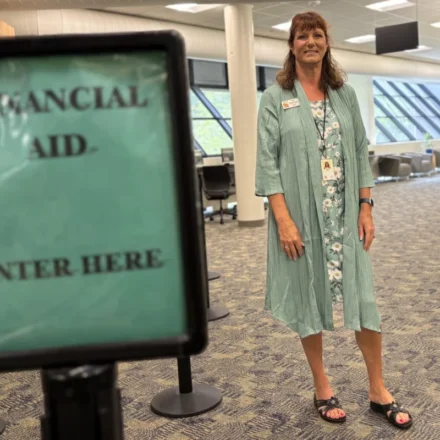
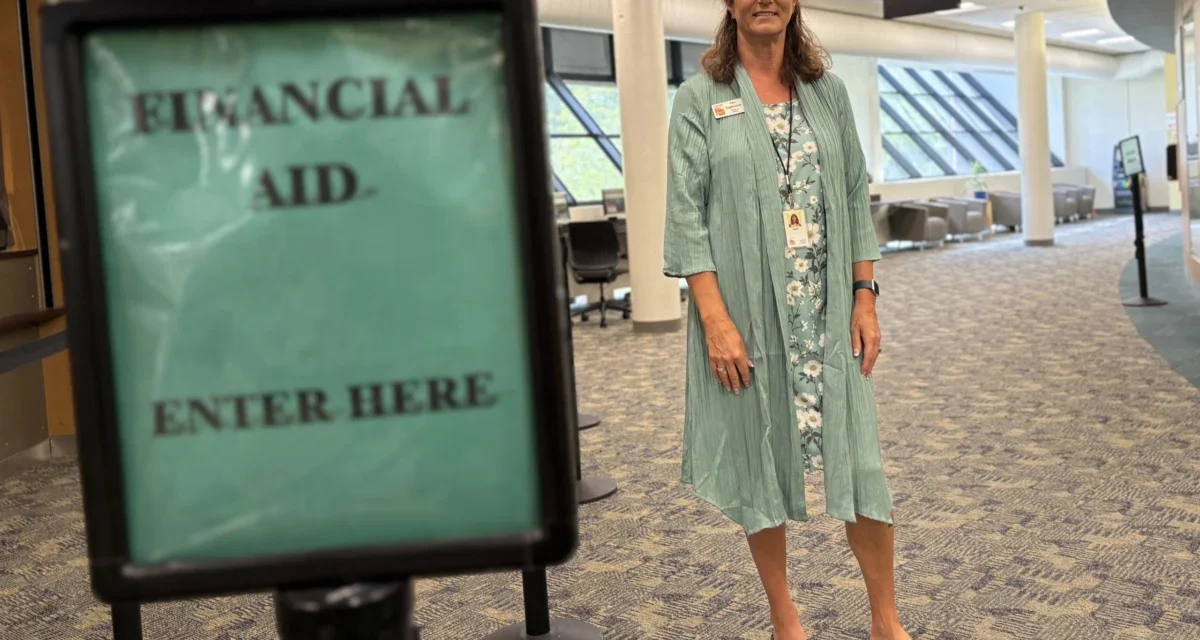
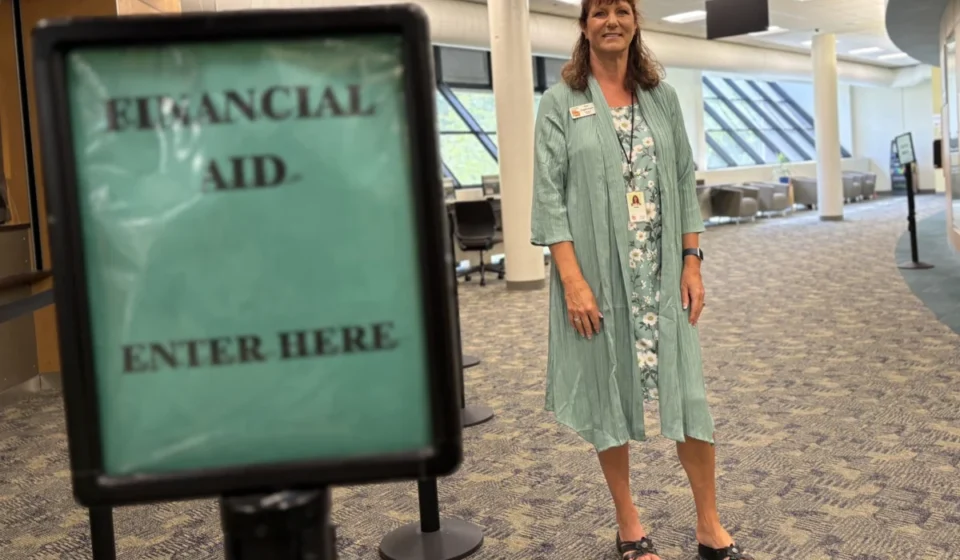
“We’re doing everything we can to correct it,” said Pam Engebretson, Century’s financial aid director. “We’re as much of a victim as anyone else. This is not a Century College problem; it’s a system office problem, and we need a system office solution.”
The proposed solution involves a more sophisticated verification process, likely requiring high-risk applicants to provide government-issued identification and participate in real-time, on-camera identity verification. However, the path forward is fraught with complexity. There is a constant fear that over-securitization could inadvertently create barriers for legitimate, vulnerable, or non-traditional students who need these services most.
Furthermore, the technology landscape is a moving target. Maurice Simpkins, founder of AMSimpkins & Associates, a firm that assists colleges in fighting fraud, notes that his client base has exploded from six schools in 2023 to over 500 today. “Fraud trends change weekly, sometimes daily, sometimes hourly,” Simpkins warned. “A security system that works today can be rendered obsolete by tomorrow.”

Implications for the Future of Higher Education
The rise of the "ghost student" forces a reckoning with how public institutions verify identity in an increasingly digital, anonymous world.
For faculty like Mark Grant at Dakota County Technical College, the frustration lies in the ambiguity of their role. Without clear, consistent directives from the system, professors are forced to act as amateur detectives. Some require students to wave at cameras; others have requested video-based participation to prove existence.
“We have campuses that are doing an enormous amount because they have the resources,” Grant noted. “We have campuses that are less equipped because they have fewer resources.”
This disparity is the central concern for state lawmakers. Senator Heather Gustafson, who sponsored the legislation to formalize the fraud-prevention work group, argues that Minnesota must send a clear signal: “We are not an easy target anymore, and people should know that.”
However, as the system prepares to pilot its new automated tools, the anxiety remains high among enrollment managers like Heidi Aldes of Minneapolis College. Having previously experimented with, and then scrapped, an outside verification vendor in favor of an internal process, she remains wary of the transition. “We’re doing everything we can on a local level, and any systemic changes that maybe alleviate some of the manual work we’re doing would be awesome,” she said.
Conclusion: A Delicate Balance
The battle against ghost students is far from won. It is a war of attrition where the opponents are constantly evolving, and the stakes involve not only millions of dollars in federal aid but the integrity of the academic system itself.

As Minnesota moves toward a centralized, automated verification model, the challenge will be to secure the "front door" of the university without locking out the very students the system was built to serve. For now, the "ghosts" remain in the machine, and until the technology and policy catch up, the vigilance of staff like Joe Haker and Pam Engebretson remains the most effective, if imperfect, line of defense.
The goal, according to Munson, is to drive the number of successful fraudulent claims as close to zero as humanly possible. Until then, the institutions of higher learning in Minnesota—and across the nation—will continue to operate under the shadow of a threat that is as persistent as it is invisible.