























































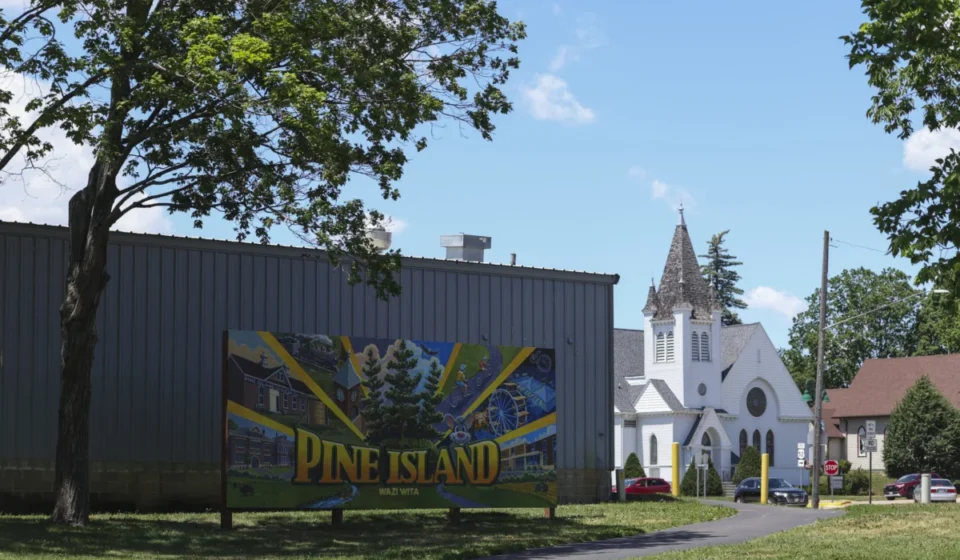

Pine Island, MN – Driving down a quiet dirt road that skirts a vast agricultural field, Aubree Derksen describes her predicament with a powerful biblical analogy: feeling like David pitted against Goliath. Her Goliath is Google, the omnipresent tech giant, collaborating with a developer to transform this tranquil rural landscape into a hyperscale data center, a colossal monument to the digital age. From her nearby Pine Island home, conspicuously adorned with anti-data center signage, Derksen spearheads a fervent local opposition to these ambitious plans.
Derksen is not alone in her battle. She has found steadfast allies within her community and across the state, forming a burgeoning grassroots coalition of Minnesotans. This diverse collective is united in its mission to halt or significantly regulate data center projects not just in Pine Island, but also in Farmington, Hermantown, Monticello, Faribault, and other cities where similar developments loom. Their core contention is that local governments, often dazzled by the glittering promises of economic development, are failing to adequately address resident concerns regarding the profound health, environmental, and resource-management risks that these energy- and water-intensive facilities pose.
Despite the vociferous protests and organized advocacy, many proposed developments have navigated local regulatory processes with unsettling ease over the past two years. Only the intervention of court orders, as seen in Pine Island and Faribault, has managed to force a pause. At a higher legislative echelon, a raft of bills introduced last session, aimed at reining in data center proposals through moratoriums and greater transparency, ultimately failed to pass. "That was incredibly disappointing," Derksen stated, reflecting on the legislative setbacks.

However, the upcoming campaign season has ignited a new spark of hope and strategic opportunity. With city, county, and state offices across Minnesota poised for elections this fall, Derksen and her allies are determined to elevate data centers to a pivotal electoral issue. "This is the new single-issue voter," she asserted, predicting a shift in political discourse. "It’s not going to be abortion or LGBTQ or immigration issues. I think it’s going to be data centers, and I think that’s something both parties are going to have to reckon with."
The Unfolding Conflict: A Chronology of Resistance
The struggle against hyperscale data centers in Minnesota is a multi-faceted narrative, marked by initial public outcry, legislative hurdles, and a recent pivot towards electoral mobilization. The "reckoning," as Derksen terms it, began to manifest palpably at the DFL (Democratic-Farmer-Labor) and GOP (Republican) state conventions held last month.
Early Warning Signs and Legislative Frustration:
The initial proposals for these massive data centers, often shrouded in secrecy due to non-disclosure agreements (NDAs) signed by local officials, began to surface in various Minnesota communities. Residents, sensing an existential threat to their rural character and natural resources, quickly organized. However, their protests often met with a bureaucratic wall. Local government bodies, keen on attracting investment and the promise of jobs and tax revenue, often greenlit projects with minimal public input or environmental scrutiny. This fast-tracking led to widespread frustration, exemplified by the legal challenges in Pine Island and Faribault, where residents successfully secured court-ordered pauses, buying precious time for further advocacy.

Recognizing the systemic nature of the problem, activists turned their attention to the state legislature. Bills were introduced seeking statewide moratoriums on new data center construction, mandates for comprehensive environmental impact assessments, and greater transparency in development processes, particularly regarding NDAs. The failure of these legislative efforts last session was a significant blow, leaving opponents feeling unheard and unrepresented by their state lawmakers.
Grassroots Activism Takes Center Stage:
The legislative disappointment, however, did not dampen the resolve of the burgeoning movement; instead, it galvanized it. Figures like Aubree Derksen, a former Minneapolis resident who moved to Pine Island seeking a quieter life, and Cathy Johnson, a retired teacher turned activist from Farmington, embody this transformation. Neither was a "local government gadfly" before the data center proposals emerged. Now, they are key organizers, testament to the profound impact these projects have had on ordinary citizens. Johnson, who leads the "Coalition for Responsible Data Center Development," articulated her motivation, "I was really enjoying my retirement. It just felt like these are such egregious projects that I could not just sit by. I needed to be involved." Her entry into the cause was driven by an environmentalist perspective, viewing data centers as an unnecessary and unsustainable drain on local energy and water resources.
A Bipartisan Political Awakening:
The shift in strategy towards electoral politics gained significant momentum at the recent state party conventions. At the DFL gathering, two data center resolutions garnered substantial support on platform ballots. A call for a statewide moratorium secured an impressive 64% of votes, while a more conciliatory resolution, focusing on tighter regulations (and deemed more palatable to labor unions, who often see construction jobs as a benefit), received 76% support. This demonstrates a clear desire within the DFL for action, albeit with internal debates on the severity of the measures.

Remarkably, the issue transcended traditional partisan lines. While the Minnesota Republican convention may not have focused on data centers with the same intensity as the DFL, platform committee members nonetheless adopted a resolution advocating for a "data center pause." This bipartisan convergence highlights the unique nature of the issue, which taps into concerns about local control, environmental preservation, and fiscal prudence that resonate across the political spectrum. Sarah Mooradian, government relations and policy director at CURE, a Montevideo-based nonprofit tracking data center issues, affirmed this trend: "(The DFL platform votes) were a pretty good indicator of what’s happening statewide. We know how bipartisan it is."
Beneath the Surface: The Environmental and Economic Debate
The core of the opposition to data centers lies in deeply held concerns about their environmental footprint and the skepticism surrounding their long-term economic benefits. These "hyperscale" facilities, designed to power the vast infrastructure of the internet, artificial intelligence, and cloud computing, come with immense demands that can drastically alter local ecosystems and community character.
Resource Demands: Water, Energy, and Land:
At the forefront of environmental concerns are the staggering resource requirements of modern data centers.

- Water Consumption: Data centers require enormous quantities of water, primarily for cooling their legions of heat-generating servers. These facilities can consume millions of gallons of water daily, often drawing from local aquifers or municipal water supplies. This demand raises serious questions about sustainable water management, particularly in regions prone to drought or with existing agricultural needs. The impact on groundwater levels, the health of local rivers and lakes, and the availability of water for human consumption and farming are critical considerations that opponents argue are not adequately addressed by developers or local governments.
- Energy Consumption: Equally significant is their insatiable appetite for electricity. A single hyperscale data center can consume as much power as a small city. This places immense strain on existing energy grids, potentially necessitating new power plant construction or significant upgrades to transmission infrastructure. While developers often tout partnerships with renewable energy providers, the sheer scale of consumption means that a substantial portion of the energy often still comes from fossil fuels, or displaces renewable energy that could otherwise power homes and businesses. Xcel Energy, a major utility, being a platinum sponsor of local events alongside Google, highlights the embedded nature of these projects within the regional energy landscape.
- Land Use and Ecological Impact: The transformation of rural fields and agricultural land into sprawling industrial complexes represents a permanent alteration of the landscape. For residents like Aubree Derksen and Rodney Lanners, this means the loss of natural beauty, agricultural productivity, and crucial habitats. Derksen monitors native plants, birds, and pollinators in her backyard, and cherishes the sight of bald eagles and the Northern Lights. The construction and operation of massive facilities will inevitably disrupt these delicate ecosystems, fragment habitats, and reduce biodiversity. The visual impact alone, converting open vistas into monolithic structures, is a profound concern for those who value their rural surroundings.
Quality of Life: Noise and Light Pollution:
Beyond the macro-environmental impacts, data centers also pose direct threats to residents’ quality of life.
- Noise Pollution: The constant hum and drone from thousands of cooling fans and backup generators can be a pervasive source of noise pollution. For those who moved to rural areas seeking peace and quiet, this incessant mechanical sound can be unbearable, disrupting sleep, outdoor activities, and the overall tranquility of their homes. Derksen worries, "If this were to get built, with the noise, with the light, are we still going to be able to hear the birds?"
- Light Pollution: Hyperscale data centers operate 24/7, requiring extensive exterior lighting for security and operation. This contributes significantly to light pollution, obscuring natural night skies, impacting nocturnal wildlife, and diminishing the very reason many choose to live in less populated areas – to enjoy the stars in silence.
Economic Promises vs. Long-Term Reality:
Developers and their proponents frequently emphasize the economic benefits of data centers: job creation, property tax revenue, and local investment. However, opponents and some local officials are increasingly skeptical of these claims.
- Job Creation: While data center construction does generate temporary jobs for skilled trades, the long-term operational workforce is typically small, highly specialized, and often recruited from outside the local area. Mayor Tom Berg of Lonsdale, who testified at the Capitol against secretive agreements, articulated this skepticism, noting that most jobs would be for construction, "providing only a temporary benefit to the local economy."
- Property Tax Revenue: The promise of substantial property tax revenue is often a primary draw for cash-strapped municipalities. However, critics argue that these revenues might "dry up in the long-term," especially as developers often negotiate significant tax abatements or incentives. This can leave cities "overextended with an empty industrial building" if the facility becomes obsolete or its tax benefits expire without a sustainable local economic base. Berg bluntly states, "Praying for a boom is just not good fiscal responsibility."
- Non-Disclosure Agreements (NDAs): A persistent point of contention is the widespread use of NDAs, which often bind local officials to secrecy during the initial stages of data center negotiations. These agreements prevent public discussion and scrutiny of projects until they are well underway, fostering distrust and undermining democratic processes. Berg, a vocal opponent of NDAs, believes they are "eroding public trust in institutions." This lack of transparency is seen as antithetical to good governance and community engagement, fueling public resentment and suspicion.
Official Responses and Strategic Shifts
The growing public opposition and the emerging bipartisan consensus are beginning to influence official responses at both local and state levels, leading to crucial strategic shifts in how these projects are approached.

Local Government Moratoriums: A Path Forward:
A number of Minnesota cities, witnessing the controversies unfolding elsewhere, have taken proactive steps to pause or regulate data center developments.
- Rosemount: Perhaps the most notable example is Rosemount, a southeast Twin Cities suburb. While Meta is actively constructing a data center there, the city has commendably imposed a moratorium on any new projects beyond the current one. This demonstrates a recognition of the need for careful planning and resource management once the initial enthusiasm for development has been tempered by experience.
- Lonsdale: Approximately 40 miles south of Minneapolis, Lonsdale imposed a one-year moratorium in May. Mayor Tom Berg explained their reasoning: "Lonsdale saw other cities entering into conversations with developers before regulations were in place and didn’t want to follow suit." He emphasized the importance of a pause to develop robust regulations with "community feedback." This proactive approach is a model for other towns seeking to gain control over development.
- These local moratoriums are a direct outcome of community pressure and provide tangible examples for activists like Rebecca Gilbertson in Hermantown, where Google is pursuing "Project Loon." Her group is actively "exploring its options on how to get involved at the local government level" and is committed to "making it an election issue."
Electoral Strategy and State-Level Implications:
The focus on elections is not merely about local control; it extends to the state legislature, where shifts in party control could revive proposals for moratoriums and stricter regulations that failed last session.
- Pine Island’s Local Races: Pragmatically, the opponents of "Project Skyway" in Pine Island need to elect at least three of the five City Council members who align with their views. With three local races on the ballot this fall, including a crucial mayoral race (following the recent resignation of former Mayor David Friese), residents are actively working to identify and support sympathetic candidates.
- Legislative Battlegrounds: Data center opponents are closely watching legislative races in communities affected by proposed developments. For instance, Mayor Berg and Cathy Johnson reside in a battleground Senate district south of the Twin Cities metro, currently held by Republican Bill Lieske. Johnson openly supports Lieske’s DFL challenger, Mark Legvold, believing he will be more aligned with her stance on data centers. In northern Minnesota, Gilbertson’s community of Hermantown is part of another high-stakes swing district, where DFL Senator Grant Hauschild and Republican Representative Natalie Zeleznikar are defending their seats. The outcome of these races could significantly alter the legislative landscape, potentially paving the way for statewide policies on data center development.
While positive changes may not be achievable in every district, activists are strategically targeting opportunities to elect candidates willing to prioritize community and environmental concerns over unchecked industrial expansion.

The Stakes for Minnesota’s Future
The fight over data centers in Minnesota is more than a series of isolated land-use disputes; it represents a fundamental struggle over the character and future trajectory of communities, pitting the allure of technological advancement against the preservation of natural heritage and local identity.
Preserving the Soul of Rural Minnesota:
For residents like Aubree Derksen, who moved to Pine Island six years ago, the appeal lies in its unique blend of rural tranquility and accessibility. While Rochester, a rapidly developing regional center, is only a 20-minute drive away, Pine Island, with its population of about 3,800, has retained its small-town charm. Derksen’s fight is deeply personal. It’s about protecting the "little things" that define her community: the vibrant native plants, the diverse birds and pollinators in her backyard, the breathtaking sight of the Northern Lights from her patio, and the majestic bald eagle’s nest overlooking a local cemetery. Her poignant question, "If this were to get built, with the noise, with the light, are we still going to be able to hear the birds?" encapsulates the fear of losing an irreplaceable way of life. For many, moving is not an option, making the fight for their homes a desperate one. "We can’t afford to move, so we don’t have an escape plan," she noted.
Rodney Lanners, 74, a longtime Pine Island resident, echoes this sentiment. From his backyard, he cherishes the sight of raptors soaring, songbirds at his feeders, and the quiet contentment of a home he’s lived in for 26 years. "I’m a little bit in heaven here," he mused, a man who would clearly prefer tending his garden to attending contentious public meetings. For Lanners and countless others, these projects threaten the very essence of what makes "home" feel like home. They are drawn into activism not by choice, but by necessity, when they perceive a profound risk to their community’s character and landscape.

The Power of the "Single-Issue Voter":
Derksen’s assertion that data centers will define the "new single-issue voter" is gaining traction. The issue’s capacity to transcend traditional political divides, uniting environmentalists, rural landowners, fiscal conservatives, and local control advocates, makes it a potent force. The sheer scale of resources wielded by tech giants like Google and Meta, evident even in their "platinum sponsorships" of local events like the Pine Island Cheese Festival, highlights the unequal playing field. Yet, the collective voice of energized residents, often operating on shoestring budgets, is proving surprisingly effective in challenging these powerful entities.
This dynamic suggests a broader implication for Minnesota’s political landscape. Candidates, regardless of party affiliation, will increasingly be forced to take a clear stance on data center development, recognizing that their positions could sway significant blocs of voters. This could reshape local and state elections, moving away from purely national or ideological issues to address concrete, localized concerns about quality of life and environmental stewardship.
In essence, the unfolding struggle in Minnesota over data center development serves as a crucial case study for communities nationwide. It underscores the difficult balance required between embracing technological advancement and safeguarding local environments, resources, and the unique character of place. As residents like Derksen and Lanners continue their uphill battle, they are not just fighting for a field in Pine Island; they are fighting for a vision of Minnesota’s future where progress does not come at the irreparable cost of its cherished landscapes and the well-being of its people.