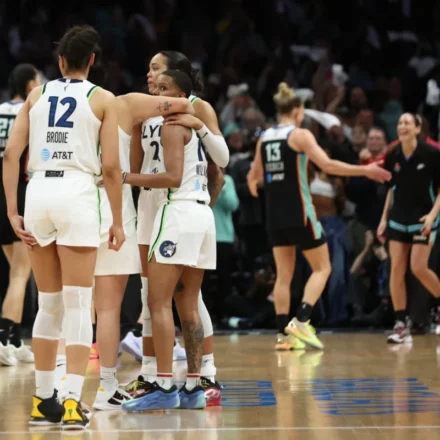


























































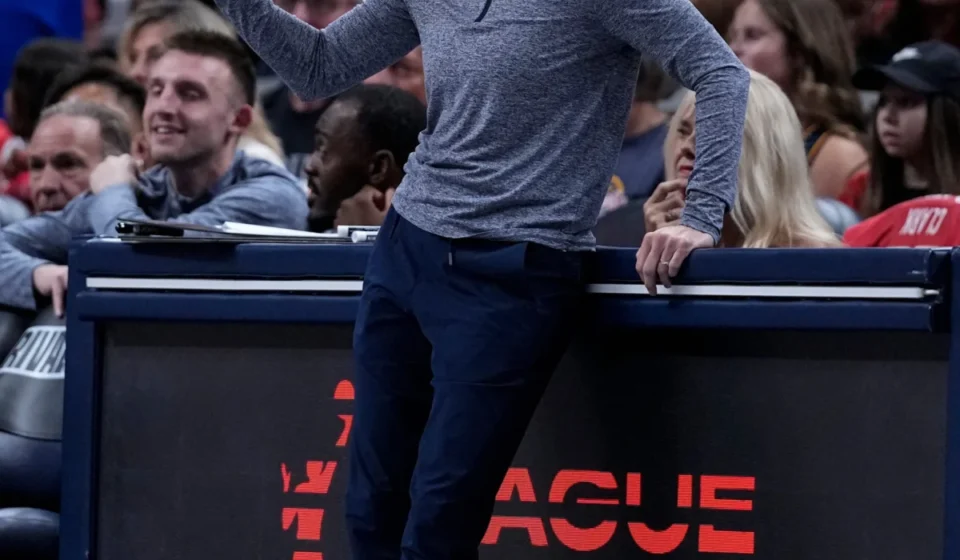

For decades, the gospel of basketball—at both the collegiate and professional levels—has been written in the language of grit, stops, and defensive rotations. The axiom "defense wins championships" has served as the bedrock of dynasties, including the Minnesota Lynx’s golden era in the 2010s under head coach Cheryl Reeve. However, as the 2026 WNBA season barrels toward the playoffs, that foundational belief is being challenged by a breathtaking, high-scoring offensive evolution that has turned the league into a showcase of pace and precision.
The New Reality: Scoring at an Unprecedented Clip
The WNBA is currently experiencing a historic offensive surge. Night after night, scoreboards across the league flash triple digits, a phenomenon once reserved for rare, outlier performances. This isn’t merely a temporary trend; it is a fundamental shift in how the game is being played.
The Minnesota Lynx, currently holding a stellar 31-8 record, have become an unlikely poster child for this transformation. According to data provided by team and league analysts, the Lynx have surpassed the 100-point threshold 11 times this season—more than double their previous club record. This surge places them among the most prolific offensive units in the league’s 30-year history, trailing only the Indiana Fever, who shattered records with 18 such performances this year.
Furthermore, efficiency has followed volume. The Lynx have shot 50% or better from the field in 18 separate games this season, tying the 2014 Phoenix Mercury for the second-most in league history. They remain within striking distance of the all-time record of 21, set by the Las Vegas Aces in 2023. This is not just a Minnesota trend; across the league, teams are averaging 87.3 points per game and hitting 45.3% of their shots—both all-time high marks for the WNBA.
Chronology of a Change: The Path to "Freedom of Movement"
The sudden explosion in scoring did not happen by accident. Following widespread frustration among players and fans regarding excessive physicality that often stifled offensive flow, the WNBA established a special task force during the last offseason. Coach Cheryl Reeve was a key voice on this committee, which was tasked with reviewing the enforcement of existing rules.
The objective was simple but impactful: enforce the rulebook as written. By focusing on "freedom of movement," officials began clamping down on the clutching, grabbing, and hand-checking that had historically restricted perimeter players.
While the early weeks of the season saw an uptick in foul calls and extended game times as players and officials adjusted to the tighter officiating, the long-term effect has been undeniable. The game has opened up. Players are now able to navigate the court with greater fluidity, leading to faster pacing and more sophisticated offensive sets.

Data-Driven Insights: Why Offenses Are Exploding
Beyond the officiating changes, the caliber of play has reached new heights. The pipeline of talent arriving from the collegiate level is more refined and ready for the professional pace than in any previous era.
"The players are better than they’ve ever been," says Indiana Fever head coach Stephanie White. "The quality of depth is better than it’s ever been."
White notes that the "actions"—the complex, choreographed movements of screens, rolls, and cuts—have become more intricate. In previous years, a defensive player might have been tasked with guarding one or two primary actions during a possession. Today, teams are running "actions that lead to actions," forcing defenses to make a series of high-level decisions in rapid succession.
This is most evident in the Indiana Fever’s explosive mid-summer run, where they recorded six consecutive games of 100+ points—a feat never before seen in the WNBA. With stars like Kelsey Mitchell and Caitlin Clark leading the charge, the Fever have become the standard-bearers for this high-octane style of basketball.
Official Perspectives: The Philosophy of Defense vs. Flow
Despite the league-wide push toward offense, the coaching fraternity remains divided on whether a team can truly capture a title without elite defensive chops.
Golden State Valkyries head coach Natalie Nakase, who was honored as the WNBA Coach of the Year last season, acknowledges the beauty of the current offensive climate but remains rooted in her defensive principles. When asked if a team could win it all without a top-tier defense, Nakase didn’t rule it out, but she offered a sobering reminder.
"If you go look at the playoffs and see the finals, what’s the score?" Nakase asked. She pointed to the recent history of the WNBA Finals: the Las Vegas Aces’ sweep of Phoenix and the New York Liberty’s five-game series victory over the Lynx were both defined by defensive intensity rather than track meets. "That’s why we hang our hat on defensive execution," she added.

Cheryl Reeve, while embracing the league’s evolution, echoes this sentiment. "I don’t know very many coaches that think you can really get somewhere without having a team that defends," Reeve remarked. She views the current challenge as a testament to how much more difficult it has become to be a "good" defensive team in such a dynamic environment.
The Implications: The Monday Night Lesson
The recent clash between the Lynx and the Golden State Valkyries served as a case study for the value of defense. Entering the game, the Lynx were riding a six-game winning streak and looking to clinch the No. 1 seed. Instead, they were met by a Golden State squad that utilized a sophisticated mix of zone and man-to-man defense.
The result was the Lynx’s lowest-scoring output of the season: 66 points. The Valkyries successfully clogged the passing lanes, neutralized the creative impact of rookie sensation Olivia Miles—who finished with a season-low eight points and four turnovers—and held the Lynx to a dismal 35.6% from the field.
For the Lynx, the game was a stark reminder of their own defensive slippage. While they began the season as a defensive powerhouse, holding opponents under 40% shooting regularly, that consistency has waned. Since June 28, the Lynx have held an opponent under that 40% mark only once in 20 games.
Conclusion: The Playoff Horizon
As the WNBA heads toward the postseason in late September, the central narrative will be whether the league’s high-octane offensive juggernauts can maintain their pace when the game slows down.
While the "freedom of movement" era has undoubtedly made the game more exciting, more complex, and more productive, the postseason often serves as a great equalizer. When shots stop falling—as Stephanie White noted they inevitably will—teams must rely on their defensive identity to grind out victories.
The 2026 season has proven that offense can fill arenas and capture headlines, but as the playoffs approach, the old guard of coaching remains convinced that the championship trophy will once again be hoisted by the team that remembers how to get a stop when it matters most. The lesson from Monday’s game in Minneapolis is clear: offense might win games, but defense remains the ultimate prerequisite for history.