


























































By [Your Name/Journalistic Desk]
In the quiet, residential streets of St. Cloud, Minnesota, Cori Roberts keeps a folder of records—a paper trail of a battle she never asked to fight. Four years ago, while living in a rented basement, the recently divorced, former stay-at-home mother received a devastating diagnosis: early-stage cervical cancer. While Roberts had health insurance, the out-of-pocket costs ballooned to over $8,000. For a woman earning $41,000 a year, the bill was not just a debt; it was a life-altering crisis.
“I had my car and a basket of clothes,” Roberts recalls. “Medical bills were not something I could have afforded.”
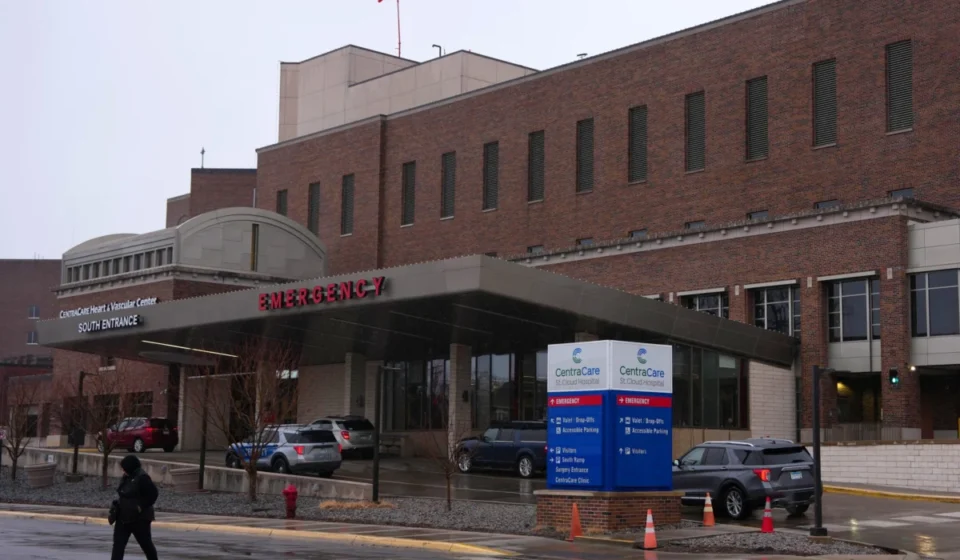
She turned to CentraCare, the St. Cloud-based nonprofit health system that treated her. As a nonprofit, CentraCare enjoys millions of dollars in federal, state, and local tax exemptions—a benefit justified by the promise to provide “charity care” to those who cannot afford their medical expenses. Yet, when Roberts reached out for help, she was told she earned too much to qualify. What followed was a two-year struggle of skipping groceries and canceling Christmas gifts to pay down $6,000 of the debt. It ended only when CentraCare sued her for the remaining balance.
Roberts’ story is not an outlier; it is a symptom of a systemic crisis. A joint investigation by the Minnesota Star Tribune and KFF Health News has uncovered that Minnesota’s hospitals—frequently touted for their world-class care—are among the least charitable in the United States.

The Disparity: Minnesota Hospitals vs. The Nation
The data is stark. Nationally, hospitals dedicate an average of 2.4% of their operating budgets to charity care. In Minnesota, that figure is roughly a third of the national average. Out of the state’s 123 general hospitals, 62 spent less than 0.5% of their operating budgets on charity care between 2020 and 2024.
CentraCare’s flagship facility, St. Cloud Hospital, stands as a prime example of this trend, devoting less than 0.25% of its budget to patient aid. To put that in perspective, for every $10,000 the hospital spends on operations, it provides a mere $25 in charity care.
“The system is not working,” says Erin Hartung, director of legal services at Cancer Legal Care, a nonprofit that assists patients burdened by medical debt. “And the burden is falling hardest on the people who are least able to bear it.”
A Chronology of Exclusion
The path to medical debt for many Minnesotans is often paved by complex bureaucratic hurdles.
- The Diagnosis: Patients like Roberts or Abby Kelley-Hands, a St. Paul special education coordinator, face sudden health crises that necessitate expensive treatment.
- The Insurance Gap: Even with coverage, high deductibles and unexpected "insurance snafus" leave patients with five-figure bills.
- The Application Maze: When patients seek aid, they are met with exhaustive requirements. Many hospitals mandate the disclosure of bank statements, retirement accounts, mortgage documents, and even the value of personal vehicles or farm equipment.
- The Denial: Due to a lack of standardized state criteria, eligibility varies wildly. One hospital might offer free care to a person earning $47,000, while another cuts off aid at $15,000.
- The Legal Escalation: When aid is denied or not properly disclosed, patients fall into debt. Hospitals then frequently resort to collections and lawsuits, despite their nonprofit status.
For Arleen Mullenax, a cancer patient who underwent surgery in Rochester, the process of applying for aid was a daunting ordeal. “I knew as a former office manager I had to stay on top of it,” she said. “But it was the most daunting thing I had to do as a patient.”

Supporting Data: Why Are Margins So Tight?
Hospital administrators argue that the picture is more nuanced than simple greed. They point to razor-thin operating margins, the rising costs of labor and supplies, and the chronic underpayment from government programs like Medicare and Medicaid, which cover a significant portion of their patient base.
“Rural hospitals like ours are often portrayed as though we are sitting on piles of cash,” says Robert Pastor, CEO of Rainy Lake Medical Center. “We are the second- or third-largest employer in town, running on razor-thin margins.”
However, state data reveals a different reality for larger systems. While some safety-net hospitals, such as Hennepin Healthcare (HCMC), are struggling to stay open, other major players like Mayo Clinic, Essentia Health, and Sanford Health maintain robust financial health. In 2024, CentraCare hospitals reported operating margins exceeding 10%, even as they continued to pursue patients for unpaid debts.
Furthermore, state figures show that Minnesota hospitals collectively write off roughly $200 million annually in "bad debt"—bills they failed to collect—while spending only $163 million on actual charity care. In 2024 alone, these institutions posted a combined net income of $2.4 billion.
Official Responses and the Attorney General’s Push
The state is beginning to push back. Minnesota Attorney General Keith Ellison has emerged as a vocal critic of current hospital practices. “There is a benefit you get from being a nonprofit hospital in the state of Minnesota,” Ellison stated. “But do the people get the benefit?”

Following an investigation into the Mayo Clinic—which found the institution was systematically discouraging patients from applying for aid—the Attorney General’s office reached a landmark agreement. The result? Mayo’s charity care spending nearly doubled, exceeding 1.5% of operating expenses in 2024.
Despite this victory, the Minnesota Hospital Association remains resistant to state-mandated standards. Spokesperson Tim Nelson argues that hospital boards are better positioned to assess the specific needs of their communities. "Adding mandates for providers across the state will not close that gap, and will only increase bureaucratic and procedural barriers," Nelson said.
Implications: The Looming Crisis of Medical Debt
The implications of this low-charity environment are dire. As the national uninsured rate rises and budget cuts potentially threaten Medicaid, charity care is becoming the last line of defense for the vulnerable.
Medical debt is not just a financial issue; it is a public health crisis. Studies indicate that the stress associated with medical debt leads to poor health outcomes and even premature death. For many, like Abby Kelley-Hands, the debt has forced a life of extreme austerity. After a $20,000 bill from the Mayo Clinic, she and her husband sold a car and moved to a life without basic appliances just to maintain her access to life-saving medication.
The Path Forward: Automatic Screening?
Legislators, including State Senator Liz Boldon, are advocating for systemic changes, such as a uniform application process and standard eligibility thresholds, similar to models already in place in Maryland and New York.

Attorney General Ellison is also pushing for a requirement that hospitals use automated screening software. This technology would identify patients who qualify for financial assistance based on existing data, removing the need for a patient to navigate a 53-question application while suffering from a chronic illness.
Some systems are already ahead of the curve. Sanford Health, for instance, uses software to identify eligible patients, ensuring that nearly 25% of their financial aid is granted without the patient having to file a formal request.
Conclusion: "A Good Person Some Grace"
As for Cori Roberts, the lawsuit against her has finally been dropped, but the emotional and financial scars remain. She was forced to borrow against her retirement savings to clear the debt—a permanent loss of future security.
Driving past the $200 million expansion at CentraCare’s campus in St. Cloud, Roberts is left with a question that echoes the frustrations of thousands of Minnesotans: "They have all the money. But they can’t grant a good person some grace?"
Until the state mandates a more transparent and accessible charity care system, the promise of the nonprofit hospital will remain, for many, a broken one—an irony that continues to haunt the very communities these institutions were founded to serve.