











































During his four-year tenure as president of basketball operations for the Minnesota Timberwolves, Tim Connelly has built a reputation as a master of course correction. He is a front-office executive who treats roster construction like a high-stakes chess match, willing to sacrifice pawns—and occasionally knights—to secure the integrity of the board. However, the sheer frequency with which Connelly has been forced to "rectify" his own gambits in recent months suggests that the Timberwolves’ championship window is being managed through a cycle of aggressive spending followed by desperate austerity.
The latest chapter in this saga arrived on the eve of the NBA Draft, when the organization executed a salary-dumping maneuver involving Julius Randle, shipping him to the Brooklyn Nets. This move, while mathematically sound, serves as a poignant indictment of the team’s recent strategic volatility.
A Chronology of Miscalculation and Correction
To understand the current state of the Timberwolves, one must look at the rapid-fire roster churn that has defined the post-Karl-Anthony Towns era. Connelly’s tenure has been marked by a series of moves designed to push the franchise into immediate contention. Yet, the fallout from these decisions has left the team perpetually re-tooling.
The early stages of this era involved shedding mid-tier bench assets—players like Bryn Forbes, Shake Milton, and Troy Brown Jr.—with relative ease. These were minor adjustments. However, the internal turmoil grew significantly with the handling of lottery pick Rob Dillingham. Less than two years after investing precious draft capital to secure a prospect intended to solve the team’s backcourt needs, Connelly authorized his departure.
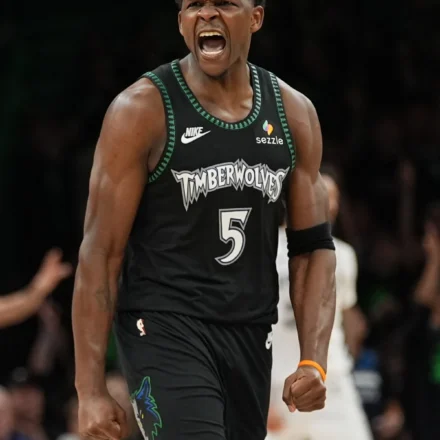
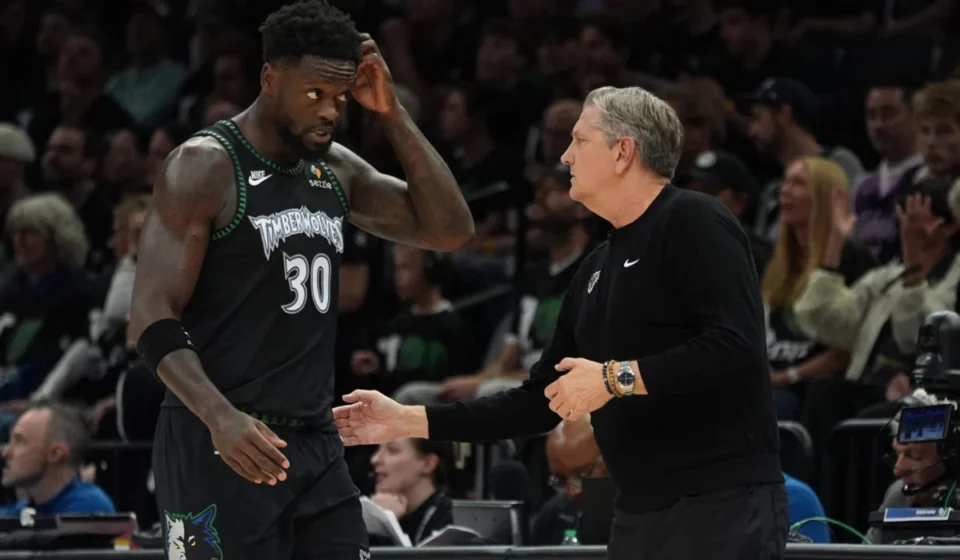
The most jarring pivot, however, concerns Julius Randle. Only one year ago, head coach Chris Finch lauded Randle as "maybe our most important player," a sentiment backed by statistics; Randle led the Wolves in assists and finished as the team’s second-leading scorer behind Anthony Edwards. Fast-forward to this Tuesday, and that same contract—once viewed as a cornerstone—was treated as a toxic asset that needed to be offloaded to provide the team with fiscal breathing room.
The Economics of the Randle Departure
The mechanics of the Randle trade were dictated by the harsh realities of the NBA’s modern collective bargaining agreement. The Brooklyn Nets, one of the few franchises with the cap space to absorb Randle’s $33 million salary for the upcoming season, became the primary destination.
To facilitate the move, Minnesota was forced to sweeten the deal, trading their 28th overall draft pick for Brooklyn’s 33rd. In a complicated three-team transaction involving the Chicago Bulls, the Timberwolves acquired power forward Mo Gueye. With only 165 minutes of NBA experience under his belt, Gueye is widely expected to be waived, rendering the player acquisition aspect of the trade effectively moot. The trade was purely a financial maneuver: the Wolves sought to escape the financial shadow of a contract that had become, in the eyes of management, an "albatross."
Supporting Data: The Shadow of the Knicks
The optics of these moves are complicated by the external success of former Timberwolves. Critics of Connelly’s tenure point directly to Karl-Anthony Towns, whose pivotal role in the New York Knicks’ recent championship run has cast a long, uncomfortable shadow over Minneapolis.
The narrative that trading KAT was necessary to sustain a young core around Anthony Edwards, Jaden McDaniels, and Naz Reid is now being scrutinized against the reality of a championship ring on Towns’ finger. While Connelly argued that KAT’s $53 million salary was incompatible with a long-term build, the trade—which netted Randle, Donte DiVincenzo, and Joan Beringer—now looks like a tactical retreat rather than a visionary realignment.
Furthermore, the decision to resign Randle last offseason, at the expense of letting Nickeil Alexander-Walker walk to Atlanta, remains a point of contention. Alexander-Walker’s subsequent ascension to NBA Most Improved Player status—performing similar playmaking duties at half the price—highlights a significant misvaluation of internal talent.
Internal Friction: The POBO and the Head Coach
While both Tim Connelly and Chris Finch have maintained a facade of unity, the cracks in the organizational philosophy have become visible. The handling of Dillingham and Randle revealed a divergence in priorities: Dillingham was clearly a "Connelly guy," a prospect favored by the front office, while Randle was firmly entrenched as a "Finch favorite."
This was not a case of open hostility, but rather a clash of tactical visions. The front office viewed the team through the lens of cap flexibility and long-term asset management, while the coaching staff sought the stability of veteran production. When the production dipped—specifically during the second round of the playoffs against the Spurs—the front office’s cold, analytical approach ultimately won out. Randle’s exit, marked by a silent departure from Target Center without speaking to the media, served as the final confirmation that his time in Minnesota had run its course.
Strategic Implications: Addition by Subtraction
Despite the criticism, there is a clear, optimistic path forward for the Timberwolves. The departure of Randle and Dillingham has paved the way for a more sustainable, high-paced future.
- Fiscal Flexibility: By shedding Randle’s salary, the Wolves successfully dipped below the first apron of the salary cap. This allows the team to utilize the "non-taxpayer midlevel exception"—essentially a $15 million "gift card" for roster upgrades.
- Trade Exceptions: The trade generated a $33.3 million trade exception, a massive tool that provides the front office with the leverage to acquire talent throughout the next calendar year.
- The Ayo Dosunmu Era: The salary dump was synchronized with the signing of Ayo Dosunmu to a 5-year, $112 million contract. Dosunmu represents the stylistic direction the Wolves are pursuing: speed, defensive intensity, and selfless ball movement.
- Opening the Door for the Core: The exit of Randle clears the path for Naz Reid to finally enter the starting lineup. After years of playing behind high-usage stars, Reid is expected to provide the defensive backbone alongside Rudy Gobert, while Jaden McDaniels will be granted the freedom to evolve into a primary playmaker.
The Championship Template
The Timberwolves are now pivoting toward a model that reflects the league’s current champions: reliance on wing depth, young two-way players, and defensive mobility. By locking up Anthony Edwards, McDaniels, Reid, Dosunmu, Beringer, and TJ Shannon for the next three years, the organization has created a core that is both young and cohesive.
The 2025-26 season was marred by "character issues" that plagued the locker room, and while Randle cannot be blamed for all of them, his presence clearly didn’t fit the defensive-minded, selfless identity the team is now trying to cultivate.
Tim Connelly’s tenure has been a series of expensive lessons. Drafting Dillingham and doubling down on Randle were undoubtedly costly mistakes—mistakes that cost the team future draft capital, including a 2031 first-round pick sent to the Spurs. Yet, the current "reset" suggests that the Wolves are no longer chasing the ghost of the KAT-Gobert experiment. They are now building a template that favors continuity over splashy acquisitions. Whether this iteration of the Timberwolves can turn this financial clarity into a Larry O’Brien trophy remains to be seen, but for the first time in years, the roster finally matches the front office’s long-term vision.