









































Minnesota’s Political Crossroads: Tumultuous Conventions Reignite Calls to Reform Century-Old Candidate Selection System

WASHINGTON, D.C. – The echoes of last weekend’s tumultuous DFL and GOP state party conventions continue to reverberate across Minnesota’s political landscape, sparking renewed and vigorous debate over the state’s deeply entrenched, yet increasingly controversial, method of choosing political candidates. A chorus of voices from both sides of the aisle is now advocating for a radical overhaul, proposing to dismantle a system steeped in over a century of tradition in favor of a more primary-election-centric approach.
Minnesota’s modern system of caucuses and endorsing conventions, formally established in 1922, is more than just a procedural mechanism; it is a foundational element woven intricately into the fabric of the state’s unique political culture. Yet, its distinctiveness also renders it an anomaly in contemporary American politics. Only eight other states across the nation, including California and Michigan, retain systems where state party conventions play a significant role in endorsing or nominating candidates. This outlier status, coupled with recent convention dramas, has intensified scrutiny and fueled calls for fundamental change.
The core of the proposed reform centers on two pivotal shifts: the abolition of endorsing conventions and the relocation of Minnesota’s primary election from its current August 11th slot to an earlier date, potentially in June. Implementing such changes would require significant political will, necessitating the approval of both the state parties themselves and the legislative body. However, the pressure for this systemic overhaul is palpably building, particularly in the wake of conventions that saw high-profile candidates either rejected by delegates or choosing to bypass the endorsement process altogether.
"Party endorsements do not produce the most electable candidates," asserts Blois Olson, a veteran political analyst and publisher of TheDailyAgenda.com, encapsulating a sentiment widely shared among reform advocates. Jessica Shaten, a DFL delegate from south Minneapolis, further articulates this concern, pointing to the delegate selection process as inherently flawed. "What the endorsement process has become is a way for extremist candidates to take control of their parties," she contends, arguing that the system grants disproportionate influence to highly motivated activists on the ideological fringes, often at the expense of broader voter appeal.
A Century of Tradition Under Scrutiny: The Genesis and Evolution of Minnesota’s Caucus System
Minnesota’s caucus and convention system traces its roots back to 1922, emerging from an era where party bosses often held sway and candidate selection lacked widespread public input. The intention was to create a more organized and democratic process for party members to coalesce around candidates and articulate platforms. The system functions as a tiered structure: it begins with local precinct caucuses, where party members gather to discuss issues, elect delegates to county and legislative district conventions, and ultimately, to the state conventions. These state convention delegates, numbering around 1,200 for the DFL and 2,000 for the GOP in recent years, are then tasked with the weighty responsibility of endorsing candidates for statewide office.
For decades, this process was largely accepted, embodying a form of "small-d" democracy that allowed dedicated party members to shape their party’s direction. It fostered grassroots engagement and ensured that candidates understood the core tenets and priorities of their party’s base. However, critics argue that what was once a mechanism for broad party engagement has, over time, transformed into a narrow funnel, concentrating power in the hands of a relatively small, self-selecting group of activists. While the local caucuses are open to many, the commitment required to navigate the full convention process means that the final delegate pool often represents a highly engaged, and often ideologically driven, segment of the party.
This inherent tension between tradition and contemporary political realities has simmered for years, occasionally boiling over into public debate. Past elections have seen candidates choose to bypass the endorsement, yet the recent conventions have brought this issue to a head with unprecedented force, forcing both parties to confront the fundamental question of who should truly select their standard-bearers.
The Tumultuous Weekend: A Chronicle of Division and Discontent
The recent state conventions for both the DFL and GOP unfolded with considerable drama, laying bare the deep fissures within each party and providing ample ammunition for those advocating for systemic change.
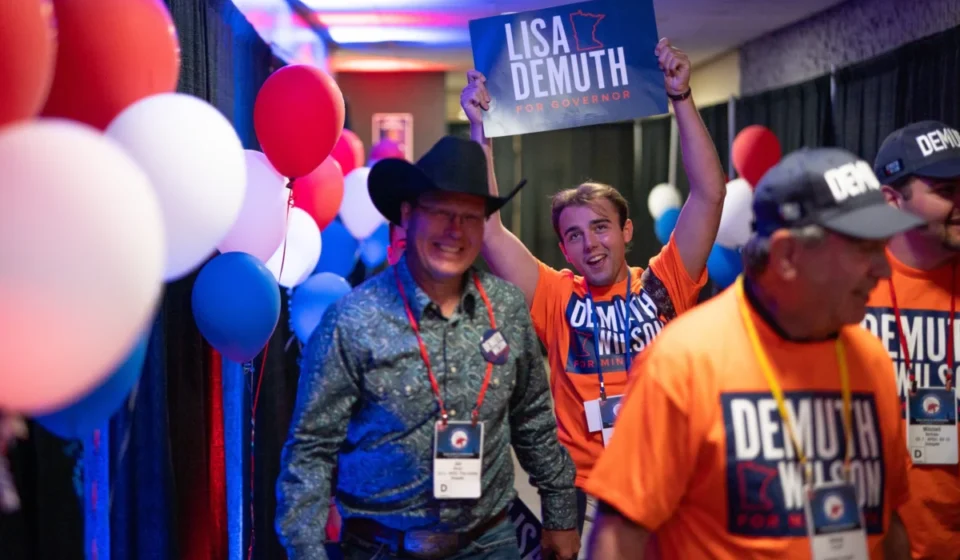
Republican Party Convention in Duluth: The GOP convention was marred by an atmosphere of distrust and procedural irregularities. Early in the proceedings, officials announced "anomalies" in a round of balloting for the gubernatorial endorsement. This revelation cast a shadow over the process, particularly when businessman Kendall Qualls, running on a platform positioned to the right of state House Speaker Lisa Demuth, surged ahead to eventually secure the endorsement. The incident fueled suspicions and highlighted the fragility of the convention’s procedural integrity.

Further deepening the party’s internal divisions, delegates rejected Michele Tafoya, a former sportscaster who was a candidate for the U.S. Senate and enjoyed significant backing from the National Republican Senatorial Committee (NRSC). Despite her national profile and establishment support, Tafoya was decisively outmaneuvered by former Navy SEAL Adam Schwarze, who garnered over 60% of the delegate votes. Both Qualls and Schwarze are perceived as more conservative and aligned with the "MAGA" wing of the Republican Party than their more moderate rivals, signaling a clear ideological preference among the attending delegates.
In a significant development following the convention’s disarray, Tafoya had already declared her intention to "not abide" by the endorsement and continue her campaign into the primary election. The balloting snafu ultimately prompted the Minnesota Republican Party on Monday night to take the extraordinary step of releasing all candidates from the endorsement process. This decision allowed Lisa Demuth, who had previously pledged to abide by the endorsement, to also proceed to the primary. MyPillow CEO Mike Lindell, another candidate, confirmed his intention to remain in the race, ensuring a crowded and potentially divisive Republican primary for the U.S. Senate seat.
Democratic-Farmer-Labor (DFL) Convention in Rochester: The DFL convention also witnessed significant internal strife. Representative Angie Craig, D-2nd District, found herself in a challenging battle for delegate support against Lieutenant Governor Peggy Flanagan in the race to succeed retiring Senator Tina Smith. Sensing an uphill battle against Flanagan’s growing momentum among delegates, Craig made the strategic, albeit risky, decision to skip the DFL convention entirely and bypass the endorsement process, opting instead to take her campaign directly to the August primary. Craig, like Tafoya on the Republican side, is generally considered the more moderate candidate in her respective race, further illustrating the convention system’s tendency to favor ideologically purer candidates.
Even the popular Senator Amy Klobuchar, who successfully secured the DFL endorsement for Governor, was not immune to the ideological currents. Despite her widespread appeal, approximately 30% of the DFL delegates cast their votes for 26-year-old progressive Kobey Layne, indicating a significant segment of the party’s base felt Klobuchar was "too moderate."
The collective outcome of these conventions is clear: the value and authority of the party endorsements have been significantly devalued. Hard-fought primary battles are now inevitable for Senator Smith’s seat in both parties and for the Republican gubernatorial nomination, setting the stage for a prolonged and potentially costly intra-party contest.
Data and Perspectives: Unpacking the Arguments for and Against Change
The calls for reform are underpinned by several compelling arguments, supported by political analysts and delegates alike.
Arguments for Abolishing Endorsements and Shifting to an Earlier Primary:
- Lack of Broad Representation: A primary criticism is that the small number of delegates (1,200 DFL, 2,000 GOP) who vote at state conventions simply do not represent the millions of registered Minnesota voters (over 3.8 million). Jessica Shaten emphasizes that the choice of favored candidates should be entrusted to the broader electorate in a primary election. "Let all the voters choose, then the parties could endorse those nominees at a (post-primary) convention," she proposes, suggesting a model where parties rally behind the primary winner.
- Outsized Influence of Activists: Political analyst Blois Olson highlights that the delegate selection process, which often involves a higher level of commitment than simply voting in a primary, tends to favor dedicated activists. This can give individuals on the far right and far left of the political spectrum an "outsized influence" in shaping who gets endorsed, potentially pushing out more moderate, broadly electable candidates.
- Tendency Towards "Extremist" Candidates: Shaten’s observation that the process has become "a way for extremist candidates to take control of their parties" resonates with the outcomes seen in the GOP convention, where more conservative candidates like Qualls and Schwarze prevailed over perceived moderates. This raises concerns that parties may nominate candidates who appeal to their base but struggle to win in a general election.
- Electability Concerns: As Olson stated, endorsements "do not produce the most electable candidates." The examples of Tafoya and Craig, both considered more moderate and potentially more appealing to swing voters, being challenged or bypassed by the convention system, underscore this point.
- Improved Voter Turnout with Earlier Primary: Minnesota’s current August primary date places it among a minority of states choosing their nominees late in the year. Thirty-one states hold their primaries before the end of June. Secretary of State Steve Simon, while a state House member, testified in 2017 that a June primary would find more Minnesotans available to vote, as many are on vacation or less politically engaged in August. This earlier date would also allow for a longer general election campaign period, giving voters more time to consider their options.
Arguments for Retaining (or Modifying) the Current System:
- "Small-d" Democratic Principles: Jason Franzen, a long-time GOP delegate and supporter of Kendall Qualls, acknowledges the archaic nature of the endorsement process but defends it as "very ‘small d’ democratic." He argues that it provides a structured avenue for dedicated party members to have a direct say in candidate selection and platform development.
- Delegate Insight: Frank Long, a delegate from Watertown Township and a supporter of Adam Schwarze, believes that delegates who have come up through the caucus system possess a deeper understanding of what voters want in a candidate than a "small group of people who are recruiting and funding candidates" in a primary system. This suggests a belief that grassroots delegates are more authentically connected to the party base.
- Party Cohesion and Influence: Blois Olson warns that attempts to eliminate the endorsement process could lead to "blowback" from powerful organizations that field delegates, such as labor unions and hardline ideological groups, who value their role in the current system. While acknowledging it would weaken the power of state parties, Olson notes that "parties could still have influence" by holding conventions to draft bylaws, platforms, and develop strategies, even without endorsing individual candidates.
- Historical and Cultural Significance: For many, the caucus and convention system is an integral part of Minnesota’s political identity, a tradition to be cherished and protected rather than discarded.
The Republican Dilemma: A Unique Incentive for Change:

Hamline University political science professor David Schultz highlights a particularly acute reason why Republicans, despite their traditional adherence to party processes, might be more eager to change the system. DFL candidates, such as Governor Tim Walz and former Governor Mark Dayton, have successfully flouted the endorsement process, won their primaries, and subsequently the general election. This demonstrates a greater willingness among DFL voters to support a candidate who bypasses the party’s formal endorsement.
In stark contrast, GOP candidates who choose not to abide by the party endorsement have historically been "punished by Republican voters in a primary." Schultz argues that this often disadvantages potentially more electable Republican candidates. Given that the Republican Party in Minnesota has not won a statewide election in 20 years, Schultz posits, "there are probably enough people in the Republican Party who are saying, ‘If we keep doing this and we keep losing, maybe we should do something else.’" This long electoral drought presents a powerful pragmatic argument for the GOP to reconsider a system that appears to hamstring their ability to nominate winning candidates.
Official Stances and Legislative Hurdles
The official responses from the state party leadership have been conspicuously absent from the public discourse surrounding these reform efforts. Both Minnesota Republican Party Chairman Alex Plechash and Democratic Party Chairman Richard Carlbom declined requests to comment for this story, suggesting either a reluctance to weigh in on a contentious internal debate or a strategic decision to avoid prematurely committing to a position. Their silence, however, speaks volumes about the sensitivity and internal divisions surrounding this issue.
Implementing a change to Minnesota’s election calendar and the candidate selection process represents a significant political lift, requiring the passage of new legislation. Such attempts have been made before in Minnesota and have historically failed to garner sufficient support.
One major obstacle, as pointed out by Professor Schultz, is the practical challenge for members of the Legislature. If the primary were moved to June, lawmakers, who are often still in session in mid-May during an election year (and could face special sessions), would have a severely compressed timeline to campaign for re-election. This self-interest among sitting legislators could create significant resistance to an earlier primary date. Furthermore, moving the primary would necessitate adjusting about a dozen other election deadlines, creating a complex logistical challenge for state election officials.
Implications: The Future of Minnesota’s Political Landscape
The debate over Minnesota’s candidate selection system carries profound implications for the state’s political future. Should the reforms advocating for the abolition of endorsing conventions and an earlier primary succeed, the impact would be multifaceted:
- Weakened Party Power, but Enduring Influence: Blois Olson notes that while eliminating endorsements would weaken the power of state parties in candidate selection, their influence would not vanish entirely. Parties could still play a vital role in drafting platforms, setting bylaws, engaging in voter registration, fundraising, and developing overarching campaign strategies.
- Shift Towards Broader Electorate: A primary-centric system would undeniably shift the power of candidate selection from a relatively small pool of dedicated delegates to the broader primary electorate. This could lead to the nomination of candidates with wider appeal, potentially more moderate positions, and a greater emphasis on general election viability rather than ideological purity.
- Increased Voter Engagement (Potentially): An earlier primary in June could, as former Secretary of State Simon suggested, lead to higher voter turnout, as more Minnesotans might be engaged before summer vacation plans take hold. This would make the primary results more representative of the party’s overall base.
- Longer, More Costly Campaigns: A June primary would extend the general election campaign period significantly. While beneficial for voters to learn more about candidates, it could also lead to longer, more expensive primary and general election campaigns, potentially favoring candidates with greater fundraising capabilities.
- Altered Party Dynamics: The DFL and GOP could see changes in their internal dynamics. The DFL, whose candidates have historically been more successful at flouting endorsements, might find its primary process becoming even more competitive. The GOP, freed from the perceived burden of endorsing candidates who struggle in general elections, might see new strategies emerge to win statewide office.
- Risk of Further Fragmentation: While the goal is to produce more electable candidates, a purely primary-driven system, without the unifying force of an endorsement, could also lead to further fragmentation within parties, with multiple candidates competing without a clear party standard-bearer until the primary results are in.
The pressure for change, especially after the recent convention dramas, is undeniable. Whether Minnesota’s deeply traditional political establishment is prepared to fundamentally alter a system in place for over a century remains to be seen. The coming months will likely be a critical period for debate and decision-making, as the state grapples with how best to balance historical practice with the evolving demands of modern democracy.