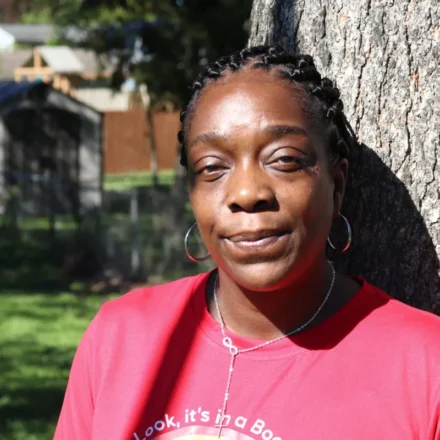



















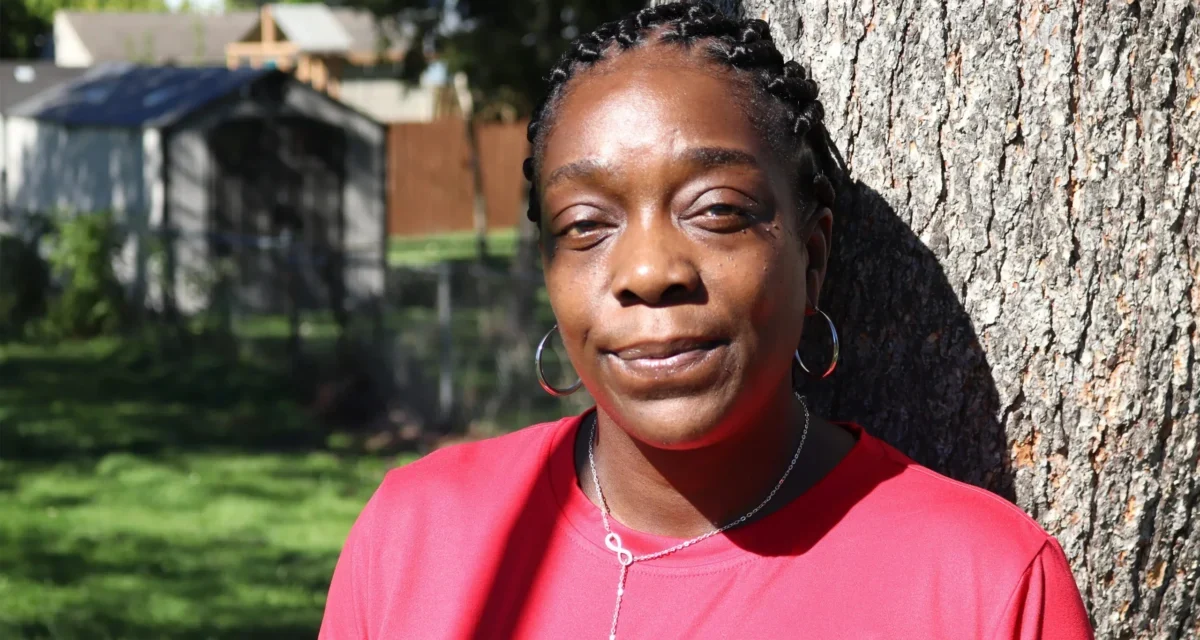



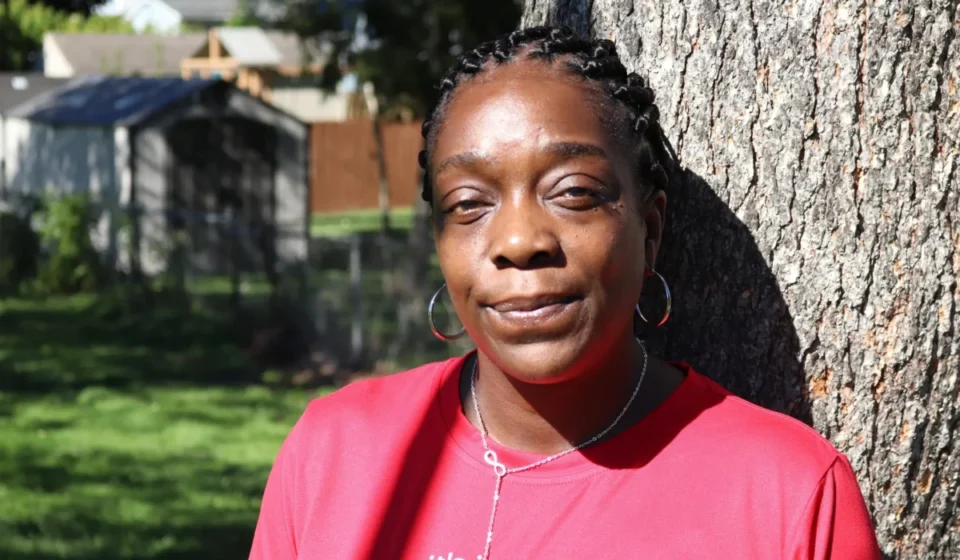

LANSING, Mich. — For Christina Starks-Clay, the math of modern American healthcare is as simple as it is devastating. Standing in line at a downtown Lansing town hall this past September, the early childhood special education paraprofessional pulled out her smartphone to show a screenshot of a $1,000 cashier’s check. She had spent the morning at her bank, liquidating a portion of her savings to chip away at her son’s mounting dental bills. Even with "good" dental insurance, she still faced an outstanding balance of $389. Weeks earlier, a routine cleaning for herself had cost $600.
"I’m standing there at the bank, telling myself, ‘Tina, you were in a position to do this,’" she said, her voice strained. "A lot of people couldn’t do what I had to do today. I couldn’t do it—but I did it. So, I need to hear from these candidates: How are you going to make this better for everyone else?"
Starks-Clay is one of millions of Americans caught in the tightening vice of a healthcare system defined by rising premiums, stagnant wages, and the constant, looming threat of medical bankruptcy. As the political season heats up, the rallying cry of "Medicare for All" has moved from the fringes of progressive discourse to the center of the Michigan Senate race, championed by Democratic candidate Abdul El-Sayed.
The Human Toll: A Chronology of Financial Despair
The anxiety permeating the Lansing town hall was palpable. The line stretched for blocks under a relentless sun, filled with voters whose personal stories underscore a systemic failure. Ahead of Starks-Clay, a man recounted his brother’s descent into thousands of dollars of medical debt. Nearby, a professor emeritus from Michigan State University expressed deep concern for his grandchildren, whose parents were struggling to navigate a $9,000 insurance deductible.
These are not isolated anecdotes; they represent a growing demographic of the "underinsured." The chronology of this crisis is rooted in the erosion of the progress made by the Affordable Care Act (ACA). In the decade following the 2010 passage of the ACA, the uninsured rate was cut nearly in half, and the prohibition on denying coverage for pre-existing conditions became a bedrock of the system. However, the last two years have marked a jarring reversal.
Following the expiration of enhanced tax subsidies and the implementation of restrictive policies under the "One Big Beautiful Bill Act" (OBBBA), Michigan has seen some of the steepest enrollment drops in the nation. Insurance companies have hiked individual marketplace rates by an average of 20%, and the Urban Institute estimates that up to 355,000 Michiganders could lose their Medicaid coverage by 2028 due to recent legislative cuts.
For frontline workers, the impact is visceral. Darleana Ash, who works at a medical diagnostics lab, describes a reality where patients skip essential tests because they cannot afford the co-pay. "If you’ve got somebody that’s 75, 80 years old, guess what? They’re going to go without the medication, because they have to eat," she said.
Perhaps most illustrative of this broken system is the story of Cindy Lou Coolich. A retiree and former healthcare advocate, Coolich spent years helping others enroll in coverage until she herself fell victim to a medical crisis. A bout of sepsis left her disabled, stripped her of her 15-acre horse farm, and forced her onto a fixed income of $900 a month from Social Security. Her financial stability was only restored following the death of her ex-husband, which allowed her to claim his Social Security benefits. "Now I’m doing quite well!" she quipped, though the irony was not lost on her. In a functioning society, she noted, survival should not be contingent upon the death of a relative.
Supporting Data: The Popularity vs. Policy Gap
Support for a government-run healthcare system is at its highest point in a decade. A new poll from KFF (formerly the Kaiser Family Foundation) indicates that two-thirds of Americans now favor expanding government-sponsored healthcare. Yet, there remains a profound disconnect between the popularity of the slogan and the understanding of the policy.
"Medicare for All" traditionally describes a single-payer system—a federal program that would guarantee universal coverage while effectively eliminating private health insurance. However, public sentiment is highly malleable, shifting significantly based on how the policy is framed by political actors.
Jonathan Oberlander, a professor at the University of North Carolina-Chapel Hill and an expert in the politics of healthcare reform, notes that the term has become a powerful shorthand for radical, systemic change. "Too many people don’t have health insurance, too many people who do have insurance can’t afford medical care, and many people are terrified about the costs of being sick," Oberlander explained. "In an electorate that is disenchanted with the status quo, Medicare for All is an important symbol."
The data supports the urgency of this sentiment. A recent Gallup poll revealed that fewer than half of Americans now say they can afford their healthcare. For candidates like El-Sayed, who trained as a doctor and served as Detroit’s public health official, this data point is the cornerstone of his platform. "When we ask people what they want to hear from candidates in regard to healthcare, it’s a plan to bring down costs," says Ashley Kirzinger, director of survey methodology at KFF.
Official Responses: The Battle of Ideologies
The debate in Michigan has crystallized into two starkly different visions for the future. On one side, El-Sayed argues that the private insurance industry is the primary driver of high costs and administrative waste. His campaign, which has centered on the mantra "Money out of politics! Money in your pocket! Medicare for All!", frames the issue as a fundamental human right.
On the other side, Republican challenger Mike Rogers offers a more traditional market-based approach. Rogers, a former congressman, has publicly attacked the Medicare for All proposal, labeling it a massive government overreach. "If the government is going to give you something, they have to take it away from someone else," Rogers stated during a recent press conference. He points to the estimated $4 trillion annual price tag as evidence that the plan is fiscally irresponsible, arguing that it would strip millions of Michiganders of their private coverage.
The fiscal debate is contentious. While critics cite the $4 trillion cost, a recent preprint study from Yale researchers found that the implementation of a universal, single-payer system could actually result in $1 trillion in savings on total healthcare spending due to the elimination of administrative overhead and the negotiation of drug prices. Despite these findings, the political theater remains focused on the sticker shock of the policy rather than the long-term economic trade-offs.
Implications: The Reality of Reform
Even if the pro-Medicare for All movement achieves a electoral victory in November, the transition to such a system faces monumental hurdles. The lobbying power of the pharmaceutical and private insurance industries, combined with deep-seated institutional resistance in Washington, makes a total system overhaul unlikely in the near term.
"It doesn’t matter if the fears that opponents are spreading are actually accurate," Oberlander noted. "Politically, what matters is if they can scare people."
This skepticism is shared by some within the Democratic base. Thomas "Jermaine" Carey, an activist who attended a recent town hall in Detroit, expressed a weary cynicism regarding the "straight-ticket" Democratic Party. While he finds the promise of Medicare for All attractive, he remains doubtful of its implementation. "It’s still America," Carey said, gesturing toward the crowd. "You still have super PACs, the lobbyists that control everything."
The implications of this cycle of hope and disillusionment are significant. As healthcare costs continue to climb, the electorate is increasingly looking for a candidate who speaks to their pain rather than just their politics. Whether "Medicare for All" remains a "shiny object" of campaign season or evolves into a viable legislative pathway depends on the ability of its proponents to translate abstract policy into tangible relief for voters like Starks-Clay.
For now, the voters of Michigan are left in a state of precarious limbo. They are caught between a system they can no longer afford and a future that, while promising, seems perpetually out of reach. As the Senate race enters its final stages, the debate is no longer just about insurance plans or tax brackets; it is a referendum on the value of a human life in a society where the cost of health has become the price of survival.