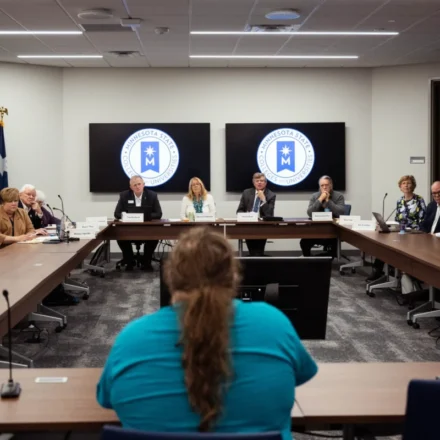



















































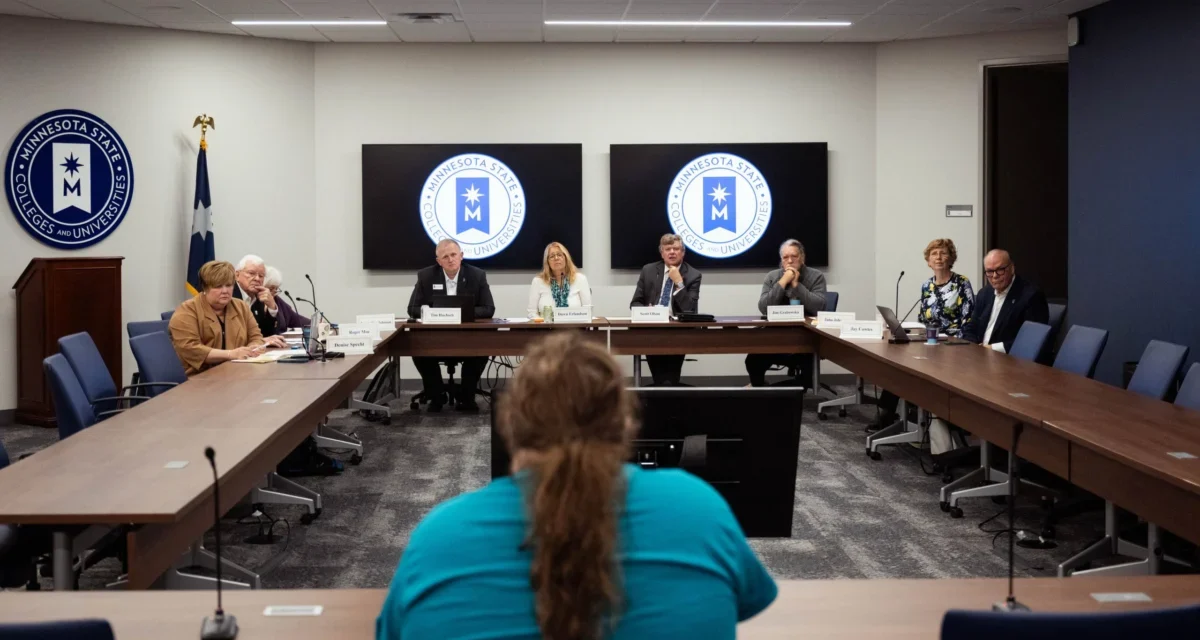





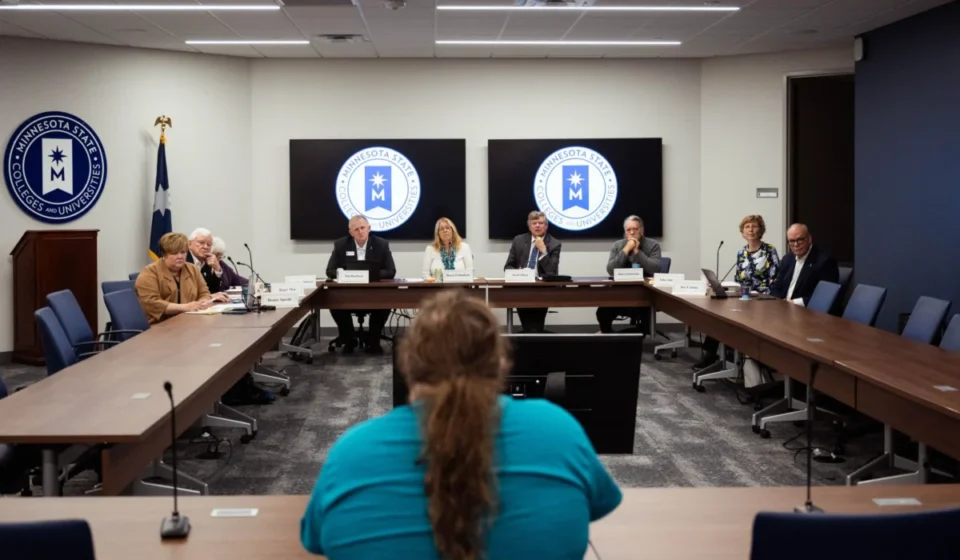

The Minnesota State university and college system, an academic cornerstone serving 270,000 students, is currently navigating its most precarious financial period in three decades. As the Board of Trustees prepares for a pivotal vote on October 14, the system is considering a controversial “stopgap” measure: shifting millions of dollars from stable, two-year community and technical colleges to bail out two of its most financially distressed four-year universities.
This proposed reallocation has ignited a firestorm of dissent among students, faculty, and administrators, who argue that the system is attempting to solve a structural, long-term rot with a temporary, inequitable bandage. The broader context is equally dire: the system is currently battling a $31.5 million deficit that, according to internal projections, is set to more than triple by the summer of 2028.
The Core Proposal: A Contentious Bailout
If the Board of Trustees approves the plan on October 14, the system will be authorized to reallocate up to $25 million annually for the next four years. While the measure requires reapproval each spring, its immediate impact would be felt heavily by the system’s two-year institutions.

Under the current plan, St. Cloud State University would receive $10 million, and Bemidji State University would be granted $4.8 million. These funds are intended to stave off total insolvency at these institutions, both of which have exhausted their cash reserves despite years of aggressive cost-cutting. System officials maintain that the move is an act of triage—a necessary, if painful, intervention to keep the doors open at vital regional hubs.
Chronology of a Slow-Motion Crisis
The current fiscal emergency did not emerge overnight. For years, Minnesota State has faced a "perfect storm" of declining enrollment, stagnant state funding, and an aging infrastructure that has become prohibitively expensive to maintain.
- 2005–2015: The system previously experimented with shifting $5.5 million to assist eight colleges and one university. Unlike the current proposal, that funding was handled centrally and did not involve stripping budgets directly from peer institutions.
- 2016: A landmark internal report explicitly warned that the system was heading toward an "unsustainable" financial future. The report urged immediate action to address declining enrollment and excess facilities. As Chancellor Scott Olson admitted during a recent town hall, that report was effectively “put on a shelf” and ignored for nearly a decade.
- 2023–2026: St. Cloud State University began a series of drastic measures, cutting its workforce by 40% over 15 years and suspending nearly 200 academic programs. Despite these cuts, the university faces a total depletion of its $19 million reserve fund.
- June 2026: The Board of Trustees first introduced the current reallocation proposal. It was met with immediate, vocal opposition from student organizations and faculty leaders.
- September 2026: Chancellor Olson announced a major systemwide redesign, signaling that the era of "business as usual" is over. This announcement included the potential for future campus closures and mergers, with a formal presentation of options expected in January 2027.
- October 2026: Minnesota State Community and Technical College announced the closure of its Detroit Lakes campus, a move designed to save $1 million annually.
Supporting Data: The Anatomy of the Deficit
The numbers behind the crisis reveal a system struggling to balance its dual mission of providing affordable access and maintaining high-quality facilities.

St. Cloud State has lost roughly 5,400 students over the last two decades, a trend mirrored in various forms across the system. Enrollment decline directly correlates to lower tuition revenue, which is the lifeblood of these institutions. According to a recent analysis of the proposed funding shift, two-year colleges would contribute roughly three times as much money as four-year universities toward the emergency fund. For the 2028 fiscal year, individual institutions would be expected to contribute between $121,000 and $1.8 million each.
This financial burden arrives at a time when many of these schools have already reached the limits of their austerity measures. As Lori Kloos, president of St. Cloud Technical and Community College, pointed out, 80% to 85% of operating budgets are tied to salaries. A 5% cut—while seemingly modest—often translates into a direct reduction in staff or student services.
Official Responses: Triage vs. Transformation
The leadership of Minnesota State finds itself in an unenviable position, balancing the survival of individual campuses against the health of the entire system.

The Administration’s Perspective
Bill Maki, the system’s vice chancellor for facilities and finance, has characterized the move as "somewhat unprecedented" and admitted it is not a "perfect solution." However, he maintains that the crises at institutions like St. Cloud and Bemidji are existential. Chancellor Scott Olson has taken a broader view, noting that simply cutting individual college budgets will not resolve the systemic holes. He argues that the system is currently hindered by "constrained" state funding and a reluctance to increase tuition, which would make education unaffordable for the very students the system is meant to serve. Regarding the possibility of shutting down St. Cloud State, Olson stated, "Given their scale, given what they mean to the economy of central Minnesota, I guess I believe it’s worth another try at saving them."
The Opposition
Faculty and student leaders are far less forgiving. Rose Sargent, treasurer of the LeadMN student organization, dismissed the proposal as a "temporary funding bandage." The consensus among critics is that the system is cannibalizing its strongest, most efficient institutions to subsidize those that have failed to adapt to changing demographics and market demands. Marco Loera Alvarez, former vice president of LeadMN, warned that the plan risks creating a "contagion" of financial instability across the entire system.
Implications: A System at a Crossroads
The decision to be made on October 14 is merely the first in a series of difficult choices. The system is simultaneously exploring a separate proposal to take $24.3 million from all institutions to fund the demolition of unused buildings. While reducing the physical footprint is necessary to cut utility and maintenance costs, critics argue this will disproportionately impact technical schools that rely on specialized, equipment-intensive facilities like welding and automotive shops.

The Path Toward Reform
The broader restructuring plan—which may include mergers and campus consolidations—is being accelerated by the very urgency of the current budget crisis. The fact that an internal warning from 2016 went unheeded has created a deep sense of distrust among staff and faculty. Transparency has become the central demand in recent town halls, as employees realize that their institutions may be next on the chopping block.
As the system looks toward the upcoming legislative session, it is requesting $25 million in one-time funding for struggling schools and another $25 million for infrastructure demolition. Whether the state legislature will provide this lifeline, or if they will force the system to continue its current path of internal cannibalization, remains to be seen.
The Human Cost
Beyond the spreadsheets and the policy memos, the crisis has a human cost. When a campus closes—such as the one in Detroit Lakes—or when programs are suspended, students lose access to local education and faculty face uncertainty. The "crisis of scale" facing Minnesota State is not just a matter of finance; it is a challenge to the mission of providing accessible higher education in every corner of the state.

As the Board of Trustees convenes, the fundamental question remains: Can a massive, decades-old educational system pivot quickly enough to survive in an era of shrinking enrollment and rising costs? For now, the answer seems to lie in a painful cycle of stopgap measures, high-stakes restructuring, and the hope that the system can preserve its core identity before the budget deficits become irreversible.