
















































MINNEAPOLIS — For years, the Monday morning rhythm at Corner Coffee in downtown Minneapolis was a quiet affair, a ghost of its pre-pandemic self. However, the first week of September 2025 signaled a definitive shift in the city’s tectonic plates. Store manager Mia Pariseau, who has weathered the lean years of the remote-work era, suddenly found herself at the center of a caffeinated whirlwind.
“We got just slammed,” Pariseau remarked, reflecting on a morning where a line of at least five customers remained constant for over an hour. “And it was just me and one other person here.”
The surge in foot traffic is no coincidence. Corner Coffee sits in the shadow of Target Corporation’s massive headquarters. On September 2, 2025, the retail giant’s commercial unit officially began a new chapter, with employees ordered to return to in-person work at least three days a week. This mandate, coming from one of the city’s most influential employers, is doing more than just filling cubicles; it is recalibrating the economic and social heartbeat of the Upper Midwest’s largest business district.
Main Facts: The Target Mandate and the 75% Threshold
The revitalization of downtown Minneapolis is currently tethered to the return-to-office (RTO) policies of its "Big Three" anchors: Hennepin Healthcare, Target, and Wells Fargo. Target, the city’s second-largest employer, has long been the bellwether for the health of the central business district. Its recent decision to require three days of in-person presence for its commercial unit represents the most significant private-sector push toward office stabilization since the pandemic began.
According to Kittie Fahey, Senior Director of Advancement for the Minneapolis Downtown Council, in-person work metrics have climbed to nearly 75% of pre-pandemic levels. This figure is expected to rise further as the data from Target’s September rollout is fully synthesized.
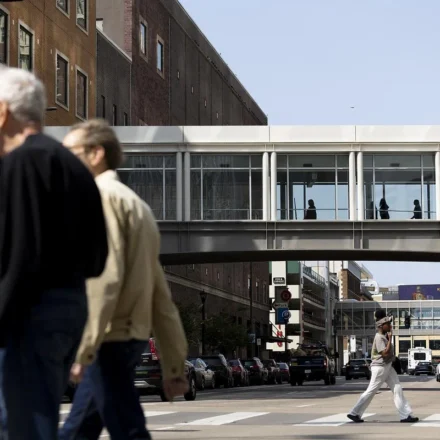
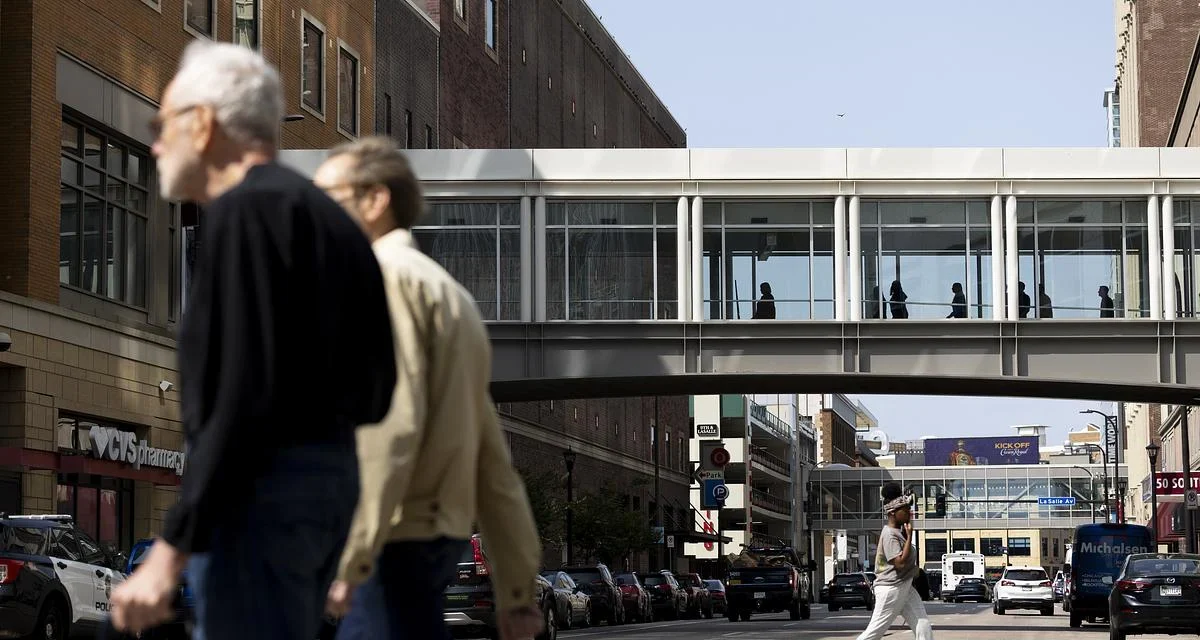
The shift is palpable on the streets and in the skyways. For employees like Madelyn Dunn-Lammert, an associate designer for Target, the transition represents a return to a "vibrant and exciting" atmosphere. Having started her career three years ago during the height of the remote-work trend, Dunn-Lammert is part of a cohort of workers discovering the professional nuances of the office for the first time.
“Being able to grab lunch with co-workers or work through a project in person helps build team connections and facilitate collaboration,” she noted, emphasizing that for creative fields, the serendipity of the office environment is difficult to replicate over a Zoom call.
Chronology: From "Ghost Town" to Urban Hub (2020–2025)
The path to this 75% recovery has been long and fraught with setbacks. To understand the significance of the current "slam" at Corner Coffee, one must look at the timeline of the city’s hollowed-out years.
2020–2021: The Exodus
Following the onset of the COVID-19 pandemic, downtown Minneapolis transformed into what local attorney Jenny Lissarrague describes as a “ghost town.” As remote work skyrocketed, the skyways—the city’s famed climate-controlled pedestrian veins—fell silent. Minnesota’s share of primarily remote workers hit 21% in 2021, significantly higher than the national average of 17.9%.

2022–2023: The Stagnant Middle
While other metropolitan areas began aggressive RTO pushes, Minnesota remained cautious. By 2022, the share of remote workers had dropped to 16.9%, but the "Central Business District" (CBD) remained eerily quiet. Many businesses that relied on the 9-to-5 lunch crowd shuttered permanently, and those that remained began closing their doors by 2 PM or 3 PM.
June 2025: The Public Sector Lead
The momentum began to shift in earnest during the summer of 2025. On June 1, the State of Minnesota required government employees to spend 50% of their workdays in the office. Though the policy was met with significant resistance and strike threats from labor unions, it established a baseline for the return of the professional class to the city center.
September 2025: The Target Effect
The Labor Day transition for Target’s commercial unit served as the final major catalyst. With 12 of the top 15 downtown employers now enforcing strict back-to-office policies, the "back-to-school" energy described by local residents has finally returned to the IDS Center and surrounding blocks.
Supporting Data: The Statistical Landscape of Recovery
The recovery of Minneapolis is being closely monitored by the Federal Reserve Bank of Minneapolis, which has tracked the evolution of work-from-home (WFH) trends in the Ninth District. Their data confirms that Minnesota was an outlier in its initial embrace of remote work, which explains why the current "return" feels so dramatic to local stakeholders.
- Workforce Density: Of the top 15 employers in the downtown core, 80% (12 out of 15) now have formal in-person requirements. This collective shift has pushed the daily population of the CBD to its highest levels in five years.
- The Commuter Lag: Despite the influx of workers, transit data suggests a disconnect. Jenny Lissarrague noted that commuting is more challenging now than in 2012. "Increased remote work means fewer buses are needed to transport people downtown," she explained. This reduction in service creates a "chicken and egg" problem: workers are required to be in-office, but the infrastructure to get them there has been scaled back.
- Temporal Shifts: Kittie Fahey points out that the traditional "rush hour" has flattened. Many employees now utilize flexible start times, commuting in at noon or leaving early to avoid traffic, which spreads the foot traffic across a wider window but reduces the concentrated "peak" that many service businesses rely on.
Official Responses: The Downtown Council’s Vision vs. Reality
The Minneapolis Downtown Council is optimistic but realistic. For Kittie Fahey, the goal is no longer just "returning to 2019," but rather evolving into a "24/7 city." However, she acknowledges that the current ecosystem is still heavily weighted toward the workday.
“Go out for lunch, stay after and go meet friends, go do some things,” Fahey urged. “Use all the resources we have.”
The challenge, according to the Council, is the "work-and-go" culture. While employees are returning to their desks, they aren’t necessarily returning to the city’s nightlife. This is compounded by a secondary economic issue: the hospitality labor shortage.
“You’d be hard-pressed to find, in the central business district, a restaurant open until 11 p.m.,” Fahey said. “That’s crazy different than pre-pandemic.”
This creates a cycle of early departures. If the restaurants close early, workers have no reason to stay; because workers don’t stay, restaurants see no reason to remain open late. Breaking this cycle is the primary focus of the Downtown Council’s advancement strategy for 2026.

Implications: Rebuilding a Comprehensive Urban Ecosystem
The return of Target and other major corporations carries implications that extend far beyond coffee sales. The revitalization of the downtown core is essential for the city’s tax base and the safety of its streets.
1. The Social Multiplier Effect
The presence of 60,000 downtown residents provides a floor for activity, but the "commuter class" provides the ceiling. As professionals like Dunn-Lammert engage in in-person collaboration, the social fabric of the city is mended. The "isolation" mentioned by long-term workers like Lissarrague is beginning to dissipate, replaced by the friction of a functioning society.
2. The Transit Crisis
The "resistance" mentioned by state workers in June highlights a growing tension: the cost and difficulty of the commute. If the city and Metro Transit do not realign their schedules with the new three-day-a-week reality, the RTO movement could face a sustainability crisis. Workers are less likely to support local businesses if their commute is an arduous two-hour ordeal due to reduced bus lines.
3. The Future of the Skyway System
The Minneapolis skyway system, the largest of its kind in the world, is uniquely dependent on office density. The images of workers walking through the IDS Center with lunch in hand are a visual confirmation that the "Skyway Life" is being resurrected. For the small businesses located within these corridors, the Target mandate is a literal lifeline.
Conclusion: A Bright, If Different, Future
As the sun sets over the IDS Center, the streets of downtown Minneapolis are no longer the "ghost town" they were in 2021. The lines at Corner Coffee and the buzz in the Target corridors suggest that the city has reached a turning point.
While the "11 PM restaurant" may still be a rarity, and the bus schedules remain a point of contention, the general sentiment among those on the ground is one of cautious hope. The transition from a remote-first state to a hybrid-hub is nearly complete.
For Mia Pariseau, the manager who saw the "slam" of customers on a Monday morning, the math is simple. More people means more coffee, more coffee means more conversation, and more conversation means a city that is finally waking up.
“The future is bright,” Pariseau said. In the heart of a city that was once written off as a casualty of the remote-work revolution, those words carry the weight of a hard-won reality.