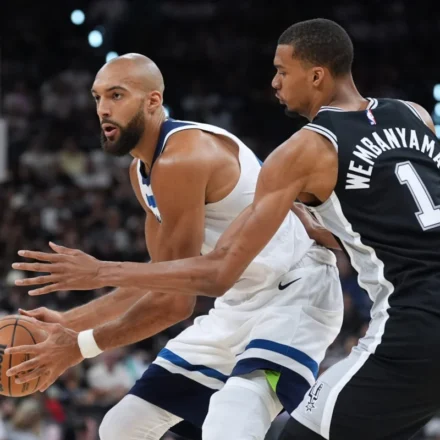

























As the Minnesota Timberwolves stand on the precipice of the 2026-2027 NBA season, the atmosphere surrounding the franchise is one of cautious reinvention. Following an 80-minute, wide-ranging interview with Timberwolves Head Coach Chris Finch, a portrait emerges of a team looking to shed the lethargy of a disappointing previous campaign in favor of a high-ceiling, high-volatility future.
Main Facts: The Transition Period
The Timberwolves are entering training camp with a clear understanding that the "continuity" era—which produced underwhelming results last season—has officially ended. The team’s focus has shifted toward integrating raw, high-potential talent like 19-year-old center Joan Beringer while simultaneously restructuring a coaching staff that recently lost key voices, including lead assistant Micah Nori to the Portland Trail Blazers.
Coach Finch, speaking candidly from his office in Minneapolis, acknowledged that the upcoming season presents a unique challenge: the team’s ceiling may be higher than ever, but its floor has arguably become more precarious. The challenge for the coaching staff is to instill a renewed sense of purpose and structure without stifling the creative freedom that defines the team’s stars, particularly Anthony Edwards.
Chronology of the Coaching Shake-up
The loss of Micah Nori, widely regarded as Finch’s "right-hand man," has triggered a ripple effect within the organization. The chronology of this restructuring is not merely a replacement of personnel, but a fundamental reassessment of how the Timberwolves handle game-day logistics.

- The Departure: With Nori’s exit and the departure of Max Lefevre to lead Paris Basketball, the Timberwolves were forced to re-evaluate every granular duty within the staff.
- The Internal Promotion: Pablo Prigioni has been elevated to the role of lead assistant. While he will take on some of Nori’s responsibilities, Finch emphasized that Prigioni will maintain his focus on offensive strategy, where his expertise is most valuable.
- Redistribution of Labor: Finch is personally reclaiming some of the late-game decision-making duties. Meanwhile, other staff members, including Nate Bubes, Kevin Hansen, and Elston Turner, are stepping into expanded roles. Finch has challenged his staff to "take a step forward," viewing the turnover not as a setback, but as an opportunity for internal growth.
- The New Arrival: Daniel Brady, formerly of the New York Knicks, has joined the fold. Finch describes his role as "fluid," noting that Brady will focus heavily on player development and game planning, adapting to the "Timberwolves way" as the season progresses.
The Beringer Factor: A "Raw" Hinge for the Season
At the heart of the team’s developmental goals is 19-year-old center Joan Beringer. Despite his lack of experience, the front office is remarkably "bullish" on his potential. Finch remains pragmatic about the rookie’s development, noting that his contribution will be characterized by the "inconsistency of youth."
Finch identifies the primary hurdle for Beringer as physical and mental balance. "He plays so hard, he’s got incredible balance and energy," Finch noted. "He’s got to figure out the balance of retaining the effort while regulating wanting to go after everything all the time."
The coaching staff is prioritizing core strength for Beringer, specifically to prevent him from ending up on the floor—a common ailment for young, overly aggressive big men. Finch noted that while the team would love to see a 2:1 ratio of "good" games to "bad" games from the youngster, they are prepared for the growing pains. "If we get to the point where two out of three are not good, then we are going to be a little bit exposed," the coach admitted.
Official Responses: Addressing Last Season’s "Disappointment"
Finch did not shy away from addressing the frustrations of the previous season, during which the team often looked disjointed and, at times, bored. When asked about his comments regarding the team’s lack of commitment, Finch offered a transparent assessment of his own failings.

"I kind of kicked myself all season long for the late switch," Finch said, referring to the lineup adjustments involving veteran Mike Conley and Donte DiVincenzo. He acknowledged that the team took the performance of Julius Randle for granted, placing too much of a creative burden on his shoulders.
"We just couldn’t get out of our own way," Finch added. "We didn’t play with any kind of joy at times."
The coach maintains that he remains a "players’ coach," but he signaled a shift in tone. He intends to be more involved in the team’s daily structure to ensure that the identity—defined by ball pressure, movement, and quick decision-making—is firmly established from the first day of camp.
Implications for the Season Ahead
The implications of this shift are profound. By embracing a more volatile roster and a new-look coaching hierarchy, the Timberwolves are essentially betting on their ability to iterate faster than their Western Conference rivals.

The "Cliff" Strategy
Finch agreed with the assessment that the team is "dancing on the cliff." The integration of new talent and the reliance on younger, unproven players like Beringer means that the team’s performance may fluctuate wildly. However, Finch argues that this is the reality of the modern NBA.
"I have always been big on, ‘What are the four specific things that will help this team win?’" Finch explained. "And trying to find that. That’s another way of saying, we’re not going to be good at everything."
Strategic Flexibility
The Timberwolves are moving toward a more purposeful offensive system that leverages Anthony Edwards’ strengths in a more strategic, two-man game context. Finch believes that the current point guard rotation gives him the flexibility to put Edwards in positions to succeed in ways that were impossible last season.
As for the win-total expectations and the pressure of the Western Conference, Finch remains grounded. He dismissed the idea that 60 wins is a baseline expectation, instead focusing on the process of becoming a better team after the All-Star break. For Finch, the goal is not to win the preseason or to chase arbitrary win totals, but to build a cohesive identity that can withstand the rigors of the playoffs.

A Learned Philosophy
Perhaps the most telling aspect of the interview was Finch’s reflection on his background. Having coached internationally—where volatility is a constant—Finch has cultivated an ability to adapt to shifting rosters and external pressures.
"I’ve learned to embrace it," Finch said of the constant reconfiguration. "I think with modern coaching right now, you have to embrace these changes, given roster building in the league and injuries and whatever it might be. It never gets boring."
As the Timberwolves head into the 2026-27 season, the message from the top is clear: the era of assuming success based on past continuity is over. In its place is a lean, hungry, and somewhat experimental approach designed to maximize the potential of a core that is still defining its ultimate ceiling. Whether that "cliff-dancing" strategy leads to a title run or a mid-season identity crisis remains to be seen, but one thing is certain: under Chris Finch, the Timberwolves will not be standing still.