


























































For millions of Americans, the promise of a nonprofit hospital is a pillar of the social safety net: in exchange for tax-exempt status, these institutions are expected to prioritize community health over profit margins, specifically by providing "charity care" to those unable to pay for essential medical services. Yet, in Minnesota, a state renowned for its high-quality healthcare infrastructure, a troubling paradox has emerged. A joint investigation by the Minnesota Star Tribune and KFF Health News has revealed that many of the state’s hospitals are among the least charitable in the nation, frequently prioritizing debt collection over the financial well-being of their most vulnerable patients.
The Human Cost of Unpaid Bills
Cori Roberts’ story serves as a stark illustration of this systemic failure. Four years ago, living in a rented basement and recently divorced, the St. Cloud mother of two was diagnosed with early-stage cervical cancer. Despite holding a human resources job that paid $41,000 annually—and having health insurance—the out-of-pocket costs from her treatment ballooned to more than $8,000.
"I had my car and a basket of clothes," Roberts recalled. "Medical bills were not something I could have afforded."
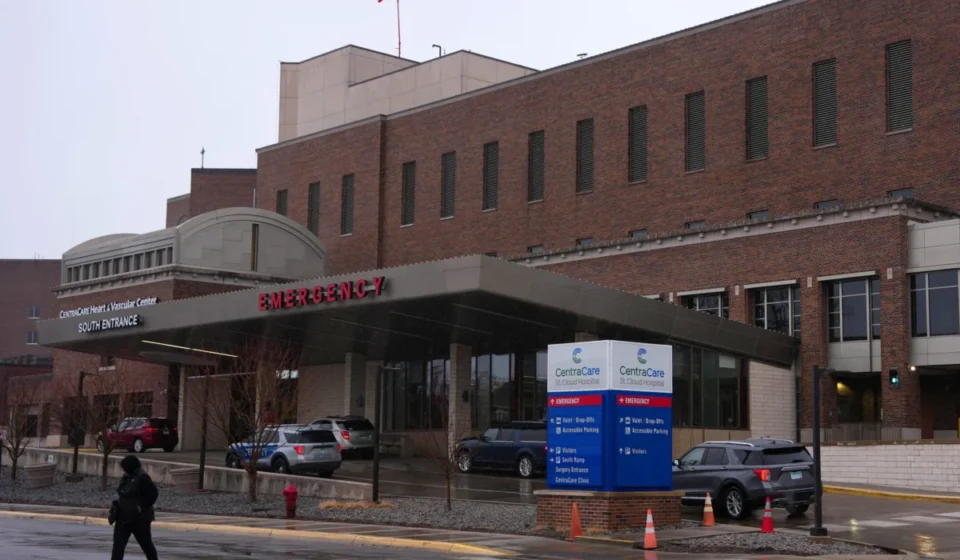
When she approached CentraCare, the St. Cloud-based nonprofit health system that treated her, she was denied financial assistance because she allegedly earned too much to qualify. For two years, Roberts sacrificed groceries and her children’s Christmas gifts to pay off $6,000 of the debt. Her reward for her fiscal discipline was a lawsuit from the hospital system, which pursued her for the remainder.

"They’re supposed to be a nonprofit," Roberts said. "It’s like, ‘Come on!’" While CentraCare ultimately dropped the lawsuit, the victory was hollow; Roberts had already been forced to drain her retirement savings to settle the account.
A Landscape of Institutional Neglect
The investigation into Minnesota’s healthcare landscape reveals that Roberts’ experience is far from an anomaly. Federal data analyzed by researcher Hossein Zare of Johns Hopkins University shows that while hospitals nationwide spend an average of 2.4% of their operating budgets on charity care, Minnesota hospitals spend roughly one-third of that amount.
The disparities are profound. Of the 123 general hospitals in Minnesota, 62 devoted less than 0.5% of their operating budgets to charity care between 2020 and 2024. CentraCare’s flagship facility, St. Cloud Hospital, performed even worse, spending less than 0.25%—or roughly $25 for every $10,000 of operating expenses.
The implications are magnified by the current economic climate. As the state’s uninsured rate climbs to its highest level since 2017 and federal budget cuts threaten to shrink Medicaid and other safety nets, the reliance on hospital-provided charity care is expected to skyrocket. Yet, many hospitals appear ill-equipped or unwilling to meet this rising tide of need.

The Anatomy of an Investigation
The scope of the Star Tribune-KFF report was comprehensive, involving a granular review of every hospital charity care program in the state, five years of financial data analysis, and dozens of interviews with patients, industry executives, and public officials.
The findings indicate that the "charity" aspect of nonprofit status is often overshadowed by aggressive billing practices. In one instance, the Mahnomen Health Center, serving one of Minnesota’s most impoverished regions, provided zero charity care over an eight-year period. Across the state, hospitals collectively write off roughly $200 million in "bad debt" annually—a result of failed collection efforts—while spending only $163 million on actual charity care.
Hospital Defenses and Official Rebuttals
Hospital leaders argue that the public narrative mischaracterizes their financial realities. Tim Nelson, a spokesperson for the Minnesota Hospital Association, noted that hospitals face rising labor and supply costs, as well as chronic underpayment from public programs like Medicare and Medicaid. "No amount of charity care from hospitals will ever fully meet the needs of uninsured or underinsured Minnesotans," Nelson said. "The need is simply too great."
Other executives echo this sentiment, pointing to their roles as community anchors that train medical staff and maintain essential but unprofitable services like obstetrics and mental health units. Robert Pastor, CEO of Rainy Lake Medical Center, argued that rural hospitals are often unfairly painted as wealthy institutions. "We are the second- or third-largest employer in town, running on razor-thin margins," he stated.

However, state officials are increasingly skeptical. Minnesota Attorney General Keith Ellison has become a vocal critic of the current system, challenging the moral and legal justification for tax exemptions when the public benefit is so minimal. "There is a benefit you get from being a nonprofit hospital in the state of Minnesota," Ellison said. "But do the people get the benefit?"
Barriers to Access: The "Maze of Standards"
The investigation uncovered that even when charity care is available, it is often hidden behind a complex "maze of standards." Unlike states such as New York and Maryland, which have standardized eligibility criteria, Minnesota leaves hospitals to set their own rules.
The lack of uniformity leads to bizarre inconsistencies: a patient might qualify for free care at one hospital but be rejected by a facility just miles away. Furthermore, the application process is often intentionally opaque. Jared Walker, founder of the nonprofit Dollar For, notes that hospitals have "optimized to get payment" rather than to help patients navigate aid. "If you want to get on a payment plan… it’s so easy," Walker observed. "The drop-off rates are much higher the more questions you ask and the more documentation you have to provide."
Many hospitals demand invasive financial disclosures, including the value of retirement accounts, life insurance, and even personal property. One hospital’s policy even explicitly states that patients "may be required to sell recreational vehicles" to qualify for aid.

A Case Study in Stress: Abby Kelley-Hands
The emotional toll of these barriers is immense. Abby Kelley-Hands, a special education coordinator in St. Paul, suffered a rare immune condition that required expensive medication. After an insurance error left her temporarily uninsured, she was hit with $20,000 in bills from the Mayo Clinic.
Despite earning under $100,000, she was denied aid. The stress of the debt, she said, "makes you sicker and less able to even figure things out." To avoid total financial ruin, she and her husband sold their car, eliminated basic household conveniences, and postponed their honeymoon for seven years.
The Path Toward Reform
The scrutiny from the Attorney General’s office has already begun to yield results. Following an investigation into its practices, the Mayo Clinic overhauled its charity care program, leading to a near-doubling of its charitable spending.
However, systemic reform remains a battle. While state lawmakers have banned hospitals from denying care to patients with existing debt, they have yet to implement a standardized, statewide application process or common eligibility thresholds. Proponents of reform, including Sen. Liz Boldon, argue that the goal is to remove the "bureaucratic and procedural barriers" that keep families in debt.

Attorney General Ellison is now pushing for a system of "automatic screening," where hospitals would be required to use software to identify low-income patients who qualify for aid without forcing them to navigate a cumbersome application process. Some systems, such as Sanford Health, have already implemented such technology, with successful results.
Conclusion: A Call for Grace
As the debate over healthcare affordability continues to intensify in the halls of the Minnesota Legislature and the boardrooms of the state’s largest health systems, the voices of patients like Cori Roberts remain the most poignant.
"They have all the money," Roberts said, looking out at the sprawling, multimillion-dollar expansion of the medical campus where she once faced litigation for her cancer bills. "But they can’t grant a good person some grace?"
For Minnesota’s nonprofit hospitals, the path forward requires a shift in priorities: moving away from an industry focus on "bad debt" recovery and toward a mission-driven commitment to the community that sustains them. Until then, the promise of the nonprofit hospital remains, for many, a broken one.