









































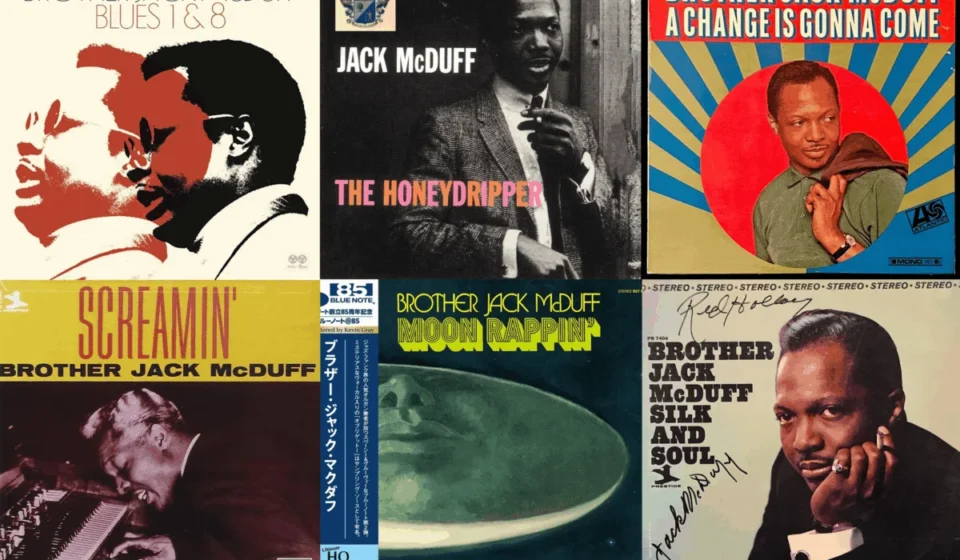

In the annals of jazz history, few figures loom as large—or as comfortably in the pocket—as Brother Jack McDuff. A titan of the Hammond B3 organ, McDuff spent the early 1960s tearing through the nightclub circuit like a sonic hurricane. He was the architect of a sound that fused the intellectual rigor of hard bop with the greasy, unfiltered soul of the blues. Yet, by the late 1980s, the "Brother" had lost his way, caught in a downward spiral of personal turbulence and professional obscurity.
What followed was not just a comeback, but a metamorphosis. On the occasion of what would have been his centennial birthday this September 17, the story of Jack McDuff’s relocation to the Twin Cities stands as a poignant reminder of how a community can preserve greatness when it is on the brink of vanishing.
The Whirlwind Years: Defining a Genre
During his prime in the 1960s, McDuff was a force of nature. His quartet was a masterclass in musical synergy, featuring the barrel-chested, robust tone of tenor saxophonist Red Holloway and a teenage prodigy on guitar named George Benson. Together with drummer Joe Dukes, they forged a rhythm section so tight it seemed to defy physics.
McDuff was the quintessential bandleader. Dressed to the nines—white-tipped hair perfectly coiffed, pencil-thin mustache, and a physical swagger that mirrored the syncopation of his playing—he commanded the stage. He was a prolific composer and arranger, often allowing his sidemen the spotlight before closing the set with his own virtuosic, high-energy solos. He wasn’t just playing music; he was curating an experience.
Chronology of a Crisis and Renewal
By the late 1980s, the landscape for jazz musicians in New York City had soured. The crack epidemic, rising crime rates, and the shifting cultural tides toward hip-hop and punk left working jazz artists fighting for scraps. For McDuff, it was a bleak period. He had lost his steady record contracts, and whispers of "partying" and "distractions"—euphemisms for a struggle with substance abuse—became the prevailing narrative among his peers.

Kenny Horst, the co-owner of the legendary Artists’ Quarter (AQ) in St. Paul, remembers the turning point. Horst had first seen McDuff in the mid-60s at a hall on Ford Parkway and was forever changed. When he began booking acts for the AQ, he brought McDuff in for a three-night stint. It was a success, but it was the second visit that would prove historic.
It was during this trip that McDuff met Kathy Ann Johnson. A local resident who lived just blocks from the AQ, Kathy caught the attention of the organist the moment she walked into the club. What began as a simple offer of a glass of wine and a ride home quickly blossomed into a profound, life-altering romance. By the summer of 1990, the man who had been adrift in Harlem had moved to South Minneapolis to be with Kathy.
Supporting Data: The Anatomy of a Renaissance
The move to the Twin Cities served as a crucible for McDuff’s rebirth. Kathy provided the stability he had lacked for years, clearing a dedicated room in their apartment for his instruments. There, the man who had been fading into the background of the New York jazz scene began to compose with renewed intensity.
"He needed the change," says saxophonist Jerry Weldon, who played with McDuff throughout the 80s and 90s. "There was a period where he wasn’t playing or recording at all. Kathy saved him. That’s not being dramatic; that is the truth."
The shift in his music was palpable. Moving away from the simpler jump-blues structures of his early hits like "Rock Candy," McDuff began writing complex, multi-layered arrangements. He adopted the moniker "Captain Jack"—a self-proclaimed promotion from his "Brother" days—and began to view his music with a more sophisticated lens. Musicians who encountered him during this period, such as organist Pat Bianchi, were stunned by the "full bloom" of his compositional voice, citing tracks like "Spec-Tator" as evidence of his modern, harmonic evolution.

Official Responses and Peer Perspectives
The transformation was not just internal; it was institutional. Recognizing that the local club circuit couldn’t always sustain the fees of a national act, manager John McCauley and Dakota Jazz Club owner Lowell Pickett helped engineer a strategic touring schedule. They would fly in his band, "The Heatin’ System," for curated weeknight stands, allowing McDuff to maintain his professional standards without the burnout of constant gigging.
"He had fresh energy," says Andrew Beals, a saxophonist in The Heatin’ System. "He was tough on the band. He came from a military background, and there was no sugarcoating his criticism. But when he brought in a new arrangement, it was like a new child. He was vibrant."
The couple’s life together was marked by international travel and a newfound domestic joy. Kathy accompanied him on tours across Europe, Africa, and Japan, seeing a side of the world that McDuff had previously missed while locked in his room during his darker years. Even as his health began to fail following a debilitating stroke in 1998, the connection he shared with Kathy remained the bedrock of his existence until his passing.
Implications: The Legacy of a Mentor
The significance of McDuff’s time in the Twin Cities extends far beyond the music he produced there. In the jazz world, he is increasingly viewed as the "Art Blakey of the organ"—a mentor who acted as a launchpad for dozens of guitarists, drummers, and horn players. His legacy is etched in the careers of artists like Paul Bollenbeck, Dave Stryker, and Mark Whitfield, all of whom learned the professional rigor of the bandstand under his watchful eye.
As Pat Bianchi prepares to lead a Centennial Celebration of Jack McDuff in Vancouver this September, the focus remains on the "invisible threads" of his influence. The project aims to recreate the transcriptions of his late-career arrangements, honoring the work he produced during those fertile, stable years in Minneapolis.

Conclusion: A Community’s Gift
Jack McDuff’s life is a testament to the fact that talent is not a finite resource, but it is fragile. Had he stayed in the turmoil of 1980s New York, the jazz world might have lost one of its most innovative composers to the ether of addiction and neglect. Instead, the Twin Cities offered him a sanctuary.
Through the love of his wife, the support of local club owners like Kenny Horst and Lowell Pickett, and the dedication of his bandmates, McDuff was allowed to age with dignity and create with brilliance. His story serves as a poignant reminder that while we often celebrate the "genius" of the artist, we must also celebrate the communities, partners, and friends who hold the light steady when the artist’s own flame begins to flicker.
Today, as we look back on 100 years since his birth, Captain Jack remains a towering figure—not just for the notes he played, but for the life he reclaimed, one chord at a time. The legacy of the Twin Cities’ jazz scene is richer for having provided the stage for his final, most beautiful act.