




































In the quiet, river-hugging city of Winona, Minnesota, the lines between reality and artifice are currently being blurred with remarkable precision. At the heart of this cultural investigation is Minneapolis-based artist Andy DuCett, whose latest exhibition, "Home(town)," at the Minnesota Marine Art Museum (MMAM), has effectively turned the city inside out.
The installation is not merely a collection of objects in a gallery; it is a sprawling, multi-layered meditation on what defines a community. By importing pieces of local businesses—including the iconic booths and artwork from the beloved Rocco’s Pub and Pizza—into the museum, DuCett is challenging the traditional, static role of the gallery space, forcing a conversation about the ownership of history and the future of regional identity.
A "Coming In" Migration: The Relocation of Local Lore
The most striking visual evidence of this project is the absence of a landmark in the city itself. At Rocco’s Pub and Pizza in Goodview, a neighboring city to Winona, a large, rectangular void of discolored paint now marks the spot on the wall where Ron Hunt’s 1972 painting, "Coming In," once hung. For years, this idyllic landscape of ducks and marshy riverbeds served as the visual anchor of the restaurant, a gift from the late artist to the establishment’s founder, Tom Barth.
Today, that painting—along with two tables and three booth seats from the restaurant—resides within the pristine, climate-controlled walls of the MMAM. In its place at the restaurant, an official-looking placard bears the logos of both the business and the museum, documenting the "loan" with a bureaucratic gravity that feels both absurd and deeply respectful.
This act of displacement is a foundational element of DuCett’s conceit. By removing these objects from their functional, lived-in context and placing them under the institutional gaze of a museum, the artist forces the public to confront the "archaeological" nature of local history. The discolored paint left behind in the restaurant acts as a physical reminder of what is missing, creating a temporal bridge between the pub’s thin-crust pizza, the late-night laughter of its patrons, and the silent, reverent atmosphere of an art gallery.
Chronology of a Civic Investigation
DuCett’s exploration of the "fictionalized institution" did not emerge in a vacuum. The artist has been meticulously layering these concepts for years, testing the boundaries of what a museum can be.

- 2019: DuCett creates "On Loan," a kinetic sculpture currently featured in the MMAM’s broader "Fluid" exhibition. The work features a landscape painting in a gilded frame that rocks back and forth, simulating the sensation of being on a ship at sea. The credit line for the piece references a fantastical, nonexistent entity: "The South London Museum of Maritime Kinetics."
- 2024: The "Fluid" exhibition continues its run, with DuCett’s work serving as a critical touchstone for questions regarding the nature of marine art and the history of the genre.
- September 2026: "Home(town)" officially opens at the Minnesota Marine Art Museum. The exhibition incorporates a vast array of media, including vehicles, zines, sculpture, and collaborative installations.
- October 2-4, 2026: The museum hosts "Fall Look Weekend," culminating in a "Meet the Artist" event with DuCett, further integrating the exhibition into the community calendar.
The Zamboni and the Map: Decoding the Installation
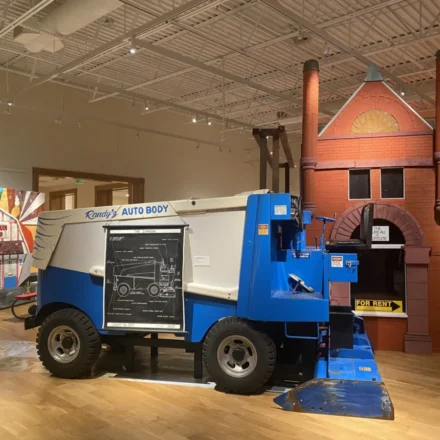
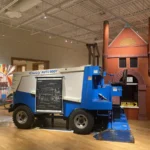
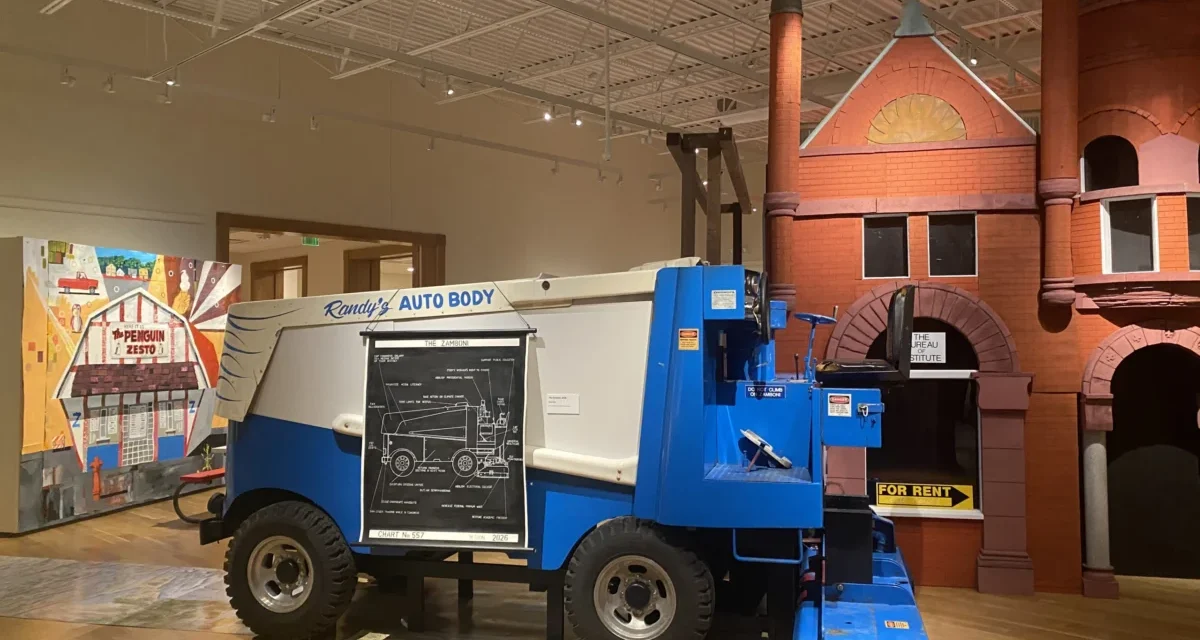
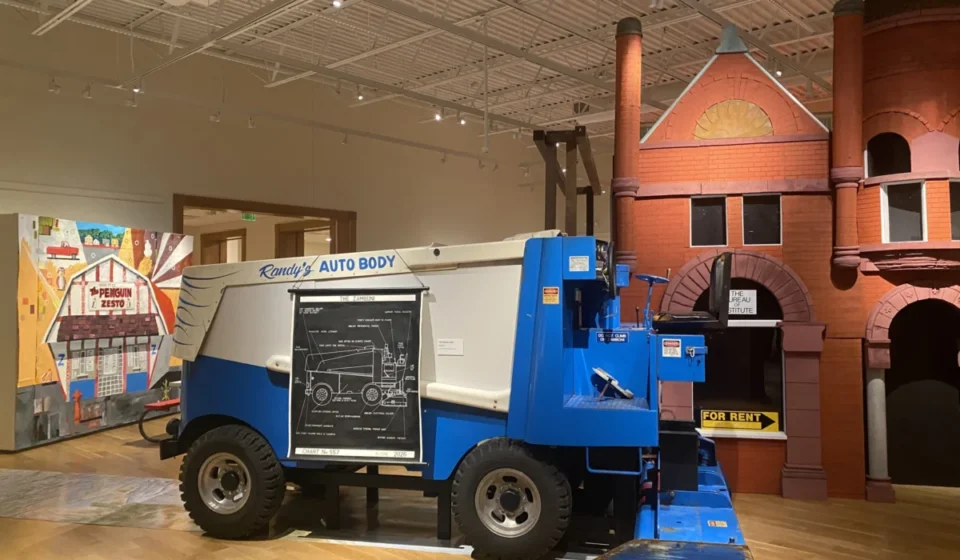
Upon entering the "Home(town)" exhibition, visitors are greeted by a surreal, industrial presence: a fully functional Zamboni. It is not a replica, but a genuine machine, serving as a jarringly mundane object in the high-art setting of the gallery.
The machine is paired with a hand-drawn map by artist Allen Brewer, which traces a fictionalized route of the Zamboni from Winona to the Mississippi River’s source at Lake Itasca. This is not just a whimsical travelogue; it is a profound commentary on the interconnectedness of Minnesota’s geography. The Zamboni, typically a tool for maintaining order on the ice, here becomes a vessel for mapping the state’s most vital waterway.
Adorning the side of this massive vehicle is a diagram by artist Mark Dion that reinterprets the machine’s mechanical parts as political catalysts. In a move that blends civic instruction with artistic satire, the diagram labels components of the machine with commands such as "Overturn Citizens United," "Abolish Electoral College," and "Term Limits for SCOTUS." The synergy between Brewer’s map and Dion’s diagram transforms the Zamboni into a manifesto on wheels, inviting viewers to imagine a more equitable and functional version of the United States.
Institutional Weight and the "Bureau of Institute"
DuCett’s practice relies heavily on the use of "institutional weight"—the authority we grant to signs, official forms, and museum labels. Adjacent to the Zamboni is a structure meant to represent the historic architecture of Winona. Complete with a "For Rent" sign, the structure houses the "Bureau of Institute," a fictional administrative body that mirrors the absurdity of bureaucratic systems.
Much like the work of Václav Havel in his play The Memorandum, DuCett’s "Bureau" pokes fun at the tendency of modern life to create endless, meaningless layers of administration. Yet, the artist also leaves room for optimism. Throughout the run of the exhibition, the structure is intended to host rotating businesses, implying that the "Bureau" could actually become a space for real, future-oriented community growth.
The Intersection of Memory and Local Lore
While the museum has traditionally focused on maritime art, "Home(town)" signals a shift in the institution’s scope. By including local landmarks—such as the Penguin Zesto ice cream shop—the MMAM is expanding its definition of what constitutes "marine art." The river, after all, is not just a body of water; it is a cultural artery that feeds the local economy and defines the daily lives of those who live on its banks.

Collaborating with artist Carolyn Swiszcz, DuCett celebrates the legacy of Penguin Zesto, a multi-generational staple in Winona. Through zines, a vibrant mural, and historical context regarding the shop’s former giant ice cream sculpture, the exhibit validates the small, seemingly ephemeral details of local life. When visitors compare these exhibits to the real experience of visiting the Trempealeau National Wildlife Refuge or the Winona Athletic Club, the exhibition ceases to be an object of study and becomes a lens through which to view one’s own reality.
Implications for the Future of Museums
The implications of DuCett’s work for the broader art world are significant. "Home(town)" asks fundamental questions: Who gets to write the history of a city? What happens to the "soul" of a place when its physical components are extracted and displayed in a museum? And, most importantly, can a museum serve as a living, breathing component of a city rather than a mausoleum for its past?
The success of the exhibit lies in its ability to balance irony with genuine affection. There is a "mad kind of love" woven into the fabric of the show. By satirizing the way we categorize and store our collective memories, DuCett manages to preserve them more effectively than a traditional archive ever could.
As the exhibition continues, the "Rocco’s corner" remains a fan favorite—a space where, despite the neon Miller Lite sign and the museum-sanctioned distance, one feels the immediate, sensory memory of a Friday night dinner. It is a testament to the fact that while objects can be moved, loan-agreed, and displayed, the stories attached to them remain, for better or worse, in the community that birthed them.
DuCett’s "Home(town)" is an invitation to engage with the world with the same mixture of skepticism and awe. It serves as a reminder that the stories we tell about our hometowns are never finished; they are constantly being written, revised, and, occasionally, hung on a wall in a museum, waiting for the next visitor to come along and breathe life into the frame.