

























































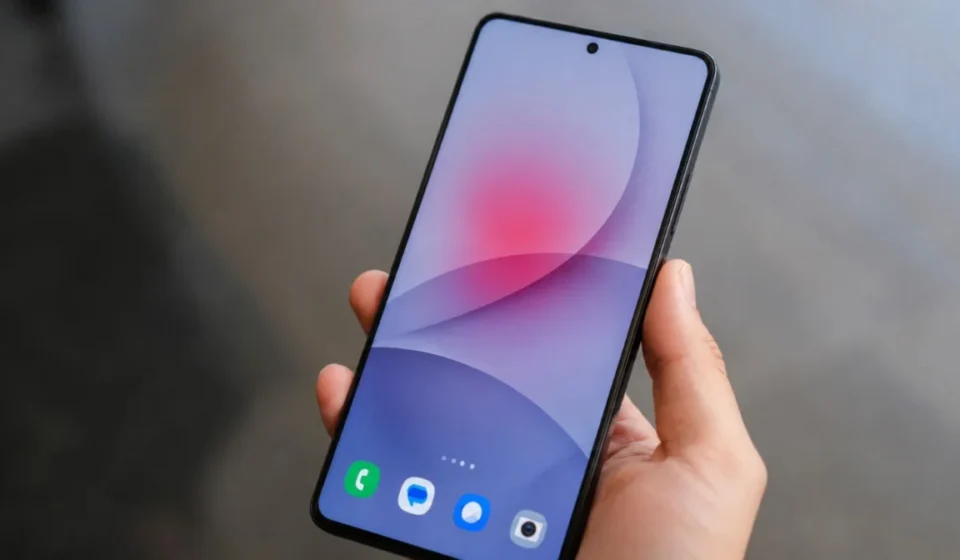

Samsung’s premium flagship smartphone, the Galaxy S26 Ultra, is facing mounting scrutiny as a growing number of users report a distinct, localized red or pink patch appearing near the center of their displays. The issue, which manifests as a concentrated discoloration that remains fixed regardless of the content being displayed, has prompted Samsung to launch an internal investigation.
This development marks another chapter in a series of display-related controversies for the tech giant’s most expensive mainstream device, raising questions about hardware quality control and the long-term durability of its highly publicized screen innovations.
1. Main Facts: The Nature of the S26 Ultra Red Patch Defect
The primary issue centers on a concentrated pink-to-red discoloration located near the middle of the Galaxy S26 Ultra’s OLED panel. Unlike software-driven display anomalies or overall color temperature shifts—such as a system-wide warm tint—this phenomenon is localized and static.
+----------------------------------------+
|         Samsung Galaxy S26 Ultra       |
|                                        |
|              +----------+              |
|              |  Fixed   |              |
|              | Red/Pink |              |
|              |  Patch   |              |
|              +----------+              |
|                                        |
|   (Discoloration remains static over   |
|    changing apps, menus, & images)     |
+----------------------------------------+
Key Characteristics of the Defect:
- Static Placement: The reddish patch occupies a fixed region in the center of the screen. As users scroll through menus, switch applications, or view images, the discoloration remains stationary, overlaid on top of the changing user interface.
- High Contrast on Light Backgrounds: The defect is particularly noticeable when displaying solid, light-colored backgrounds, such as white, light gray, or light blue.
- Resistance to Calibration: Impacted users report that adjusting system settings—including screen brightness, manual white balance, Eye Comfort Shield, and Adaptive Color Tone—fails to eliminate or reduce the intensity of the red patch.
- Gradual Onset: Many owners report that their devices appeared completely normal upon unboxing, with the red discoloration developing gradually over several days or weeks of regular usage.
- Presence in Retail Environments: In addition to consumer-owned devices, similar discoloration marks have been spotted on retail demonstration units in physical stores, suggesting the issue is not isolated to specific consumer charging habits or environments.
2. Chronology: From Launch Debates to the Emergence of the Red Patch
The emergence of the red patch is not the first time the Galaxy S26 Ultra’s display has been the subject of public debate. The device’s screen has been a focal point of discussion since its release, moving through several phases of user feedback and technical criticism.
[ Launch ] ──> [ Clarity & Eye Strain Debates ] ──> [ Color Depth Controversy ] ──> [ Red Patch Reports ]Phase 1: Early Clarity and Eye Strain Complaints
Immediately following the launch of the Galaxy S26 Ultra, early adopters populated online forums with complaints regarding visual comfort. Some users reported experiencing eye strain, headaches, and a perceived lack of text clarity. While many owners praised the display’s brightness and outdoor visibility, a vocal minority claimed the panel exhibited a subtle, fuzzy rendering style that caused visual fatigue, even when the phone’s high-profile "Privacy Display" feature was completely disabled.
Phase 2: The 8-Bit vs. 10-Bit Color Controversy
Shortly after the initial display comfort debates, tech analysts and consumers scrutinized Samsung’s marketing materials regarding color depth. Samsung advertised advanced 10-bit color processing for the S26 Ultra. However, hardware analysis revealed that the physical OLED panel is natively an 8-bit display that utilizes temporal dithering and image processing algorithms to simulate a wider 10-bit color range.
While temporal dithering is a common industry practice, consumers purchasing an "Ultra" flagship at a premium price point expressed disappointment over the discrepancy between hardware specifications and marketing terminology.
Phase 3: Reports of the Red Patch Surface
The latest and most severe phase began when users on platforms such as Reddit, Korean online communities (such as Naver), and Samsung’s official community forums began sharing photographs of a physical red tint in the center of their screens. Unlike the subjective debates surrounding eye strain or color depth processing, the red patch represents a highly visible, objective hardware anomaly that cannot be dismissed as a calibration preference.
3. Supporting Data & Technical Hypotheses
While Samsung has not yet released a formal technical post-mortem, hardware specialists, display engineers, and online communities have formulated several prominent theories regarding the root cause of the red patch.
The Privacy Display Integration Hypothesis
One of the most discussed variables unique to the Galaxy S26 Ultra is its integrated Privacy Display technology. Advertised as a mobile-first hardware feature, this system allows users to restrict side-angle viewing to prevent onlookers from seeing sensitive information, such as passwords, personal messages, or corporate applications.
Standard OLED Stack                  S26 Ultra Stack (Speculative)
+------------------------+           +------------------------+
|     Cover Glass        |           |     Cover Glass        |
+------------------------+           +------------------------+
|   Polarizer/Adhesive   |           | Privacy Layer/Micro-opt| <--- Suspected source of
+------------------------+           +------------------------+      thermal/optical stress
|       OLED Panel       |           |   Polarizer/Adhesive   |
+------------------------+           +------------------------+
                                     |       OLED Panel       |
                                     +------------------------+
To achieve this, the display incorporates pixel-level modifications and optical micro-structures that alter the path of exiting light. Because this layer is deeply integrated into the panel stack, some experts hypothesize that:
- The micro-optical elements may be undergoing physical or chemical degradation under the influence of device heat.
- The layer may cause uneven light diffraction over time, manifesting as a warm or reddish hue in the area of highest thermal concentration—typically near the center of the chassis where the processor and mainboard are located.
- Turning the software toggle for the Privacy Display "off" does not physically remove the layer from the display stack, explaining why disabling the feature does not resolve the red tint.
The Thermal and Adhesive Degradation Hypothesis
Modern smartphone displays are constructed using multiple laminated layers, including the cover glass, polarizing filters, touch digitizers, and the OLED substrate itself. These layers are bound together using Optically Clear Adhesives (OCA).
If a specific batch of adhesive is highly sensitive to the thermal cycles of the device, localized heat generated by the processor, battery, or wireless charging coils could cause the adhesive to partially cure, degrade, or delaminate. This chemical alteration can change the refractive index of the adhesive layer, resulting in a localized color shift—frequently appearing as a yellow, pink, or red patch.
Historical Context: Samsung’s Past Display Issues
To understand the technical plausibility of these theories, it is helpful to examine how Samsung has resolved similar display anomalies in previous generations:
| Device Model | Reported Display Issue | Resolution Method |
|---|---|---|
| Galaxy S20 Series | Sudden green tint appearing at low brightness and high refresh rates. | Resolved via a software calibration update. |
| Galaxy S24 Series | Washed-out colors and a grainy, "sandy" texture on dark gray backgrounds. | Partially adjusted via software color profile updates; some hardware variance remained. |
| Galaxy S21 / S22 / S23 | Sudden, permanent vertical green or pink lines running down the screen. | Handled via physical display replacements, with Samsung offering free out-of-warranty repairs in select markets. |
4. Official Responses and Consumer Diagnostic Guidelines
Samsung has officially acknowledged the reports of the red patch and confirmed that its engineering teams are reviewing affected hardware internally. However, the manufacturer has stopped short of declaring a hardware defect, announcing a recall, or detailing the exact percentage of devices affected.
Official Stance
In statements provided to technology publications, Samsung representatives indicated that they are actively analyzing customer devices returned through official service channels. The company advises any user experiencing unusual display behavior to contact Samsung Support or visit an authorized service center for an evaluation.
Diagnostic Steps for Affected Owners
Because digital cameras automatically adjust white balance, exposure, and color saturation, photographs of a phone screen can sometimes exaggerate or misrepresent subtle tints. To help owners determine whether their Galaxy S26 Ultra has a genuine physical defect, hardware experts recommend the following diagnostic protocol:
Step 1: Disable Display Modifiers (Eye Comfort, Adaptive Tone, Privacy Mode)
                               │
                               ▼
Step 2: Display Solid, Light-Gray & White Backgrounds in a Neutral Room
                               │
                               ▼
Step 3: Take a Screenshot & View It on a Secondary Device (PC, Tablet, or TV)
                               │
            ┌──────────────────┴──────────────────┐
            ▼                                     ▼
[ Red Patch Appears on PC ]           [ Red Patch Absent on PC ]
            │                                     │
            ▼                                     ▼
     Software Issue                        Hardware Issue
(Likely OS or App Glitch) (OLED Panel/Layer Defect)- Environmental Calibration: Move to a room with neutral, natural lighting. Avoid environments with strong warm or cool artificial light sources that could cause optical illusions on the screen glass.
- Deactivate Display Modifiers: Go to Settings > Display and temporarily turn off Eye Comfort Shield, Adaptive Color Tone, and the Privacy Display feature. This ensures the phone is outputting a standard color profile.
- Isolate with Test Patterns: Open full-screen, high-resolution images of solid white, light gray, and dark gray. Observe if a distinct, circular or rectangular pink/red patch remains visible in the center.
- The Screenshot Isolation Test: Capture a screenshot of the display while the red patch is visible. Transfer this screenshot file to another verified device, such as a computer monitor, tablet, or another smartphone.
- If the red patch is visible on the second device: The issue is rooted in the software, operating system, or a specific application rendering error.
- If the red patch is completely absent on the second device: The issue is physical, indicating a hardware defect in the S26 Ultra’s display panel or optical stack.
5. Implications for Samsung and the Smartphone Market
The emerging display issues on the Galaxy S26 Ultra carry significant financial and reputational implications for Samsung, particularly given the device’s positioning at the absolute top of the consumer smartphone market.
                  ┌──────────────────────────────┐
                  │ Galaxy S26 Ultra Display Bug │
                  └──────────────┬───────────────┘
                                 │
         ┌───────────────────────┼───────────────────────┐
         ▼                       ▼                       ▼
┌─────────────────┐     ┌─────────────────┐     ┌─────────────────┐
│ Reputational    │     │ Financial       │     │ Competitive     │
│ Risk            │     │ Risk            │     │ Risk            │
│                 │     │                 │     │                 │
│ Premium "Ultra" │     │ Expensive screen│     │ Competitors can │
│ branding is     │     │ replacement     │     │ capitalize on   │
│ compromised.    │     │ programs.       │     │ display flaws.  │
└─────────────────┘     └─────────────────┘     └─────────────────┘
Reputational Stakes for the "Ultra" Brand
The "Ultra" suffix in Samsung’s product lineup represents the pinnacle of mobile engineering, carrying a premium price tag to match. Consumers who purchase these models expect uncompromising quality. When hardware issues emerge—especially regarding the display, which is the primary interface of the device—it weakens the premium branding that Samsung has spent years cultivating.
Furthermore, Samsung Display is the industry-leading supplier of OLED panels globally, providing screens not only for Samsung Electronics but also for major competitors, including Apple and Google. A high-profile display defect on Samsung’s own flagship phone creates an uncomfortable irony, potentially affecting consumer trust in Samsung’s display technology as a whole.
Financial Consequences of Hardware Replacements
If Samsung’s investigation concludes that the red patch is a physical hardware defect—such as adhesive degradation under heat or a structural issue with the Privacy Display layer—the financial ramifications could be substantial.
Unlike software bugs, which can be resolved globally via an over-the-air (OTA) update at minimal cost, physical panel defects require manual replacement. Replacing an OLED panel integrated with specialized privacy layers is a highly complex, labor-intensive repair. If a significant percentage of production batches are affected, Samsung may be forced to initiate a formal hardware replacement program, leading to substantial warranty expenses and logistical challenges.
Market Positioning and Feature Risk
Samsung heavily promoted the built-in Privacy Display as a key differentiator for the Galaxy S26 Ultra—a hardware-level security feature that competitors like Apple’s iPhone or Google’s Pixel do not offer out of the box.
If this privacy layer is ultimately identified as the root cause of the red patch, a major selling point of the device could become its primary structural vulnerability. For now, consumers are advised to document any persistent discoloration, run isolation tests, and contact authorized service centers to protect their warranty rights while Samsung completes its technical investigation.