






















































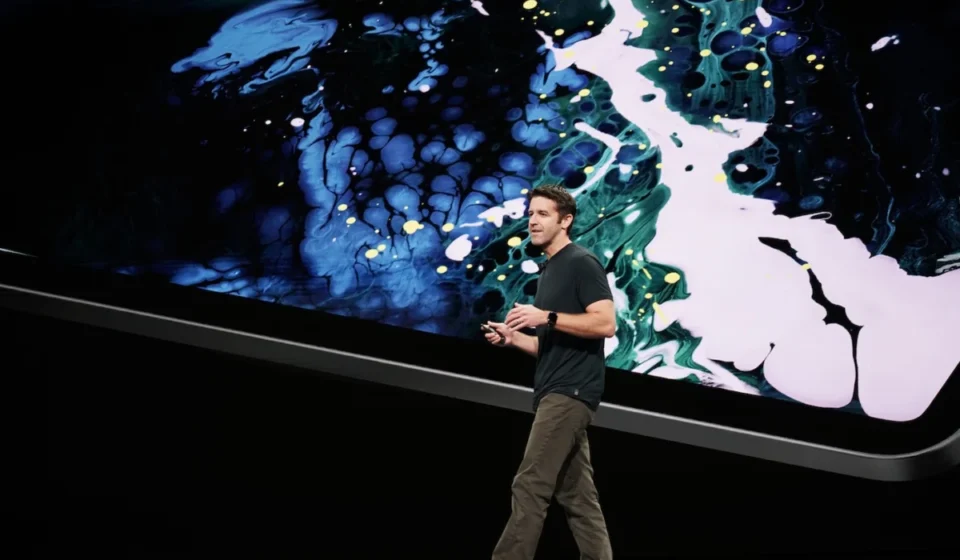

The atmosphere in Cupertino is thick with anticipation as the calendar inches toward September 9. For years, the rhythm of Apple’s product cycle has been a predictable, if exhilarating, march of iteration. However, this year’s event marks a tectonic shift. Beyond the unveiling of new hardware, the day represents the formal debut of John Ternus as the face of Apple’s leadership, signaling a transition from the era of Tim Cook to a new, potentially more hardware-centric chapter.
Main Facts: A New Chapter Begins
The primary focus of the upcoming keynote is the much-anticipated introduction of Apple’s first-ever folding smartphone. After months of fevered speculation, the industry is bracing for a device that could redefine the iPhone’s form factor. Yet, the gadget itself is only half the story.
John Ternus, having officially stepped into the role of CEO, is set to deliver his first keynote address. This transition is not merely administrative; it is a fundamental pivot in the company’s identity. While Tim Cook mastered the art of services-led growth and supply chain dominance, the appointment of Ternus—a career hardware engineer—suggests that Apple is preparing to refocus its massive resources on the physical architecture of its ecosystem.
Chronology: From the Cook Legacy to the Ternus Future
To understand the gravity of this moment, one must look at the timeline of Apple’s evolution:
- 2001–2011: The Steve Jobs Era, defined by the birth of the modern smartphone and the disruption of the music and mobile industries.
- 2011–2026: The Tim Cook Era. Cook took the reins following Jobs’ passing and, against early skepticism, turned Apple into the world’s most valuable corporation. He transitioned the company from a hardware-only player to a diversified giant with a massive services arm (Apple Music, iCloud, Apple Pay) and revolutionary hardware like the Apple Watch, AirPods, and Vision Pro.
- September 2026: The transition point. John Ternus ascends to the CEO chair, tasked with maintaining the financial momentum established by Cook while reinvigorating the product design philosophy that first made Apple a household name.
- September 9, 2026: The Keynote. The first public test of the Ternus leadership, featuring the foldable iPhone and a roadmap for the next two decades of innovation.
Supporting Data: The Economic Landscape
The scale of the task facing Ternus is monumental. When Tim Cook assumed the CEO role in 2011, Apple’s stock was trading at approximately $13.74 per share (split-adjusted). By the time of his departure, that figure had ballooned to nearly $320. This roughly 20-fold increase created unprecedented value for shareholders.
However, the "easy" growth phase—where Apple could simply capture new market segments—has matured. Today, Apple is a colossus that must grow by finding deeper utility within its existing user base. The services division, which now represents the company’s second-largest revenue stream, was the hallmark of Cook’s financial strategy. Ternus must now prove that he can balance this lucrative software-and-services model with a renewed, aggressive hardware push. His appointment of veterans like Laura Legros, former vice president of hardware engineering, underscores his commitment to keeping the hardware team as the primary engine of the company’s future.
Meet the New CEO: John Ternus
John Ternus is a figure of distinct contrast to the polished, cautious public persona of his predecessor. A member of the Apple team since 2001, he has spent the last five years leading the hardware division, overseeing the critical transition to Apple Silicon.
Beyond the boardroom, Ternus’s personal life offers a window into his leadership style. An avid amateur race car driver and owner of a rare 2019 Porsche 935, Ternus is accustomed to high-stakes decision-making at speed. Observers describe him as a calm, modest, and hyper-competent technocrat. In the world of high-performance racing, a split-second hesitation can be the difference between victory and catastrophe. This aptitude for navigating extreme environments is exactly what the board hopes he will bring to the helm of a $3-trillion enterprise.
Official Responses and Internal Direction
In his inaugural memo to the Apple workforce, Ternus signaled a tone of collaborative ambition. "I’m just as excited about what lies beyond that, including the incredible products already in the works and the ones we haven’t even imagined yet," he wrote.
His strategy appears to be one of "doubling down." By surrounding himself with deep-bench hardware talent, Ternus is signaling that the era of Apple as a consumer-electronics powerhouse is far from over. He is not looking to dismantle the Cook legacy but rather to build upon it, specifically by integrating the hardware-software-services triad into more complex environments, such as the smart home and home security sectors.
Implications: The Road Ahead
The implications of the September 9 keynote extend far beyond the announcement of a new phone. The industry is currently watching three specific pillars of the "Ternus Apple":
1. The Smart Home and Domestic Robotics
Indicators suggest that Apple is ready to make a significant play in the smart home space. This is not just about a better HomePod; it is about a holistic approach involving domestic robotics and advanced security services. By leveraging its privacy-first AI framework, Apple hopes to succeed where others have struggled: providing high-utility smart home automation without sacrificing the personal data of the user.
2. The Enterprise Frontier
For years, Apple has remained relatively quiet regarding its enterprise offerings. Under Ternus, analysts expect a more aggressive push into the professional and enterprise sectors. If Apple can better integrate its hardware ecosystem with the specific needs of businesses—beyond simple mobile device management—it could unlock a massive new revenue stream that remains largely untapped.
3. The AI Challenge
Perhaps the greatest challenge for the new CEO is the implementation of Artificial Intelligence. Apple’s approach has been famously cautious, prioritizing privacy over the "move fast and break things" philosophy of its rivals. Ternus must now scale this. He needs to deliver AI agents that are powerful enough to compete with market leaders while maintaining the ironclad security standards that consumers expect from an Apple product. The risk of poor AI implementation—particularly in the home or health sectors—could be detrimental to the brand’s hard-won reputation.
The "One More Thing" Expectation
As the clock runs down, the narrative is clear: we are witnessing the start of a new era. While tomorrow’s product lineup—the folding iPhone, the next generation of Apple Watches, and potential updates to the iPhone 18 series—was largely architected under Cook, the presentation of these products will define the Ternus brand.
Will he open with the iconic "Hello"? Will he deliver the legendary "One more thing" that defined the Jobs and Cook keynotes? More importantly, can he convince the world that the most innovative years for Apple are still ahead?
The transition from speculation to reality begins at 10:00 AM (PT). For John Ternus, it is the start of the most important race of his career—one where the track is global, the competition is fierce, and the legacy he is inheriting is nothing short of historic. He has been CEO for a week, but the real work begins tomorrow.