

































Federal Regulators Launch Probe Into Tesla’s Cybercab Debut Over Safety Certification Concerns

By Sean O’Kane
September 4, 2026
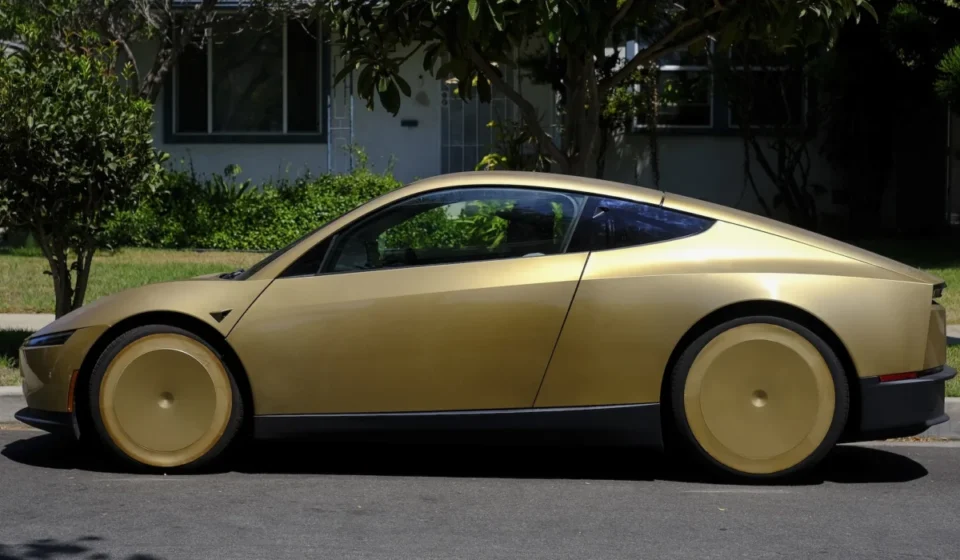
The automotive landscape shifted in an instant on Friday morning, as the first of Tesla’s long-awaited "Cybercabs"—a radical, purpose-built autonomous vehicle lacking both steering wheels and brake pedals—began navigating the public streets of Austin, Texas. However, the milestone celebration was abruptly punctuated by a significant regulatory intervention. Mere hours after the vehicles commenced operation, the National Highway Traffic Safety Administration (NHTSA) announced it has launched a formal investigation into the legal and technical basis of Tesla’s decision to deploy the fleet.
This investigation marks a critical juncture in the ongoing tug-of-war between rapid technological innovation in the autonomous vehicle (AV) sector and the established, often rigid, federal safety frameworks designed for human-operated automobiles.
The Core Conflict: Automation vs. Regulation
At the heart of the probe is the fundamental design of the Cybercab. By omitting manual controls, Tesla has pushed the boundaries of what constitutes a "vehicle" under existing federal definitions. Historically, the Federal Motor Vehicle Safety Standards (FMVSS) have mandated that vehicles include physical interfaces—steering wheels, pedals, and mirrors—to allow a human driver to intervene in the event of an emergency.
Tesla, however, has taken a bold and legally aggressive stance. The company informed NHTSA that it has self-certified the Cybercab as being in full compliance with FMVSS, arguing that the vehicle’s advanced autonomous systems render traditional manual controls redundant and, potentially, even dangerous.
NHTSA’s investigation, assigned under reference number AQ26002, aims to scrutinize the technical data and the legal rationale that Tesla employed to arrive at this self-certification. "The agency is opening an investigation to examine the process and technical data on which Tesla relied when certifying the Cybercab and related issues," the regulator stated in a formal filing.
A Chronology of the Cybercab Rollout
The timeline leading up to this morning’s regulatory friction is a study in high-stakes corporate maneuvering:
- June 2026: The Department of Transportation (DOT) signals a pivot in policy, proposing the removal of mandatory brake pedal requirements for vehicles explicitly designed for autonomous operation. This move was widely viewed as a major victory for Tesla’s lobbying efforts.
- August 2026: Tesla ramps up testing in private facilities in Texas, preparing for an aggressive public launch.
- Early September 2026: Tesla confirms the commencement of commercial operations for the Cybercab fleet in Austin, Texas.
- September 4, 2026 (5:01 AM PDT): The first Cybercabs hit public roads.
- September 4, 2026 (Late Morning): NHTSA officially announces the opening of an investigation into the vehicle’s certification process.
Self-Certification: The Automotive Industry Standard
To understand why this is a point of contention, one must understand how vehicle safety is regulated in the United States. Unlike some sectors where a government agency must grant explicit "type approval" before a car can be sold, the automotive industry operates largely on a system of "self-certification."
Under this framework, manufacturers like Tesla, Ford, and General Motors test their own vehicles against federal standards and sign off on their compliance. The government’s role is generally reactive; it audits these certifications, investigates crashes, and mandates recalls if a vehicle is found to be non-compliant or hazardous after it has already hit the road.
Tesla’s critics argue that the Cybercab represents a unique case where the gap between "standard vehicle" and "autonomous robot" is too wide for the traditional self-certification honor system. By asserting that certain federal standards are "inapplicable" to the Cybercab, Tesla has effectively created its own interpretation of the law—a move that NHTSA now intends to rigorously test in a court of public and legal scrutiny.
Implications for the Future of Autonomous Transit
The implications of this investigation extend far beyond Tesla’s stock price or the immediate future of the Cybercab.
The Regulatory Precedent
If NHTSA determines that Tesla’s interpretation of the FMVSS was overly broad or legally insufficient, it could force a massive recall or a mandatory halt to the service. Conversely, if Tesla successfully defends its process, it could establish a landmark precedent that effectively writes the "manual control" requirement out of American automotive history, paving the way for a generation of vehicles that function more like automated pods than traditional cars.
The Impact on Competitors
Companies like Waymo, Zoox, and Cruise have navigated a much more cautious, incremental path toward removing steering wheels, often working in close, prolonged consultation with regulators. Tesla’s "move fast and break things" approach—applied here to the most regulated industry in the world—creates a competitive dynamic that could force other manufacturers to accelerate their own timelines, regardless of the potential for regulatory backlash.
The Question of Safety Data
While Tesla maintains that its Autopilot and Full Self-Driving (FSD) suites (the foundation of the Cybercab’s intelligence) are safer than human drivers, the burden of proof is high. NHTSA’s investigation will likely require Tesla to disclose proprietary data regarding how the Cybercab handles edge cases—scenarios where the software must make split-second decisions without the possibility of human override.
Official Responses and Next Steps
As of this writing, Tesla has not released a detailed public rebuttal to the NHTSA filing, though the company’s history suggests a combative stance in defense of its engineering choices.
For its part, NHTSA is keeping its cards close to the vest. The agency’s focus is explicitly on the "process and technical data" of the certification. They are not merely asking if the car is safe; they are asking how Tesla decided the law didn’t apply to it in the first place.
"The investigation will consider the extent to which the company’s certification depended on determinations that certain federal motor standards are inapplicable to the Cybercab," the agency noted. This is a crucial distinction. The regulator is questioning the logic of the exclusion as much as the performance of the vehicle.
Industry Analysis: A High-Stakes Gamble
Industry observers are divided on the move. Supporters of Elon Musk’s vision see this as the inevitable friction of progress, arguing that bureaucratic red tape shouldn’t stand in the way of a technology that could theoretically save thousands of lives currently lost to human error.
"Tesla is betting that the data will eventually speak louder than the regulation," says one transportation analyst. "If they can prove the Cybercab has a lower crash rate than a human-driven sedan in the first six months of operation, the political pressure on NHTSA to approve their design will be immense."
However, safety advocates warn that the removal of a "fail-safe" manual control is a bridge too far. "A steering wheel is the ultimate redundancy," says a spokesperson for a prominent automotive safety group. "When the software fails—and software always fails—you need a human to take the wheel. By removing it, Tesla is removing the safety net."
As the Cybercabs continue to circulate through the streets of Austin, the eyes of the global automotive world are fixed on the interplay between the code driving these machines and the regulators auditing their right to exist. For now, the experiment continues, but the window of opportunity for Tesla to prove its case is closing rapidly under the watchful gaze of federal authorities.
This story is developing. Check back for further updates as legal filings and additional data emerge from the ongoing NHTSA probe.
Disclaimer: When you purchase through links in our articles, we may earn a small commission. This doesn’t affect our editorial independence.