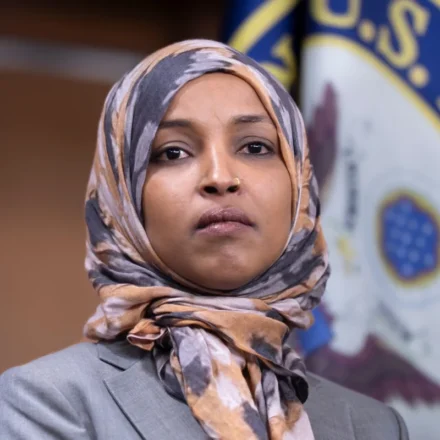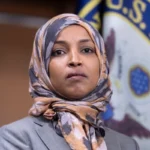

















































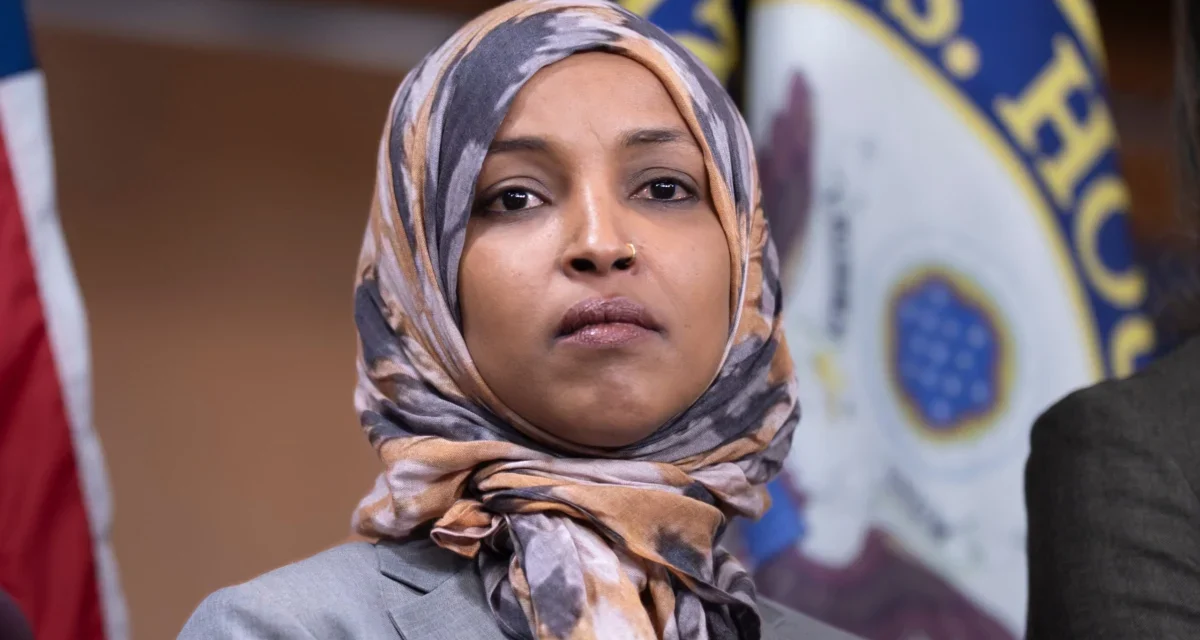





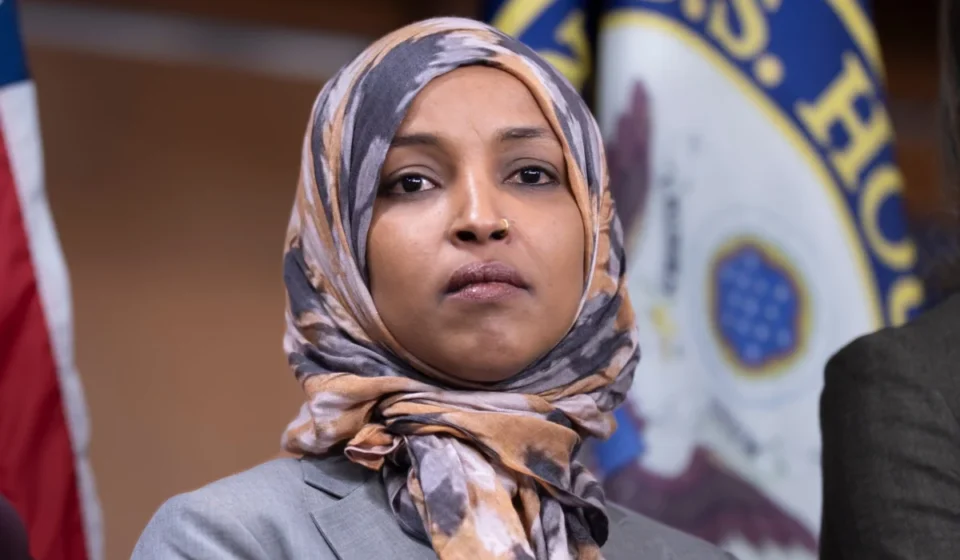

WASHINGTON D.C. – In a dramatic escalation of long-standing political hostilities, federal agents from Homeland Security Investigations (HSI) executed a search warrant at the Washington D.C. residence of Democratic U.S. Representative Ilhan Omar on Monday. The action, confirmed by the Justice Department as part of an "ongoing federal criminal investigation," immediately ignited a fierce political backlash, with Omar and her Democratic colleagues condemning it as a politically motivated attack just three weeks before the November midterm elections.
The precise nature and scope of the criminal probe remain officially undisclosed. However, the search comes after years of relentless accusations from senior Trump administration officials and Republican figures, including Vice President JD Vance and Homeland Security Secretary Markwayne Mullin, alleging immigration fraud against the Minnesota congresswoman. Omar, a prominent progressive voice and one of the first two Muslim women elected to Congress, has consistently and vehemently denied these allegations as "baseless lies" and "smear campaigns."
The timing of the search has drawn particular scrutiny, occurring well within the 60-day window before an election when the Justice Department typically refrains from public investigative actions involving political candidates. This perceived deviation from established norms has fueled accusations that federal law enforcement is being weaponized for partisan purposes, thrusting the politically charged investigation into the national spotlight with significant implications for both Omar’s re-election bid and the broader political landscape.
Main Facts of the Investigation
On Monday morning, federal agents from Homeland Security Investigations (HSI) descended upon the Washington D.C. home of Congresswoman Ilhan Omar, blocking off the street as they conducted a judicially authorized search. Two individuals familiar with the matter, who spoke on condition of anonymity due to the ongoing nature of the investigation, confirmed the operation, though they were not authorized to publicly discuss it.
The Justice Department, in a terse statement, acknowledged that HSI agents had executed a search warrant secured by the department in the Washington D.C. area, adding that this "enforcement action is part of an ongoing federal criminal investigation." Beyond this confirmation, federal authorities offered no further details regarding the specific allegations or the focus of the probe. An email seeking comment from Rep. Omar’s office on Monday went unanswered initially, though she later issued a forceful denial via social media.
Omar, 44, represents Minnesota’s 5th Congressional District, which includes Minneapolis. First elected in 2018, she quickly rose to national prominence as a member of "The Squad," a group of progressive female lawmakers known for their outspoken views and sharp critiques of former President Donald Trump and conservative policies. Her background as a Somali-born immigrant and her left-wing political stances have made her a frequent target for Republicans, leading to years of sustained criticism and allegations.
The search immediately triggered a political firestorm, largely due to its proximity to the upcoming November midterm elections. With just three weeks remaining until voters head to the polls, Democratic leaders swiftly condemned the action, arguing it constituted a politically motivated interference in the electoral process and an unprecedented weaponization of federal law enforcement against a sitting Member of Congress.
Chronology of Allegations and Actions
The federal search of Rep. Ilhan Omar’s home did not emerge in a vacuum but is the latest development in a prolonged and highly publicized campaign of allegations and scrutiny primarily spearheaded by conservative figures and the Trump administration. The accusations against Omar, predominantly centered on alleged immigration fraud and other financial malfeasance, predate her initial election to Congress in 2018.
Early Accusations and Denials (Pre-2018): Questions about Omar’s personal history, including assertions that she married her brother and committed immigration fraud, first surfaced before she was elected to the House. These claims, often amplified by conservative media and political opponents, were consistently and emphatically denied by Omar, who dismissed them as "disgusting lies" and attempts to discredit her. Her office has maintained that these allegations are fabricated and lack credible evidence.
Trump Era Escalation (2018-2020): Following her election, Omar became a frequent and prominent target for then-President Donald Trump. Trump regularly invoked Omar’s name at rallies, often attacking her immigrant background, her progressive views, and reiterating the unproven allegations against her. This sustained presidential rhetoric significantly elevated the profile of the accusations, embedding them within the national political discourse and transforming Omar into a symbol for both her supporters and her detractors.
Vice President JD Vance’s Public Calls for Investigation (May, Current Year): The push for a formal investigation gained new momentum earlier this year when Vice President JD Vance publicly signaled the Trump administration’s intent to scrutinize Omar. In May, Vance openly told reporters, "It certainly seems like something fishy is there, but everybody’s entitled to equal justice under the laws. So we’re going to investigate it. We’re going to take a look at it. If we think there’s a crime, we’re going to prosecute that crime." He went further in a separate interview with conservative podcaster Benny Johnson, stating without offering evidence, "we actually think that Ilhan Omar definitely committed immigration fraud against the United States of America." Vance elaborated on his discussions with then-Deputy White House Chief of Staff Stephen Miller, a known hardliner on immigration, about "trying to look at what the remedies are" and "how to investigate her, how to actually do the thing, how to build the case necessary to get some justice for the American people." Omar’s chief of staff, Connor McNutt, at the time, dismissed Vance’s claims as "fabricated and defamatory," a "ridiculous lie and desperate attempt to distract" from other political issues.
Homeland Security Secretary Mullin’s Confirmation (Last Month): Just weeks before the search, Homeland Security Secretary Markwayne Mullin publicly confirmed the existence of an "ongoing investigation" related in part to whether Omar lied on her immigration forms. Mullin’s remarks, including his ominous statement that "something’s going to happen," further telegraphed the administration’s intentions and heightened anticipation of official action against the congresswoman.
Congressional Actions and Other Incidents (2023-Present): The political targeting of Omar has not been limited to verbal attacks. When Republicans gained control of the House in 2023, they voted to remove Omar from the influential House Foreign Affairs Committee, citing her controversial remarks critical of Israel. This move was seen by Democrats as another politically motivated act designed to silence a prominent progressive voice. In January of the current year, the rhetoric surrounding Omar took a physical turn when an assailant sprayed her with a substance (later identified as vinegar) during a town hall meeting in Minneapolis, hours after Trump had again criticized her at a rally in Iowa. The attacker was subsequently sentenced to 14 months in prison.
The Search (Monday): This history of persistent allegations, public statements from high-ranking officials, and congressional actions culminated in Monday’s federal search. The presence of HSI agents, an investigative arm of the Department of Homeland Security (DHS), directly follows the public statements from Secretary Mullin and Vice President Vance, drawing a clear line between the administration’s rhetoric and the executive action. The street was blocked off as agents conducted their search, signaling the serious nature of the operation.
Timing Controversy: The decision to conduct such a high-profile investigative action just three weeks before a general election has immediately raised questions about adherence to long-standing Justice Department policy. Historically, the DOJ has sought to avoid public investigative actions involving political candidates within 60 days of a primary or general election to prevent the appearance of political interference and to safeguard the integrity of the electoral process. The search of Omar’s home falls squarely within this sensitive period, intensifying the political fallout.
Supporting Data and Context
The investigation into Rep. Ilhan Omar unfolds against a backdrop of heightened political polarization and a charged environment where allegations, particularly those concerning immigration and national identity, often become potent political weapons. Understanding the nature of the allegations, the role of the agencies involved, and the relevant political norms is crucial for contextualizing Monday’s events.
The Nature of Immigration Fraud Allegations: While specifics of the current federal probe remain undisclosed, the public discourse surrounding Omar has consistently focused on allegations of immigration fraud. Such claims can encompass a range of offenses, including making false statements on immigration documents, misrepresenting marital status, or engaging in sham marriages to gain immigration benefits. These are serious federal offenses that, if proven, can carry significant legal consequences, including fines, imprisonment, and even deportation for non-citizens (though Omar is a naturalized U.S. citizen and a sitting member of Congress). It is important to note that these remain unproven allegations, and Omar has steadfastly denied any wrongdoing.
Ilhan Omar’s Political Profile and Significance: Omar’s identity as a Somali-born refugee who immigrated to the U.S. and later became a naturalized citizen and a Member of Congress is central to the political narrative surrounding her. She represents a significant demographic shift in American politics and is a powerful symbol for many immigrant communities and progressive activists. Her outspoken progressive views on issues ranging from foreign policy to economic justice, often articulated with sharp critiques of Republican policies and leadership, have made her a lightning rod for conservative opposition. Her membership in "The Squad" further solidifies her image as a leading figure in the Democratic Party’s progressive wing, ensuring that any action taken against her will resonate widely across the political spectrum.
Homeland Security Investigations (HSI): HSI is the principal investigative arm of the U.S. Department of Homeland Security (DHS). Its broad mission includes investigating a wide range of transnational crime, including customs violations, financial fraud, cybercrime, human trafficking, and immigration and human rights violations. Given its mandate, HSI is the appropriate agency to investigate allegations of immigration fraud. However, its involvement in a high-profile case targeting a sitting Member of Congress, particularly under the shadow of prior public statements from top DHS and White House officials, inevitably raises questions about the independence of the investigation.
Justice Department Policy on Election-Related Investigations: A critical piece of context for Monday’s search is the Justice Department’s long-standing policy regarding investigations involving political candidates during an election cycle. The "60-day rule," while not a rigid legal prohibition, is a guideline designed to prevent the appearance of political interference by federal law enforcement. It dictates that prosecutors and investigators should generally avoid taking overt investigative steps, such as executing search warrants or issuing indictments, that could affect an election within 60 days of a primary or general election. The purpose is to protect the integrity of the electoral process and ensure that justice is not perceived as being influenced by political considerations. The search of Omar’s home just three weeks before the midterms clearly falls within this sensitive window, making the Justice Department’s decision to proceed highly controversial and subject to intense scrutiny. Critics argue that this action breaches a crucial norm intended to safeguard the non-partisan nature of federal law enforcement.
Historical Precedents and Concerns over Weaponization: The current climate is rife with accusations of political weaponization of federal agencies. The debate around the FBI’s actions during the 2016 and 2020 elections, for instance, highlights the deep partisan divisions and distrust that can emerge when federal investigations touch high-profile political figures. While the Justice Department has defended its actions as legally authorized and necessary for ongoing investigations, the optics of targeting a prominent opposition figure so close to an election are inherently problematic, especially given the history of public pronouncements from the executive branch. This incident adds to a growing list of concerns among civil liberties advocates and some legal experts about the politicization of federal law enforcement.
Official Responses and Reactions
The search of Rep. Ilhan Omar’s home immediately triggered a wave of reactions from various political figures and institutions, ranging from strong condemnations to terse confirmations, underscoring the deep partisan divide surrounding the event.
Ilhan Omar’s Defiant Statement: Shortly after the news broke, Congresswoman Omar took to X (formerly Twitter) to issue a forceful statement, unequivocally rejecting the legitimacy of the search and framing it as a political attack. "This is an attempt to target political enemies and weaponize federal law enforcement," she declared. Omar directly linked the action to former President Trump, stating, "For ten years, Trump has targeted me with baseless lies and smear campaigns. This is just the latest escalation in his campaign of political intimidation." She concluded with a defiant promise: "I will not be silenced." Her statement positioned the investigation not as a legitimate legal inquiry but as a continuation of a politically motivated vendetta aimed at silencing a prominent critic.
House Democratic Leadership’s Strong Condemnation: Top Democratic leaders in the House swiftly rallied to Omar’s defense, issuing a joint statement that echoed her sentiments and condemned the federal action in the strongest terms. Their statement read, "For years, Donald Trump and far-right extremists have relentlessly targeted Congresswoman Omar with vile personal attacks and baseless accusations. Now, less than 30 days until the midterm election, his violent mass deportation machine has descended upon the home of a duly elected Member of Congress and her family." The use of phrases like "violent mass deportation machine" underscored their belief that the search was not only politically motivated but also a dangerous abuse of executive power, particularly given Omar’s immigrant background. They portrayed the action as an attack on democratic norms and institutions.
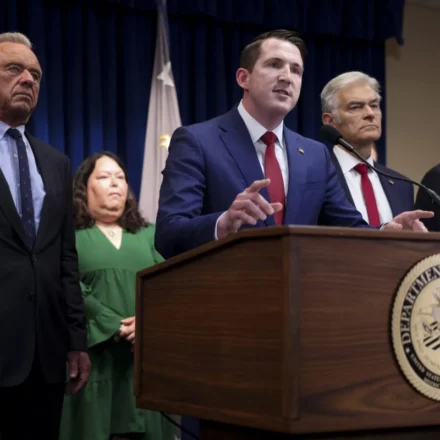
Justice Department and Department of Homeland Security’s Official Stance: In contrast to the emotional and politically charged responses from Omar and her Democratic colleagues, the federal agencies involved maintained a strictly factual and non-committal posture. The Justice Department confirmed in a statement that HSI agents had executed a "judicially authorized search warrant" in the Washington, D.C., area as "part of an ongoing federal criminal investigation." They provided no further details about the scope or nature of the investigation, adhering to standard practice for active criminal probes. Similarly, a spokesperson for the Department of Homeland Security, of which HSI is a part, referred all questions about the search to the Justice Department, declining to offer any additional information. This official silence, while standard procedure, stood in stark contrast to the prior public pronouncements from Vice President Vance and Secretary Mullin, which had openly discussed an impending investigation into Omar.
Omar’s Office’s Prior Defense Against Vance’s Claims: It is also important to recall the strong defense mounted by Omar’s office in March, in response to Vice President Vance’s earlier public accusations of immigration fraud. Omar’s chief of staff, Connor McNutt, issued a scathing statement at the time, dismissing Vance’s claims as "fabricated and defamatory." McNutt added, "This is rich coming from someone who literally said they were willing to ‘create stories’ to redirect the media. This is a ridiculous lie and desperate attempt to distract from the pedophile protection party’s unpopular war of choice, increasing gas prices, and rapidly dropping polling numbers." This consistent stance from Omar’s team indicates a long-held belief that the allegations are politically manufactured and part of a broader strategy to undermine her.
Republican Reactions (Implicit): While no new, specific Republican statements on the search were immediately available beyond the initial news, the prior comments from Vice President Vance, Homeland Security Secretary Mullin, and former President Trump serve as their implicit reaction. Their consistent public pressure for an investigation into Omar, coupled with their belief that "something fishy is there" and that she "definitely committed immigration fraud," suggests they view the search as a justified and necessary step in a legitimate legal process. This divergence in interpretation highlights the deep partisan chasm over the very premise of the investigation.
Implications and Future Outlook
The federal search of Rep. Ilhan Omar’s home carries significant implications, reverberating through her re-election campaign, the broader political landscape, and the public’s perception of federal law enforcement. The event is not merely a legal action but a potent political symbol in an already fractured nation.
Political Ramifications for Ilhan Omar:
- Re-election Bid: The most immediate impact is on Omar’s re-election campaign for Minnesota’s 5th District. While she is in a heavily Democratic district, a federal criminal investigation, regardless of its outcome, can be a damaging distraction and a potent talking point for opponents. Her defiant response aims to rally her base by framing the action as political persecution, but undecided voters might be swayed by the cloud of suspicion. The timing, so close to the midterms, maximizes its potential electoral effect.
- Reputational Damage: Even if no charges are ultimately filed, the public nature of the search itself can inflict lasting reputational damage. The mere association with a "federal criminal investigation" can erode public trust and provide fodder for ongoing political attacks, regardless of factual merit.
- Legal Costs and Stress: Defending against a federal investigation, even if unwarranted, is a costly and emotionally draining process, potentially diverting resources and attention from her legislative duties and campaign.
Implications for the Democratic Party:
- Rallying Cry: Democratic leaders have already coalesced around Omar, transforming the search into a rallying cry against what they perceive as the weaponization of federal agencies by political adversaries. This could energize their base, particularly progressive voters and minority groups who may see the action as an attack on one of their own.
- Accusations of Abuse of Power: The incident provides Democrats with powerful evidence to support their claims that the Trump administration is abusing its power and politicizing the Justice Department and other federal agencies. This narrative could be leveraged in the upcoming elections to discredit Republican governance.
- Divisive Issue: While unifying for some, the continued focus on Omar could also be a divisive issue within the broader Democratic coalition, particularly if the investigation yields unexpected developments.
Implications for the Republican Party and the Trump Administration:
- Validation of Claims: For Republicans, the search could be presented as a validation of their long-standing allegations against Omar. It allows them to argue that their concerns were legitimate and that federal authorities are finally taking action.
- Risk of Backlash: However, if the investigation fails to produce substantive charges, or if it is widely perceived as politically motivated without sufficient evidence, it could backfire severely. The Trump administration and its allies could face accusations of abusing federal power for partisan gain, potentially undermining public trust in institutions and fueling charges of authoritarianism.
- DOJ’s Independence: The perceived politicization of the Justice Department under Trump has been a recurring theme. This incident, coming after public statements from top executive officials and so close to an election, will intensify scrutiny of the DOJ’s independence and adherence to non-partisan principles.
Impact on Federal Law Enforcement and Public Trust:
- Erosion of Trust: The decision to conduct such an overt action within the 60-day election window, contravening established norms, risks further eroding public trust in the impartiality of federal law enforcement agencies like the Justice Department and HSI. For many, it will reinforce the perception that these agencies are susceptible to political pressure.
- Precedent Setting: The precedent set by this action could be concerning. If the norm against election-period investigations is seen as easily circumvented for political figures, it could open the door to similar actions in future elections, further blurring the lines between legal process and political maneuvering.
Legal Outlook:
- Next Steps: A federal criminal investigation typically involves grand jury proceedings, which are secret. If sufficient evidence is found, a grand jury could issue an indictment. If not, the investigation could be closed without charges. This process can be lengthy, taking months or even years.
- Outcome Uncertainty: The outcome remains highly uncertain. Omar has denied all allegations, and without knowing the specific details of the warrant and the evidence collected, it is impossible to predict whether charges will be filed.
In conclusion, the federal search of Rep. Ilhan Omar’s home is a politically charged event with profound implications. It underscores the deep divisions in American politics, the sensitivity surrounding the independence of federal law enforcement, and the high stakes involved when political rhetoric intersects with legal action, especially in the crucible of an election. The coming weeks and months will undoubtedly see continued debate, legal maneuvering, and intense public scrutiny as this "ongoing federal criminal investigation" unfolds.