


















































Navigating Volatility: Chris Finch on the Timberwolves’ Evolution, Coaching Transitions, and the "Joan Beringer" Era

As the Minnesota Timberwolves stand on the precipice of a new NBA campaign, Head Coach Chris Finch sits at the center of a franchise in flux. Following an 80-minute, wide-ranging interview with MinnPost, a picture emerges of a team attempting to reconcile the bitter frustrations of a disjointed previous season with the high-ceiling potential of a retooled roster.
In this final installment of our four-part series, we examine the developmental trajectory of 19-year-old center Joan Beringer, the organizational response to a significant coaching staff exodus, and Finch’s candid assessment of the "volatility" that will define the team’s identity in the coming months.
The Beringer Factor: A High-Stakes Development
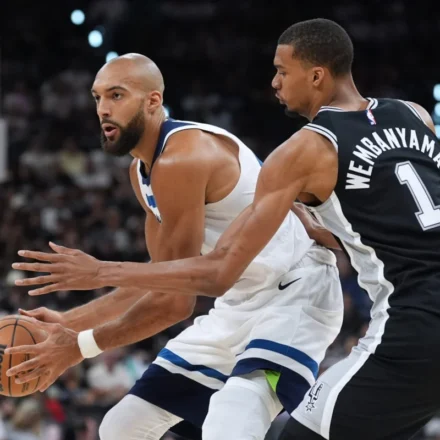
At the heart of the Timberwolves’ immediate future is 19-year-old center Joan Beringer. Despite his youth and "raw" status, the organization is undeniably bullish on his potential. However, Finch is quick to temper expectations, emphasizing the inherent inconsistency that accompanies young players.
"You have to realize, as with all young players, there is going to be inconsistency," Finch noted. "The way I’m looking at it is: is it self-imposed inconsistency or is it just young-player-growth inconsistency? With Joan, you are certainly going to have the latter. He plays so hard, he’s got incredible balance and energy. He’s got to figure out the balance of retaining that effort while regulating the urge to go after everything all the time."
Finch points to the physical side of the game as a critical area for improvement. The goal is to build Beringer’s core strength to prevent the frequent falls and out-of-position fouls that plagued his limited minutes last season. "Core strength is what gives you the ability to play in the air and land on your feet," Finch explained, drawing a parallel to the physical maturation seen in veteran Naz Reid.

For the upcoming season, Beringer is expected to anchor the backup center position. Finch admits that the team’s success may hinge on how quickly Beringer adapts to the rigors of the NBA, noting that if his performance dips too frequently, the team could find itself exposed.
Coaching Staff Turnover: Rebuilding the Brain Trust
The Timberwolves enter the season with a significant void to fill following the departure of Micah Nori, who was hired as the head coach of the Portland Trail Blazers. Nori served not only as a lead assistant but as Finch’s primary confidant and the architect of the team’s late-game and special-situation strategies.
Finch is currently in the midst of a "granular" reorganization of staff roles. Pablo Prigioni is set to step into the role of lead assistant, though his responsibilities will remain focused on offensive innovation. Meanwhile, the specialized tasks previously managed by Nori—such as clock management, foul tracking, and timeout usage—will be redistributed among the remaining staff, with Finch himself taking a more hands-on approach during high-leverage late-game situations.
"It is hard to replace a player straight-up for who they are," Finch observed. "Coaching staff is no different. It creates opportunities for some other people who are deserving of it."
Finch expressed confidence in the remaining staff, including Nate Bubes, Jeff Newton, and James White, noting that the organization thrives on this type of fluid adaptation. "I’ve always been a believer in ‘What are your best skill sets?’ and then I try to craft what you do around that. And if it has to change the way we’ve worked a little bit, then so be it."

A Post-Mortem on Last Season’s Underachievement
The conversation inevitably turned to the 2025-26 season, a year that Finch candidly described as "super-frustrating." Despite having a roster built on the premise of continuity, the team struggled with internal consistency, mood shifts, and a failure to meet the collective expectations set during the preseason.
Finch took ownership of the team’s tactical missteps, particularly regarding the late-season rotation shifts that affected the rhythm of key players like Mike Conley and Anthony Edwards. "I think we took Julius (Randle)’s last 35 games from two seasons ago for granted and we didn’t create enough easy stuff for him," Finch admitted. "We relied on him to try and create for everybody. That’s not fair and that’s all on me."
The coach highlighted a lack of "joy" as a recurring theme, acknowledging that the team often "couldn’t get out of its own way." This reflection has colored his approach to the current season, where he plans to be more assertive in implementing his vision for the team’s identity.
Defining the Identity: Speed, Passing, and Structure
When asked about the hallmarks of his coaching philosophy, Finch emphasized a desire to return to a faster, more egalitarian style of play. "I want to continue to play faster, offensively, for sure," he said. "We have got to get passing back into our game. We didn’t pass enough last year; at times I thought we even became reluctant passers."
Finch envisions a team that operates with freedom, but within a more rigid, purposeful structure. This includes a more strategic use of Anthony Edwards, utilizing the presence of a true point guard to create easier looks for the team’s star rather than forcing him to initiate every possession. Defensively, the mandate remains focused on ball pressure and physical engagement, though the specific schematic adjustments remain a work in progress.

Implications: A High-Ceiling, High-Volatility Future
Perhaps the most telling moment of the interview came when the discussion turned to the team’s outlook for the year. When asked if the Timberwolves have a higher ceiling but a lower floor compared to previous years, Finch quietly agreed.
"There might be more volatility on our team," Finch said. "We don’t know how the new players are going to integrate, and measure up against expectation."
Finch pushed back against the narrative that the team should be aiming for a specific "60-win" benchmark, noting the sheer difficulty of winning in the modern Western Conference. He argues that the focus should be on internal growth and finding the specific four or five pillars that will define this specific group’s success.
The Philosophy of Constant Change
For Finch, the Timberwolves’ tendency to aggressively reconfigure their roster is not a flaw, but a survival mechanism. His background in international basketball, where external volatility—from travel to financial instability—is a constant, has taught him to embrace change rather than fear it.
"I’ve learned to embrace it," Finch said. "I think it’s exciting to think about it that way—it never gets boring, put it that way."

As the Timberwolves head into training camp, the message from the top is clear: the era of "continuity" is over, replaced by a philosophy of intentional adaptation. Whether this willingness to iterate will lead to a championship run or further volatility remains to be seen. However, under Finch’s guidance, the team is choosing to lean into the uncertainty, betting that their ability to evolve will ultimately prove to be their greatest strength.