











































Education in the Shadow of Enforcement: Minnesota Schools Grapple with the Fallout of ‘Operation Metro Surge’

The landscape of Minnesota’s public education system is undergoing a profound and distressing transformation. From the bustling hallways of St. Paul to the quiet residential streets of Willmar, the daily routine of thousands of students has been upended by "Operation Metro Surge," a federal immigration enforcement initiative that has triggered a wave of fear, mass absenteeism, and an unprecedented pivot toward remote learning. As federal agents increase their presence, educators and superintendents are sounding the alarm: an entire generation of children is being forced to sacrifice their fundamental right to a stable childhood in favor of basic survival.
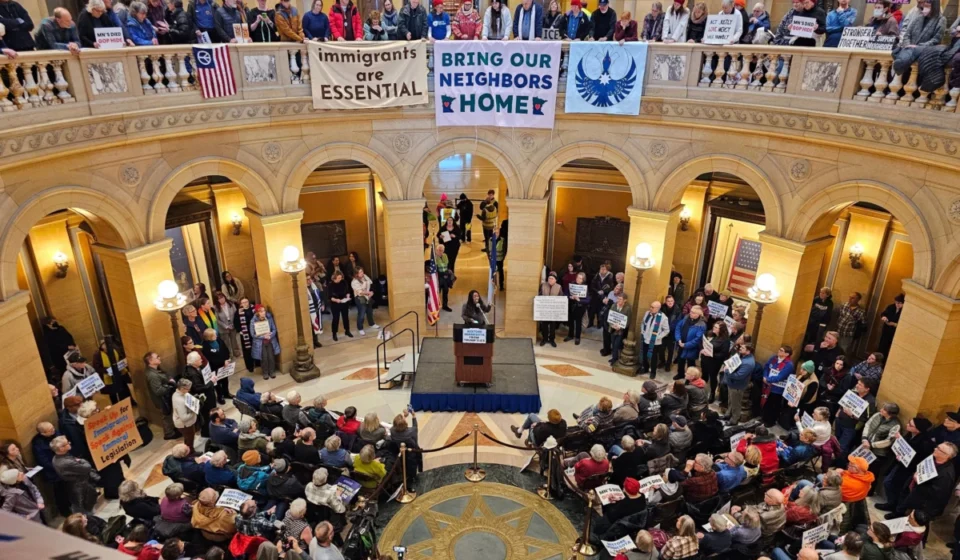
The crisis reached the halls of the state capitol this Wednesday, as the Senate Education Finance Committee held the first of several planned hearings to address the widening chasm between federal immigration policy and the operational realities of local schools.
The Human Cost: A Generation Living in Fear
For many Minnesota students, the school day no longer begins with a bus ride or a walk with friends. Instead, it begins with an atmosphere of stifling anxiety. The testimony provided at the legislative hearing painted a harrowing picture of children living in a state of constant, low-grade trauma.
Consider the elementary school student walking to the bus stop alone, while their parents watch nervously from behind closed curtains—a silent, desperate surveillance meant to ensure the child makes it safely to the curb. Or consider the middle schooler who returns home to an empty house, only to realize that their parents have been detained by immigration officials while they were in class. These are not isolated incidents; they are becoming the new baseline for many families in the state.
Amy Hewett-Olatunde, an English as a second language teacher within St. Paul Public Schools, provided a haunting assessment of the situation. At the height of the operation, nearly 7,000 students in her district alone were absent. "We are watching a generation of St. Paul children, and children across this entire country, lose their childhoods to a fear that no child should know," she testified.
Chronology of a Crisis
The impact of Operation Metro Surge did not manifest overnight, but rather through a series of escalating incidents that have effectively paralyzed school communities.
- Early Implementation: As federal activity increased, initial reports of student and parent detentions began to circulate through school networks.
- The Attendance Plunge: Following high-profile enforcement actions, districts across Minnesota saw immediate and drastic declines in daily attendance.
- The Shift to Virtual Learning: Recognizing that parents were too afraid to send their children to physical buildings, districts began facilitating a mass migration to online learning platforms.
- Systemic Disruption: Superintendents began reporting incidents of ICE vehicles patrolling school perimeters and instances where agents were accused of using deceptive tactics—such as posing as media—to track community members.
- Legislative Intervention: By the second day of the current session, DFL lawmakers introduced proposals aimed at restricting immigration enforcement near educational and childcare facilities, setting the stage for a tense political battle.
Supporting Data: The Statistics of Absence
While statewide, comprehensive data remains incomplete, the anecdotal evidence provided by school officials is staggering. The numbers paint a picture of a system struggling to maintain its core function: the education of children.
In Willmar Public Schools, Superintendent Bill Adams reported that a student—a legal resident—was detained for several days last month. In the wake of that incident, the district saw a 25% drop in attendance, resulting in 936 daily absences out of a total enrollment of roughly 4,000. Adams has since taken to performing personal home visits to ensure that children have a guardian present after their parents have been apprehended.
The situation is equally dire in the charter school sector. The Minnesota Association of Charter Schools reported that some institutions have faced attendance drops exceeding 40%. At Partnership Academy in Richfield, which serves a predominantly Latino student body, attendance hit an all-time low of 39% following the death of Renee Good. According to Executive Director MJ Johnson, students spent that Monday watching live feeds on Zoom, witnessing the arrival of ICE agents at the homes of their classmates and even staff members.
The fiscal implications are also mounting. Columbia Heights Superintendent Zena Stenvik reported that her district’s enrollment has plummeted by 130 students compared to the previous year, a decline attributed directly to the immigration surge. This shift is projected to cost the district nearly $2 million in lost state funding.
Official Responses and Political Polarization
The legislative hearing highlighted a deep, perhaps irreconcilable, partisan divide regarding the role of schools in the immigration debate.
The Educators’ Perspective
Educators like Brenda Lewis, superintendent of Fridley Public Schools, have pleaded for a focus on child safety rather than partisan politics. Lewis recounted a day when six ICE vehicles circled a roundabout directly in front of Hayes Elementary School, effectively preventing children from crossing the street to enter the building. "I wish that I could tell you that this is an exaggerated situation," Lewis said, emphasizing that her priority is, and must remain, the safety and learning environment of her students.
The Opposition’s Stance
Republican committee members pushed back against the narrative presented by the schools. Sen. Eric Lucero (R-Saint Michael) criticized the proceedings for framing law enforcement officers as "invaders" or "terrorists." He argued that agents deserve recognition for the risks they take to uphold federal law. Lucero further contended that the hearing was fundamentally flawed because it failed to provide a platform for citizens who feel their opportunities and resources are being compromised by undocumented immigration.
The Call for Civility
Sen. Jason Rarick (R-Pine City) sought a middle ground, though he remained critical of the methods used by some advocates to oppose enforcement, including the use of whistles to alert neighbors to the presence of federal agents. "We have to lower the tensions on both sides if this is going to be solved," Rarick remarked, noting that he would not defend any actions that violate the U.S. Constitution, but insisted that "civility" must be part of the dialogue.
Long-term Implications for Minnesota
The long-term consequences of this climate of fear are only beginning to surface. Social workers are increasingly engaged in crisis intervention, helping terrified parents fill out "Delegation of Parental Authority" paperwork—a legal safeguard to determine who will care for their children if they are suddenly detained.
Betsy Lueth, executive director of Twin Cities Academy, described the heartbreaking reality of these interactions. Parents, even those who are legal refugees, are sobbing as they navigate these legal forms, paralyzed by the fear that their families will be torn apart.
Furthermore, the social isolation is absolute. Sarah Lindsey, a teacher and parent, shared the story of a South Minneapolis family that has not left their home in eight weeks. Their four children participate in online schooling behind closed curtains, whispering their answers to avoid detection. "Parents and caregivers have stepped up to lead in this moment," Lindsey told the committee. "And now it is time for you, as legislators, to step up, to lead, and to support our impacted communities."
Conclusion: A System Under Siege
As the House Education Finance Committee prepares for further hearings, the tension remains palpable. DFL lawmakers continue to push for policies that would shield schools and daycare centers from federal interference, citing the constitutional and moral imperatives to protect the state’s youngest residents. Conversely, the absence of bipartisan support suggests that the path forward will be fraught with difficulty.
For Minnesota’s educators, the challenge is clear: they are tasked with maintaining a sense of normalcy in an environment that feels increasingly hostile to the families they serve. As Senator Clare Oumou Verbeten (DFL-St. Paul) noted during the hearing, the discomfort felt by legislators regarding these testimonies is a necessary, albeit painful, starting point. "If that makes us uncomfortable, we need to sit with that," she said.
For now, the schools remain open, but the classrooms are emptier, the curtains are drawn tighter, and the children of Minnesota are learning a lesson far more profound—and damaging—than anything found in their textbooks.