



















































Data Center Divide: Trump’s "Backwards and Poor" Remark Puts Minnesota Republicans in a Precarious Position

WASHINGTON D.C. – A seemingly unambiguous declaration from former President Donald Trump, deriding communities that resist data center construction as desiring to be "backwards and poor," has ignited a fierce political firestorm, particularly putting a significant segment of Minnesota Republicans in an unenviable bind. What was once a localized land-use debate has rapidly escalated into a defining issue for the upcoming midterm elections, with public sentiment increasingly at odds with the former President’s staunch advocacy for these massive technological facilities.
Polls indicate a burgeoning bipartisan skepticism toward new data center developments, challenging the narrative that these facilities are universal economic boons. This growing public disquiet stems from profound concerns over their colossal consumption of vital resources like electricity and water, coupled with doubts about their long-term job creation potential. As the nation grapples with the rapid expansion of AI infrastructure and its strategic implications, the local impacts of data centers are forcing a complex reckoning for politicians across the spectrum, transforming local zoning hearings into battlegrounds for national ideological clashes.
A Rapidly Evolving Political Landscape: The Data Center Debate
The debate over data centers has surged to prominence with remarkable speed, transitioning from a niche infrastructure topic to a significant flashpoint in American politics. The recent pronouncements from former President Trump have served to amplify existing tensions, forcing elected officials to articulate clear stances on an issue that carries both significant economic promise and considerable environmental and social baggage.
Recent Developments and Key Events:
- Mid-2020s: Data centers begin to proliferate across the United States, driven by the exponential growth of digital services, cloud computing, and increasingly, artificial intelligence. Communities, often eager for economic development, initially welcome proposals.
- August 2026: An Economist/YouGov Poll reveals a significant shift in public perception. The survey finds that over half of Americans polled view data centers as "bad" for their communities, while only 20% consider them beneficial. Notably, 61% of Democrats express negative views, but a substantial 39% of GOP respondents also see new data center construction as detrimental, against 31% who view it favorably. This signals a growing bipartisan concern.
- This Week (circa late August/early September): Former President Donald Trump takes to Truth Social, emphatically labeling data centers as the "Golden Goose" of the modern economy. He frames their proliferation as indispensable for the United States to maintain its strategic lead in the burgeoning AI arms race against China. In a particularly pointed remark, Trump states, "The only reason that communities throughout the U.S.A. should not want Data Centers is if they want to end up being backwards and poor."
- Immediate Republican Reactions:
- Rep. Tom Emmer (R-6th District, Minnesota): Swiftly embraces Trump’s message, echoing the national security narrative. In a post on X, Emmer asserts, "President Trump is absolutely spot on… Communist China and our adversaries would love it if the United States was asleep at the wheel and stopped innovating and developing AI and emerging tech. Thanks to President Trump’s work, the USA will be a digital LEADER!"
- Rep. Brad Finstad (R-1st District, Minnesota) & State Sen. Eric Pratt (R, candidate for CD2): Offer more nuanced positions, acknowledging the strategic importance of AI and data centers but firmly advocating for local control, transparency, and careful consideration of community impacts. Their statements reflect a recognition of constituent concerns that Trump’s rhetoric might alienate.
- Ongoing Local Activism in Minnesota: Communities within Republican-held districts, including Pine Island, Faribault, North Mankato, Hermantown, and Monticello, become focal points for proposed data center projects. This triggers local protests and mobilizes Democratic challengers who champion moratoriums, bans on non-disclosure agreements (NDAs), and increased regulation.
- State Legislative Efforts (2025-2026): The Minnesota state legislature approves some baseline regulations for the industry in 2025. However, more stringent proposals, including tougher water permits and prohibitions on local NDAs, fail to pass in the current year, largely due to intense lobbying efforts by industry groups and powerful labor unions.
- The "Quiet Boom" in Political Advertising: AdImpact, a firm tracking political advertising, identifies a significant increase in campaign ads addressing data centers. While a majority of these ads are funded by Democratic campaigns, a notable 26% originate from Republican campaigns, with most of these opposing local data center construction. This underscores the issue’s growing salience in electoral contests.
This chronological progression highlights the rapid transformation of data centers into a potent political issue, revealing a growing chasm between national strategic imperatives and local community concerns, a divide now exacerbated by presidential rhetoric.
The Nuances Behind the Headlines: Supporting Data and Analysis
The vigorous debate surrounding data centers is underpinned by a complex interplay of economic promises, environmental anxieties, national security imperatives, and evolving public sentiment. Understanding these facets is crucial to grasping the political tightrope walk faced by many elected officials.
Economic Impact: A Tale of Two Narratives
Proponents, including former President Trump and his allies, frequently tout data centers as "job-producing boons" and a "Golden Goose." Their arguments often highlight:
- Short-term Construction Jobs: Data center projects are massive undertakings, requiring significant upfront investment in infrastructure and a large, skilled labor force for construction. This creates substantial, albeit temporary, employment opportunities, earning the support of trade unions.
- Tax Revenue: The sheer scale of investment in these facilities can generate considerable property tax revenue for local municipalities, which can be channeled into public services like schools, as seen with Google’s funding pledges in Pine Island.
- Catalyst for Economic Development: Some argue that hosting data centers signals a community’s readiness for the digital economy, potentially attracting other tech-related businesses.
However, critics and economists often present a more tempered view:
- Limited Long-term Job Creation: Studies, including those cited by Brookings Institution economists, indicate that once constructed, data centers require relatively few permanent employees to operate. These facilities are highly automated, meaning the initial surge in construction jobs does not translate into a lasting local employment boom.
- Displacement Concerns: While new jobs are created, they may not always benefit existing local workforces, requiring specialized skills that necessitate importing talent.
- Opportunity Cost: Some question whether the significant public resources (land, tax incentives, infrastructure upgrades) allocated to data centers could be better used to support industries with broader and more sustainable long-term employment prospects.
Environmental Footprint: The Hidden Costs
The environmental impact of data centers is a primary driver of public opposition:
- Prodigious Energy Consumption: Data centers operate 24/7, powering thousands of servers and their sophisticated cooling systems. This translates to enormous electricity demand, making them significant contributors to carbon emissions if powered by fossil fuels. As AI workloads become more intensive, this energy demand is projected to soar.
- Excessive Water Use: Cooling systems, particularly evaporative cooling towers, consume vast quantities of water. In regions already facing water stress, the prospect of a new data center drawing millions of gallons daily from local aquifers or municipal supplies raises severe concerns about water availability for residents, agriculture, and other industries.
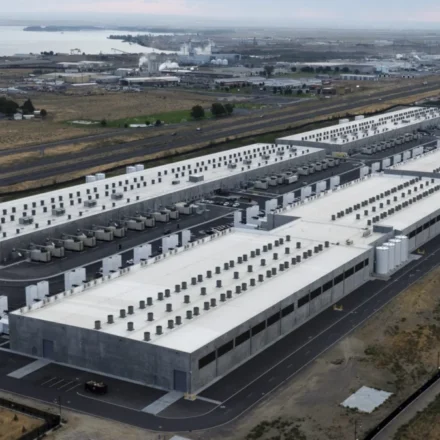
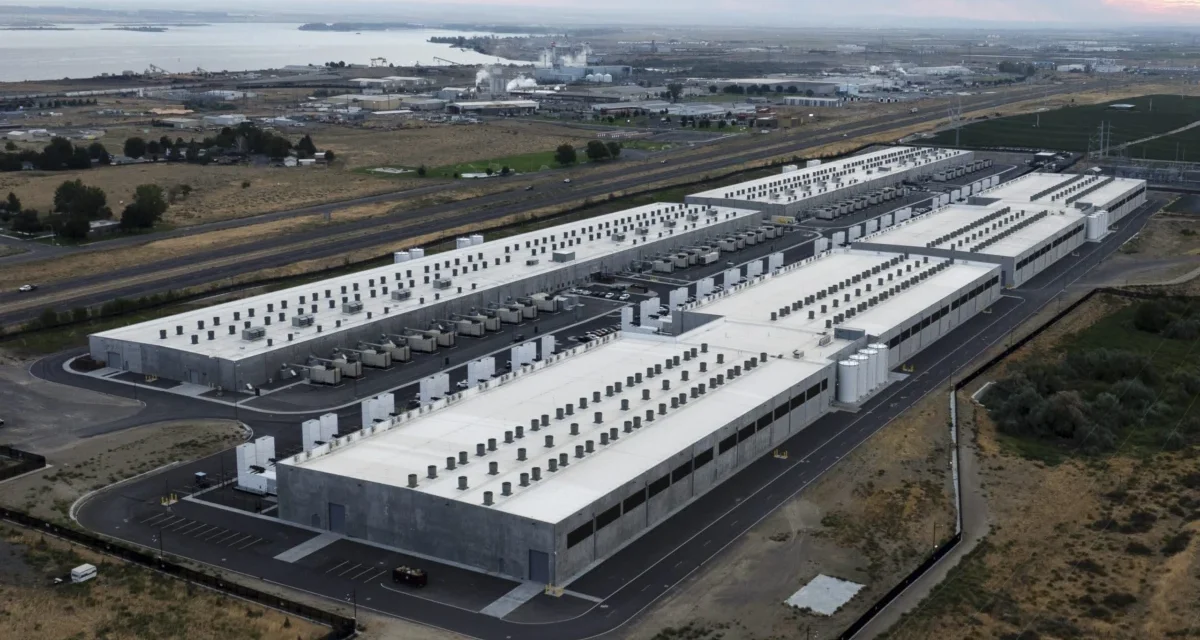
- Land Use and Visual Impact: Data centers are typically sprawling, warehouse-like structures that require large tracts of land, often in rural or semi-rural areas. Their visual impact can be a concern for communities valuing scenic landscapes or agricultural land.
- Noise Pollution: The constant hum of cooling units and generators can contribute to noise pollution in nearby residential areas.
National Security and the AI Arms Race: Trump’s Strategic Imperative
Former President Trump and his supporters, including Rep. Tom Emmer, frame data center construction as a critical component of national security and the United States’ strategic competition with rivals like China.
- Foundational for AI Development: Data centers provide the computational backbone necessary for training and deploying advanced artificial intelligence models. Without robust data center infrastructure, the U.S. risks falling behind in AI innovation, which has profound implications for defense, intelligence, economic competitiveness, and technological supremacy.
- Digital Sovereignty: Ensuring that critical data and AI processing capabilities reside within U.S. borders is seen as vital for national security, reducing reliance on foreign infrastructure and protecting sensitive information.
- Strategic Advantage: By aggressively building out data center capacity, the U.S. can solidify its position as a global leader in AI, enabling faster technological advancements and maintaining a competitive edge in emerging technologies.
Public Opinion and the Transparency Gap: The Role of NDAs
The Economist/YouGov poll’s findings underscore a fundamental disconnect: while politicians like Trump emphasize national strategic importance, local communities are primarily concerned with immediate, tangible impacts. This gap is often exacerbated by a lack of transparency.
- Non-Disclosure Agreements (NDAs): A particularly contentious practice, developers frequently require local officials to sign NDAs during the early stages of project discussions. While intended to protect proprietary business information, these agreements effectively shield crucial details about proposed data centers (e.g., specific energy/water demands, environmental impact assessments, potential incentives) from public scrutiny. This lack of information fuels suspicion, erodes trust, and prevents informed community debate. Democratic challengers, like Matt Little, have made banning such NDAs a central plank of their campaigns.
The combined weight of these economic, environmental, national security, and transparency issues creates a highly charged and complex environment for any politician attempting to navigate the data center debate.
Official Responses: A Party Divided in Minnesota
The former President’s unequivocal stance has forced a visible fracture within the Republican Party in Minnesota, illustrating the tension between national party messaging and local constituent concerns.
The Trump-Aligned Stance: Rep. Tom Emmer
Representative Tom Emmer (R-6th District), a member of the U.S. House leadership, has emerged as a staunch defender of Trump’s perspective. His immediate embrace of the "Golden Goose" narrative and the emphasis on the AI arms race against China aligns perfectly with the former President’s strategic vision. Emmer’s public statements, particularly on social media, underscore a belief that any opposition to data center development is tantamount to hindering American innovation and ceding ground to adversaries. His district, which includes Monticello, is slated for potential data center projects, suggesting a direct link between his policy stance and local economic development opportunities, albeit with a focus on national strategic benefits. Emmer’s position reflects a faction within the GOP that prioritizes national security and technological dominance above localized environmental or resource concerns, viewing such developments as a necessary sacrifice for global leadership.
The Nuanced Approach: Rep. Brad Finstad and State Sen. Eric Pratt
In stark contrast, other prominent Minnesota Republicans, facing immediate pressure from their constituents, have adopted a more nuanced, locally focused stance.
Representative Brad Finstad (R-1st District): Finstad’s district in southern Minnesota is a hotbed of proposed data center activity, with projects eyed for Pine Island, Faribault, and North Mankato. He acknowledges the importance of AI technology for the nation’s economic future and national security. However, he strongly asserts that the ultimate decision regarding a data center’s suitability "should be made by the people and local leaders who know their communities best, not handed down by Washington through a blanket, one-size-fits-all approach that treats every community the same." Finstad emphasizes the critical need for transparency from companies regarding "energy demands, environmental impacts, job creation, and potential tax benefits" to ensure communities can make "informed decisions." His position attempts to reconcile the national strategic imperative with the principle of local self-determination, a cornerstone of conservative philosophy.
State Senator Eric Pratt (R), running for Rep. Angie Craig’s seat (CD2): Pratt, whose campaign is also deeply entrenched in the local impacts of such developments, echoed Finstad’s sentiment. He advocates for "a balanced approach to data center development that puts local communities at the center of the conversation while recognizing the growing importance of domestic technology infrastructure." While acknowledging data centers’ role in the economy and national security, Pratt firmly states that "that does not mean every proposed project belongs in every community, or that concerns from the people who live nearby should ever be brushed aside." Notably, Pratt expressed opposition to outright moratoriums, suggesting a preference for negotiation and careful planning over outright bans, advocating for Minnesota to "resist an all-or-nothing approach." This position attempts to find a middle ground, supporting the industry in principle while demanding respect for local concerns.
The Democratic Counter-Narrative
Democratic challengers in these Republican-held districts have seized upon the data center issue as a potent campaign platform, actively opposing unchecked development and advocating for stringent regulations.
- Matt Little (D), challenging Eric Pratt: The former Lakeville Mayor has pledged to fight for moratoriums on data center construction and bans on nondisclosure agreements, positioning himself as a defender of community transparency and local control against corporate interests.
- Jake Johnson (D), challenging Brad Finstad: Johnson joined a protest against a proposed data center in Pine Island in August, stating his pride in standing with residents to ensure projects "actually benefit our people and our communities." He has since released "a plan for stopping data center exploitation," demonstrating a comprehensive strategy to address community concerns.
- Trina Swanson (D), challenging Rep. Pete Stauber (R-8th District): Living near a proposed data center in Hermantown, Swanson has vociferously condemned NDAs signed by local officials, the lack of robust regulations, and the heavy water and energy consumption associated with these projects. She demands "guardrails" and a prioritization of "our people over corporations like Google that paid zero dollars in federal taxes last year," highlighting corporate accountability.
- Grant Hauschild (DFL State Senator): Representing Hermantown, Hauschild has made data center regulation a central theme of his campaign, including in his televised ads. He promises to continue pushing for greater oversight, declaring, "I don’t work for data centers, I work for you." His efforts in the state legislature, though partially stymied by lobbying, demonstrate a commitment to regulatory reform.
Notably, the offices of Rep. Pete Stauber (R-8th District) and Rep. Michele Fischbach (R-7th District), both representing districts with potential data center projects, did not respond to requests for comment. Their silence itself is a form of political response, possibly indicating a reluctance to alienate either Trump’s base or local constituents on a highly sensitive issue.
This array of official responses illustrates a deep ideological and practical divide, setting the stage for highly competitive midterm elections where the future of data center development, and the balance between national interest and local autonomy, will be fiercely debated.
Broader Implications: Shaping Future Policies and Elections
The heated discourse surrounding data centers, particularly amplified by President Trump’s strong rhetoric, carries significant implications that extend beyond Minnesota’s borders, shaping future infrastructure policies, electoral strategies, and the very definition of local autonomy in an increasingly digital world.
Midterm Election Bellwether
The data center debate has unexpectedly emerged as a potent wedge issue in the upcoming midterm elections, especially in districts like those in Minnesota where proposed projects are tangible and immediate. Candidates’ stances on this issue are becoming a crucial differentiator. For Democrats, it offers a clear opportunity to champion environmental protection, local control, and corporate accountability, appealing to a broad base of voters concerned about resource strain and transparency. The "quiet boom" in data center-related political advertising, predominantly from Democrats, underscores its electoral potency. For Republicans, the issue presents a more complex challenge, forcing a choice between loyalty to the former President’s national security and economic growth narrative and the imperative to address local constituent anxieties. The divergent responses from Emmer, Finstad, and Pratt highlight this internal party struggle, which could sway tight races. Candidates who successfully navigate this tension, or clearly articulate a position that resonates with their local electorate, stand to gain significant political capital.
Republican Party Cohesion and Identity
President Trump’s "backwards and poor" comment has exposed a fault line within the Republican Party. While some, like Emmer, readily align with the nationalistic, pro-development, and AI-centric vision, others are compelled by local concerns to prioritize community input and environmental stewardship. This internal division reflects a broader tension within the modern GOP: how to balance traditional conservative values of local control and limited government with a national populist agenda that sometimes mandates large-scale infrastructure projects. The data center debate could foreshadow future intra-party struggles on issues where national strategic goals collide with local quality-of-life concerns.
The Future of Infrastructure Development and Local Autonomy
The conflict over data centers is a microcosm of a larger societal debate about how to develop critical infrastructure in an era of rapid technological change and increasing environmental awareness. It raises fundamental questions about the balance of power between federal, state, and local governments in land-use decisions. The push for local moratoriums and bans on NDAs signifies a growing demand from communities to have a stronger, more transparent voice in decisions that profoundly affect their environment, resources, and way of life. This movement for greater local control could influence future policy-making across various infrastructure sectors, from energy projects to transportation networks.
Regulatory Landscape and Lobbying Influence
The failure of more stringent data center regulations in the Minnesota state legislature, despite bipartisan concerns, underscores the powerful influence of industry groups and labor unions. This suggests that without sustained public pressure and political will, legislative efforts to impose tougher environmental standards, water permits, or transparency requirements will face an uphill battle. The outcome of the data center debate in Minnesota and elsewhere could set precedents for how robustly states are willing to regulate burgeoning tech industries, particularly when national strategic interests are invoked.
Energy Transition and Sustainability Challenges
As AI’s demand for computational power continues its exponential growth, the energy footprint of data centers will only expand. This poses a significant challenge for climate goals and the broader energy transition. The debate forces a confrontation with the reality that advancing cutting-edge technologies like AI requires immense energy, prompting questions about the sustainability of current development models and the imperative for renewable energy integration. The ability to power these facilities sustainably, without exacerbating climate change or straining local grids, will be a critical determinant of their long-term viability and public acceptance.
In conclusion, the data center controversy, ignited by presidential rhetoric and fueled by palpable local concerns, has quickly become a pivotal issue in American politics. It is a complex entanglement of economic opportunity, environmental responsibility, national security, and democratic governance, whose resolution will undoubtedly shape the technological, environmental, and political landscapes for years to come.