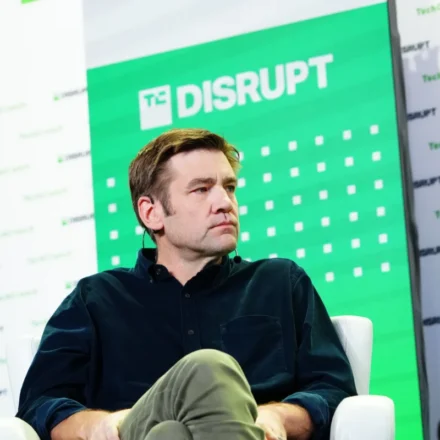





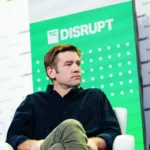



















































In the high-stakes theater of Silicon Valley, where the battle for the future of productivity is fought in lines of code and massive GPU clusters, Thibault Sottiaux has emerged as a key architect. As the lead for OpenAI’s core products—encompassing the API, agent infrastructure, enterprise solutions, and the ubiquitous ChatGPT—Sottiaux is the man tasked with moving artificial intelligence from a curiosity for coders to a daily utility for the global workforce.
With the launch of ChatGPT Work, OpenAI is attempting to bridge the gap between abstract machine intelligence and the granular, often messy requirements of professional life. The goal is no longer just to answer questions; it is to perform autonomous work. In an exclusive interview, Sottiaux discussed the company’s philosophy, the economics of "magic," and the delicate balance between pushing the technological frontier and maintaining user trust.
The Evolution of the Interface: From Codex to ChatGPT Work
The genesis of OpenAI’s current consumer strategy can be traced back to the early days of Codex, the company’s engineering tool. For many developers, Sottiaux became a familiar name, often associated with the behind-the-scenes adjustments to token limits that allowed the community to push the boundaries of AI-assisted programming.
However, the leap from Codex to ChatGPT Work represents a fundamental shift in target demographic. While Codex was built for a forgiving, technically literate audience, ChatGPT Work is designed for the white-collar professional. Sottiaux describes the product as an exercise in "packaging"—taking raw, powerful model capabilities and wrapping them in a layer of safety, accessibility, and mobile-friendly utility.
"We wanted to bring the power of coding agents to everyone," Sottiaux explained. "It’s about taking something that was made for technical people and making it available to as broad of a population as possible. This is why we launched it as part of the Plus plan. For $20 a month, the amount of value you get is quite incredible."
Chronology of Adoption and Growth
The trajectory of ChatGPT’s growth has been unprecedented in the history of software. Since the introduction of the first iteration of the chatbot, OpenAI has moved at a breakneck pace:
- The Early Phase: The initial release of ChatGPT focused on conversational fluency, proving that LLMs could handle creative writing and basic information retrieval.
- The API and Codex Era: OpenAI established the infrastructure to allow third-party developers to build upon their models, creating the first wave of "AI agents" in the wild.
- The Voice Integration: Recognizing that the keyboard is a bottleneck to productivity, OpenAI launched ChatGPT Voice, which saw rapid adoption due to its ability to mimic the natural flow of human-to-human conversation.
- The Agentic Turn (ChatGPT Work): The current phase represents the move toward autonomy. By integrating with email, calendar systems, and messaging platforms, the model is no longer just a chatbot; it is an agent capable of performing multi-step tasks.
- The 20-Million Milestone: OpenAI recently announced that it has surpassed 20 million users for its Work-focused offerings, signaling that the "magic" of AI is finding a permanent home in the modern office.
The Philosophy of "Discovery" in Product Design
One of the most profound challenges for OpenAI is deciding when a model is "ready." Should the user interface be cluttered with buttons, or should the model handle the heavy lifting behind the scenes?
Sottiaux characterizes this as a process of discovery. "We don’t always start with a rigid blueprint," he notes. "As we push on the frontier of model capabilities, we discover what the technology is actually good at. We then lean into those strengths."
This philosophy suggests that OpenAI’s product roadmap is reactive to the models themselves. When a new iteration, such as the rumored GPT-5.6, demonstrates a superior ability to process massive document sets or generate complex, multi-page reports, the product team pivots to prioritize those features. This iterative deployment—learning from the community and adapting the interface to match the model’s evolving intelligence—is what Sottiaux calls "delightful simplicity."
The Economic Implications: Owning the Relationship
Critics have long argued that OpenAI’s push into enterprise and work tools is motivated by a need to own the "application relationship." In a world where every software company is adding a chatbot to their sidebar, OpenAI’s survival depends on being the platform of choice.
Sottiaux is pragmatic about the economic model. "The more value and utility we generate, the more users are willing to pay," he says. The $20 price point for the Plus plan is framed as an investment in a tool that effectively acts as a digital force multiplier.
However, there is the question of the "token gap"—the disparity between the low monthly subscription fee and the high computational cost of running these sophisticated models. When asked if CFOs or users should be concerned about the sustainability of this model, Sottiaux pointed to the relentless pace of optimization.
"We are working every day to push the frontier on efficiency," he explained. "We announced major price cuts with our Luna model—80% off. This is a permanent price correction. Our goal is to include more utility in the same dollar amount. If you wake up six months from now, you should be able to do all the same work with less spend."
Addressing the Skeptics: Privacy, Autonomy, and Safety
As ChatGPT gains the ability to access private email, iMessage, and sensitive documents, public anxiety regarding data privacy has reached a fever pitch. The "magic" of an AI that sends texts on your behalf is, for some, indistinguishable from a security nightmare.
Sottiaux acknowledges the tension. "It is important to pick models that are safe and aligned," he emphasizes. "A very large part of our investment is in the safety stack, the safety approach, and publishing honest benchmarks."
The skepticism surrounding autonomous agents is not merely about privacy; it is about control. Professors like Ethan Mollick have pointed out that while OpenAI pushes for a "magic" experience—where the user gives a prompt and receives a result—competitors like Claude are opting for a more transparent approach, including A/B testing and requiring user confirmation for every sub-step.
Sottiaux remains undeterred by the alternative design philosophies. "We definitely see that the world seems to be ready," he asserts. "We managed to launch it in a way that is simple but powerful, simple but uncompromising."
Implications for the Future of Work
The rise of ChatGPT Work signals a transition from the "Information Age" to the "Agentic Age." In this new paradigm, the value of a worker is increasingly defined by their ability to orchestrate AI agents rather than performing rote administrative tasks.
1. The Death of the Interface?
If Sottiaux’s vision holds, the future of software may not be a series of menus, windows, and buttons, but a natural-language conversation. As the technology adapts to the human, rather than the human learning the software, the friction of digital interaction will drop to near zero.
2. The Standardization of High-Level Productivity
By commoditizing "deep research," report generation, and automated communication, OpenAI is effectively raising the floor for professional output. Tasks that previously required an intern or a junior analyst to spend hours synthesizing information can now be completed in seconds.
3. The Trust Tax
For this vision to succeed, OpenAI must pay what could be called a "trust tax." As these agents gain more access to our personal lives, the margin for error shrinks. A single major security breach involving an agent’s access to sensitive data could stall the progress of the entire industry.
Final Thoughts: The Mission to "Bring Everyone Along"
When asked about the role of his team in the broader context of public opinion, Sottiaux returns to the core mission of OpenAI: "The mission is to bring everyone along."
Whether through the "dopamine hit" of expanding token limits or the strategic integration of agents into the workplace, the goal is to demystify the machine. The transition from a tool that helps you write a line of code to an agent that manages your digital life is the current frontier. For Sottiaux and the team at OpenAI, the future is not about building more software; it is about building a partner that understands, anticipates, and acts on behalf of the user.
As we look toward the next six months, the success of this endeavor will be measured not just in token efficiency or revenue growth, but in whether the "magic" of AI can truly become a safe, reliable, and invisible part of the professional fabric.