












































The Great Correction: Assessing the Timberwolves’ Aggressive Rebuild and the Exit of Julius Randle

During his four-year tenure as the President of Basketball Operations for the Minnesota Timberwolves, Tim Connelly has earned a reputation as an executive who is never afraid to swing for the fences. Yet, as the 2025-26 NBA season fades into the rearview mirror, his legacy is being defined by a more somber reality: he has spent an inordinate amount of time attempting to rectify gambits that simply did not pay off.
The recent salary-dumping of Julius Randle on the morning of the NBA draft serves as the latest—and perhaps most jarring—chapter in this cycle of high-stakes roster management. While Connelly has become adept at trimming the fat, such as offloading mid-tier bench players like Bryn Forbes, Shake Milton, and Troy Brown Jr., the erasure of significant investments is becoming a recurring, costly theme in Minneapolis.
The Chronology of a Failed Gamble
The timeline of Minnesota’s roster turbulence is defined by a series of rapid pivots. Less than two years after investing a precious lottery pick to address a glaring positional need, the team parted ways with Rob Dillingham in February—a move that left many observers questioning the organization’s long-term scouting and development strategy.
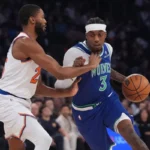
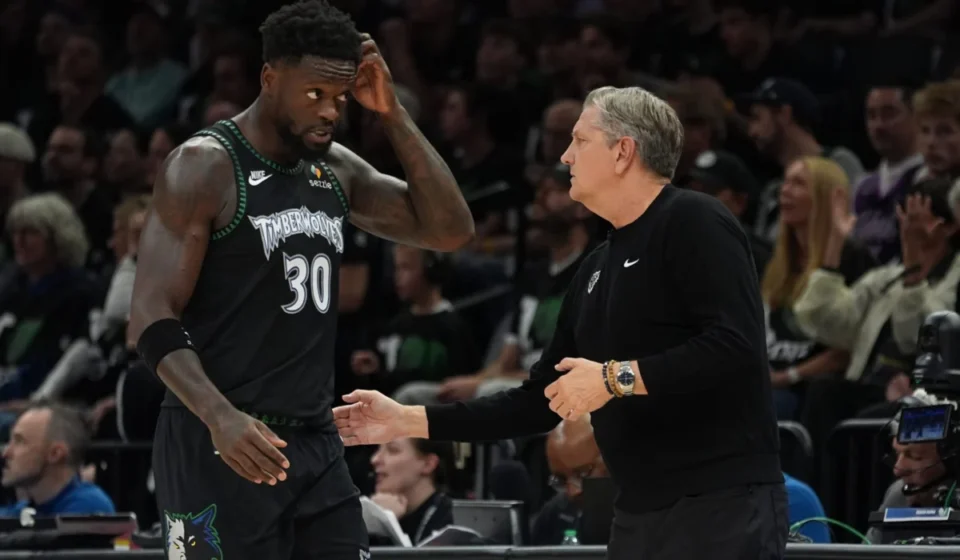
Then came the Randle saga. Head coach Chris Finch, in a moment that now feels like a lifetime ago, once labeled Randle "maybe our most important player." The sentiment was backed by the box score: Randle led the Wolves in assists and finished second only to Anthony Edwards in scoring during the first year of his three-year contract.
However, the honeymoon period was short-lived. By Tuesday morning, the front office had deemed Randle’s contract an "albatross." In a deal necessitated by cap constraints, Randle was shipped to the Brooklyn Nets, one of the few franchises with the financial flexibility to absorb his $33 million salary for the upcoming season. To grease the wheels of the transaction, the Wolves surrendered their 28th overall pick in the draft in exchange for the Nets’ 33rd, while also incorporating the Chicago Bulls to offload Mo Gueye, a fringe player expected to be waived immediately.
Supporting Data: The Cost of the Pivot
To understand the frustration surrounding these moves, one must look at the opportunity costs. The shadow of Karl-Anthony Towns (KAT) looms large over the current administration. Critics point to the fact that, shortly after being traded for a package headlined by Randle, Donte DiVincenzo, and center Joan Beringer, Towns played a pivotal role in the New York Knicks’ championship run.
While Connelly’s supporters argue that moving off KAT’s $53 million salary was essential to sustain the core of Anthony Edwards, Jaden McDaniels, and Naz Reid, the "ring on the finger" narrative makes that defense difficult to maintain. Furthermore, the decision to resign Randle last offseason—a move that necessitated letting Nickeil Alexander-Walker walk to Atlanta—looks increasingly like a strategic blunder. Alexander-Walker proceeded to win the NBA’s Most Improved Player award, providing elite scoring and playmaking at half the price of the veteran Randle.
The financial maneuverings are equally complex. By offloading Randle without taking back significant salary, the Timberwolves have effectively cleared the path to navigate under the league’s "first apron." According to industry experts, this provides the team with a $15 million "gift card" in the form of the non-taxpayer midlevel exception, and a massive $33.3 million trade exception that remains valid for a full year.
The Friction Between the Front Office and the Bench
The internal dynamics of the Timberwolves organization have not been immune to these fluctuations. While there was no public implosion, there were palpable, subtle cracks in the united front between Connelly and Finch.
The Dillingham acquisition was widely viewed as a Connelly project, one that Finch approached with visible neutrality. Conversely, Randle was a "Finch guy"—a player whose style the head coach championed, even as the on-court results began to diminish. The ultimate departure of both players suggests that the front office has reclaimed the reins of the team’s identity, prioritizing a specific tactical direction over the personal preferences of the coaching staff.
Implications: Addition by Subtraction?
Despite the cynicism, there is a cogent argument that this aggressive shedding of assets constitutes "addition by subtraction." The departure of Dillingham paved the way for the arrival of Ayo Dosunmu, who has already demonstrated that the Wolves’ roster thrives at a higher, more accelerated pace. The synchronicity between the Randle trade and the announcement of a five-year, $112 million deal for Dosunmu signals a definitive shift toward a younger, more dynamic core.
Randle’s presence had become a tactical burden. His lack of spacing, coupled with his high usage rate, created friction for Anthony Edwards. Furthermore, his defensive lapses and his decision to leave the arena without addressing the media following a disappointing second-round playoff exit against the San Antonio Spurs marked the point of no return.
For the upcoming 2026-27 season, the implications for the rotation are significant:
- Naz Reid: After years of serving as the primary backup to KAT and then Randle, Reid is finally positioned to anchor the starting lineup, where his defensive synergy with Rudy Gobert has historically been elite.
- Jaden McDaniels: With Randle’s usage gone, McDaniels is expected to receive increased freedom to operate as a secondary playmaker and scorer.
- The Core: The team has successfully locked up a nucleus—Edwards, McDaniels, Reid, Dosunmu, Beringer, and TJ Shannon—for at least the next three years.
The Championship Template
The modern NBA landscape, as evidenced by the success of the league’s top three teams this season, favors wing depth, two-way versatility, and selfless, high-IQ basketball. The Timberwolves struggled with "character issues" throughout the 2025-26 campaign, and while Randle cannot be blamed for the entirety of the team’s dysfunction, his exit removes a significant obstacle to the team’s culture.
Tim Connelly’s strategy of "rectifying gambits" is, by definition, a confession of previous failure. Drafting Dillingham and resigning Randle were expensive, time-consuming errors that forced the team to punt away future draft capital—including a 2031 first-round pick owed to the Spurs. However, the organization now possesses a rare commodity: a clear path forward.
By trimming the roster to its essential, younger parts, the Timberwolves have finally moved away from the "all-in" desperation that characterized the Rudy Gobert and Julius Randle eras. They now have the continuity and the financial flexibility to build a championship-caliber team that is not merely a collection of high-priced talent, but a cohesive unit designed for the modern game.
The pressure remains squarely on Connelly to prove that this "correction" is the final one. With the core locked in and the salary cap finally under control, the Timberwolves are betting that the subtraction of their past mistakes will be the key to their future success. The draft capital may be gone, but for the first time in several seasons, the vision for the Minnesota Timberwolves is no longer clouded by the need to fix the errors of yesterday.