





































Behind the Label: How a 30,000-Pound Argentine Beef Recall Exposes Regulatory Gaps and Supply Chain Vulnerabilities

On August 7, 2026, a South Florida beef importer initiated a voluntary recall of nearly 30,000 pounds of raw, boneless Argentine beef distributed across Florida and Texas. The U.S. Department of Agriculture (USDA) designated the action as a Class I recall—the agency’s most severe classification, reserved for products carrying a reasonable probability of causing serious health consequences or death.
Yet, despite the alarming regulatory label, no illnesses have been reported, and no pathogens have been detected in the meat. In fact, the beef was never tested for contamination. The recall stems entirely from a procedural failure: the shipment bypassed a mandatory federal safety checkpoint.
According to the USDA’s Food Safety and Inspection Service (FSIS), the beef entered domestic commerce "without the benefit of import reinspection." This critical regulatory lapse has ignited a broader debate among agricultural economists, livestock industry advocates, and consumer safety groups regarding the resilience of the U.S. meat inspection framework and the transparency of the food recall system.
1. Main Facts of the Recall
The recall, initiated by Aventura, Florida-based Corte Argentino USA LLC, encompasses exactly 29,628 pounds of raw, boneless beef products. The entirety of the affected inventory originated from a single Argentine processing facility: Frigorífico Gorina SAIC (Establishment Number: EST. Nº OF. 2025), located in La Plata, Argentina.
Identifying the Recalled Product
The recalled items were shipped in wholesale cardboard boxes of varying weights. To identify affected inventory, commercial buyers and consumers must verify the presence of two specific markings on the packaging:
- Establishment Number:
EST. Nº OF. 2025 - Shipping Mark:
26644-AA
Because the products were imported for specialized markets, the cuts on the box labels are printed in Spanish. This language barrier presents an identification challenge for warehouse workers and kitchen staff scanning freezers. The following table translates the Spanish labels into standard U.S. commercial cuts and describes their culinary uses:
| Label on Box (Spanish) | English Cut Name | Product Characteristics & Commercial Use |
|---|---|---|
| Cuadril Sin Tapa | Top Sirloin Butt | Rump primal with the cap removed; a traditional cut for Argentine-style grilling (asado). |
| Peceto | Eye Round | Lean, cylindrical cut from the hind leg; commonly roasted or sliced thin for matambre. |
| Nalga AD S/Tapa | Topside Cap Off | Inside round with the cap removed; highly lean, frequently sliced thin for milanesas. |
| Carnaza Cuadrada | Flat | Derived from the shoulder clod; tough, high-collagen cut used primarily for braising and stews. |
| Bola de Lomo | Knuckle | Sirloin tip from the leg; versatile cut often cubed, portioned into quick steaks, or ground. |
Target Market: Foodservice vs. Retail
All five recalled products were produced between May 15 and May 20, 2026, and carry "use-or-freeze-by" dates ranging from September 15 to September 20, 2026.
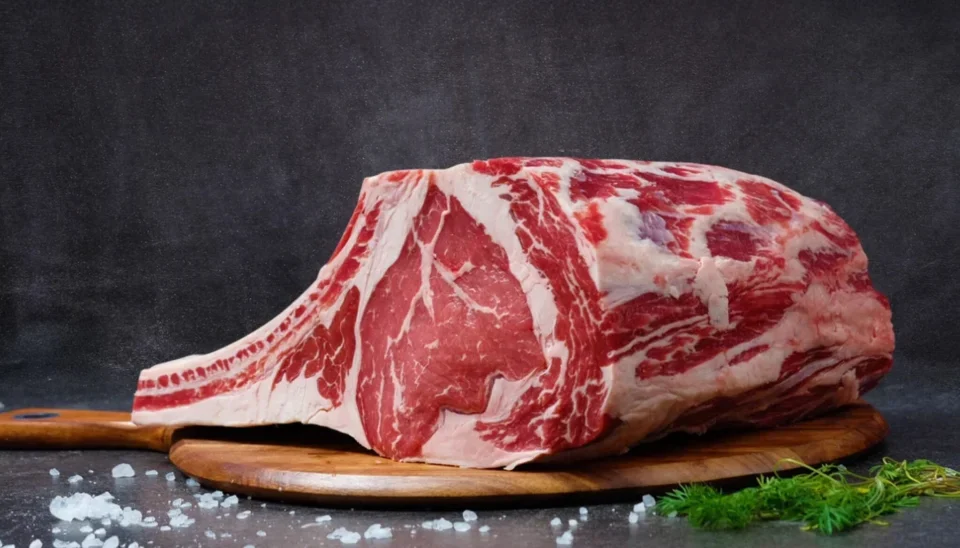
Significantly, the list contains no pre-packaged steaks, trimmings, or ground beef. These are whole-muscle primals sold in bulk boxes. Corte Argentino primarily serves restaurants, hotels, catering operations, and specialty butcher shops. Consequently, a substantial portion of this shipment likely bypassed retail grocery shelves entirely, entering commercial walk-in freezers where inventory turns over more slowly. A restaurant or catering company that purchased a 60-pound box in June may still be actively portioning and serving the product.
2. Chronology of the Safety Lapse
The timeline of the shipment reveals a significant delay between the entry of the uninspected meat into the United States and the public announcement of the recall.
[May 15–20, 2026]  -->  [Late May 2026]         -->  [Aug 7, 2026]           -->  [Sep 15–20, 2026]
Beef produced at        Imported & distributed        Recall announced by       Use-or-freeze-by
Gorina plant without FSIS inspection FSIS (79-day gap) dates on packaging- May 15–20, 2026: The beef is slaughtered, processed, vacuum-sealed, boxed, and stamped at Frigorífico Gorina SAIC in La Plata, Argentina.
- Late May 2026: The container arrives at a U.S. port of entry. It successfully clears Customs and Border Protection (CBP) documentation reviews and USDA Animal and Plant Health Inspection Service (APHIS) animal-disease screenings. However, the shipment is transferred directly to distribution channels without being presented at an FSIS official import inspection establishment.
- June–July 2026: The uninspected primal cuts are distributed to commercial warehouses, wholesalers, and foodservice operators across Texas and Florida.
- August 7, 2026: During routine surveillance and administrative reconciliation, FSIS personnel discover that shipping mark
26644-AAwas never presented for physical reinspection. FSIS issues a Class I recall notice. - September 15–20, 2026: The designated shelf-life expiration window for the vacuum-packed primals.
The 79-Day Inspection Gap
The most alarming aspect of this chronology is the 79-day window between production and the recall announcement. For nearly 11 weeks, unverified meat sat in commercial cold storage or was cooked and served to patrons in Florida and Texas.
FSIS officials confirmed that the omission was detected through routine administrative oversight rather than an automated port flag, a traceback investigation from an illness outbreak, or consumer complaints. By the time the recall was initiated, a significant portion of the 13-metric-ton shipment had likely already been consumed.
3. Supporting Data and Regulatory Context
To understand why a procedural failure triggers a high-priority Class I recall, it is necessary to examine the strict "three-gate" regulatory process that governs meat imports into the United States.
                    +---------------------------------------+
                    |        U.S. PORT OF ENTRY             |
                    +---------------------------------------+
                                        |
                                        v
                    +---------------------------------------+
                    |  GATE 1: Customs & Border Protection   |
                    |  (Verifies paperwork & manifests)     |
                    +---------------------------------------+
                                        |
                                        v
                    +---------------------------------------+
                    |  GATE 2: USDA APHIS                   |
                    |  (Screens for foreign animal diseases)|
                    +---------------------------------------+
                                        |
                                        v
                    +---------------------------------------+
                    |  GATE 3: USDA FSIS Reinspection       |
                    |  (Physical, labeling, & pathogen checks)
                    +---------------------------------------+
                                        |
                 +----------------------+----------------------+
                 |                                             |
                 v                                             v
        [PASSED REINSPECTION]                         [FAILED/BYPASSED]
   Stamped with USDA Mark of Inspection            Classified as "Adulterated"
     Approved for U.S. Commerce                     Subject to Class I Recall
The Three Gates of Importation
- Gate 1: Customs and Border Protection (CBP): Focuses on tariff compliance, manifest validation, and basic entry paperwork.
- Gate 2: Animal and Plant Health Inspection Service (APHIS): Evaluates the sanitary status of the exporting country to prevent the introduction of foreign animal diseases, such as Foot-and-Mouth Disease (FMD).
- Gate 3: Food Safety and Inspection Service (FSIS) Reinspection: Under federal law, imported meat must be presented at an FSIS-approved import inspection facility. Inspectors verify foreign inspection certificates, check shipping marks, inspect the physical condition of the containers, and conduct random or targeted testing for pathogens (such as E. coli O157:H7 and Salmonella) and veterinary drug residues.
If a shipment passes Gate 3, it receives the official USDA mark of inspection and is legally treated as domestic product. Under FSIS Directive 9900.8, any product that bypasses this final step is automatically classified as "adulterated" under the Federal Meat Inspection Act, regardless of its actual biological or chemical safety.
Because the agency cannot verify that the shipment remained uncontaminated or free of prohibited residues, it defaults to its highest risk classification: Class I.
Distinguishing This Recall from the Trump-Milei Beef Agreement
Following the recall, several media outlets linked the incident to the bilateral trade agreement signed on February 6, 2026, by President Donald Trump and Argentine President Javier Milei. That proclamation quadrupled Argentina’s tariff-rate quota, adding 80,000 metric tons of beef imports to the U.S. market.
However, trade data and tariff schedules indicate that this linkage is factually incorrect:
- The 2026 Quota Expansion: The February 2026 trade agreement specifically targeted lean beef trimmings (classified under HTSUS codes 0201.30.5085 and 0202.30.5085), which are used as raw material for domestic ground beef blending.
- The Recalled Cuts: The cuts in the Corte Argentino recall—cuadril, peceto, and bola de lomo—are premium, whole-muscle primals. These products fall under Argentina’s pre-existing, long-standing 20,000-metric-ton quota for high-quality table beef. This commercial channel has operated for decades and is unaffected by the 2026 policy changes.
- Scale of the Shipment: The recalled 29,628 pounds (approximately 13.4 metric tons) represents roughly 0.013% of the 100,000 metric tons Argentina is authorized to export to the U.S. annually. It accounts for less than four minutes of total annual U.S. beef import volume, which averages over 4.6 billion pounds.
4. Official Responses and Staffing Controversy
The 79-day detection gap has intensified scrutiny of the USDA’s enforcement capabilities. Industry advocates and labor unions have pointed to recent federal workforce reductions as a potential contributing factor.
The Labor Deficit Debate
Between January and March 2025, the FSIS underwent a significant workforce reduction. Approximately 8% of the agency’s total personnel—amounting to 555 experienced staff members—accepted voluntary or deferred resignation offers. Crucially, 63 of these departures occurred within the specialized Investigations group, which is tasked with tracking down uninspected products and monitoring import compliance.
FSIS Workforce Reductions (Jan–Mar 2025):
│
├── Total Departures: 555 staffers (Average 16 years of service)
│   └── ~8% of total agency personnel
│
└── Investigations Group: 63 departures
    └── Directly impacts import compliance and tracking
The U.S. Cattlemen’s Association (USCA) expressed concern over these vacancy rates. USCA President Justin Tupper emphasized the domestic national security implications of import lapses:
"A safe, secure, and resilient beef supply starts with a strong domestic industry. When foreign product can bypass our inspection systems and sit in domestic distribution channels for nearly three months undetected, it exposes a gap that threatens both consumer confidence and domestic producers."
The USDA’s Position
The USDA Public Affairs Office has firmly rejected any link between the workforce reductions and the Corte Argentino oversight, stating:
"There is no connection between recent recalls and FSIS vacancy rates. The safety of the U.S. food supply remains fully compromised by any failure to present product, and our administrative systems successfully identified and corrected this error. Correlation between macro-level staffing shifts and individual facility presentation failures is speculative and unsupported by facts."
Independent regulatory experts note that while vacancy rates may not directly cause an importer to bypass an inspection station, reduced investigative staff can prolong the time it takes to detect such omissions, extending the "exposure window" for uninspected foods.
5. Systemic Implications and Consumer Guidance
The Corte Argentino recall highlights a persistent weakness in the U.S. food safety network: the low recovery rate of recalled meat products.
The Illusion of Recovery
Historically, only a fraction of recalled meat is ever successfully recovered and destroyed. The most comprehensive study on this issue remains a landmark U.S. Government Accountability Office (GAO) report. The GAO analyzed ten major USDA-monitored recalls and found that, on average, only 38% of the recalled food was successfully recovered.
Furthermore, the study revealed that FSIS district staff took an average of 38 days just to verify that distributors and retail customers had been notified of a recall—a period that often exceeds the shelf life of fresh, perishable meat.
Historical Meat Recall Effectiveness (GAO Data):
┌────────────────────────────────────────┐
│ [████████████░░░░░░░░░░░░░░░░░░░░] 38%  │ Recycled/Destroyed
└────────────────────────────────────────┘
┌────────────────────────────────────────┐
│ [████████████████████████████████] 38   │ Days to Verify Customer Notification
└────────────────────────────────────────┘
Compounding this issue, as of mid-August 2026, the FSIS had not yet published a retail distribution list identifying which specific butcher shops, restaurants, or specialty markets in Houston, Dallas, Miami, or Tampa received the uninspected beef. This leaves commercial buyers and consumers without an easy way to verify if they purchased the affected product.
Consumer and Foodservice Instructions
The USDA advises anyone in possession of these products to take immediate action:
- Do Not Consume or Serve: If a box or vacuum-sealed package displays both EST. Nº OF. 2025 and shipping mark 26644-AA, do not prepare or consume the meat.
- Understand the Risk: While the processing facility (Frigorífico Gorina) has been certified to export to the U.S. since 2002 and maintains rigorous Hazard Analysis Critical Control Point (HACCP) and British Retail Consortium (BRC) food safety certifications, cooking the meat is not a guaranteed fix. Standard cooking temperatures destroy biological pathogens, but they do not eliminate chemical residues or veterinary drug contaminants, which are also screened during FSIS port-of-entry reinspections.
- Return for Refund: Commercial buyers and consumers should return the product to the point of purchase. Retailers and distributors handling Class I recalls typically issue full refunds, even without a receipt.
- Contact Information:
- Corte Argentino USA LLC: Commercial clients can contact General Manager Eial Kaplun directly at 786-350-5805 to coordinate returns and logistics.
- USDA Meat and Poultry Hotline: Consumers with general food safety inquiries can call 888-674-6854 to speak with a federal food safety specialist.