





















































Apple’s AI Strategy Under John Ternus: A Philosophy of Intentionality in a Generative Era

By Tech Analysis Desk
October 31, 2026
As the technology sector navigates the white-hot intensity of the generative AI boom, Apple has faced a persistent, simmering narrative: that the Cupertino giant, once the undisputed pioneer of consumer technology, has found itself playing a reactive game. For years, critics have pointed to the delayed rollout of a sophisticated, LLM-powered Siri—which finally reached consumers this past summer—as evidence of a company losing its grip on the cutting edge.
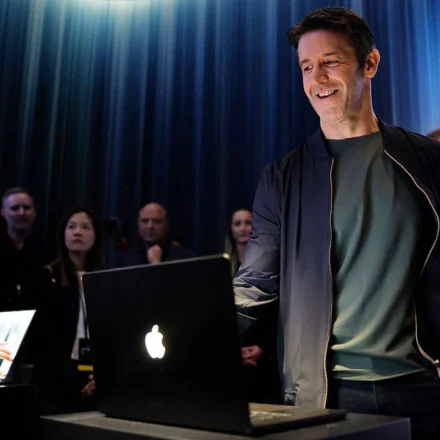
However, as of October 31, 2026, the perspective from the top of the Apple Park campus is markedly different. In a wide-ranging interview with Wired’s Steven Levy, John Ternus, who ascended to the CEO role on September 1, 2026, offered a robust defense of Apple’s deliberate, often measured approach to artificial intelligence. For Ternus, the race is not about being first to market with a flashy feature; it is about the seamless integration of technology into the human experience.
The Main Facts: Defining the "Apple Way" in the AI Era
The core of the current discourse surrounding Apple is a clash of philosophies. On one side, the industry is driven by a "ship fast, iterate later" mentality, popularized by the rapid-fire releases of models from OpenAI, Google, and Anthropic. On the other side is Apple’s traditional ethos: waiting until a technology can be implemented with enough polish to disappear into the background.
During his conversation with Levy, Ternus made it clear that Apple’s primary directive remains unchanged: the creation of products that people love. The company’s stance on AI is that it should not be an "add-on" or a performative checkbox. Instead, Apple aims to use AI as a silent engine for efficiency, creativity, and privacy.
Ternus explicitly rejected the industry’s obsession with "AI for AI’s sake." He argued that the true mark of success for an Apple product is not how many parameters a model has or how impressive its reasoning engine is, but how intuitively it solves a user’s problem. By keeping the technology subtle, Apple hopes to avoid the "uncanny valley" of over-engineered software, ensuring that the user remains the protagonist of the digital experience, rather than the AI itself.
A Chronology of Apple’s AI Evolution
To understand the weight of Ternus’s words, one must look at the timeline of Apple’s recent, often turbulent, journey into the AI-first world:
- Early 2024 – Mid 2025: As competitors unveiled transformative LLM-based products, Apple faced mounting pressure from shareholders and the tech press. Internally, reports suggested a pivot from traditional machine learning efforts toward generative models.
- Late 2025: Apple begins to signal a "quiet" shift, focusing heavily on on-device processing capabilities, ensuring that privacy remains the hallmark of their future AI offerings.
- August 2026: The long-awaited, overhauled version of Siri is launched. While it receives praise for its contextual awareness, some early reviews label the release as "anticlimactic," noting that it arrived long after the initial wave of AI hype.
- September 1, 2026: John Ternus officially takes the reins as CEO. In his inaugural memo, he promises a "huge launch" and a new era of product innovation, setting the stage for the current strategic discourse.
- October 31, 2026: Ternus defends the company’s trajectory in the Wired interview, marking the most significant public statement on Apple’s AI philosophy since his appointment.
Supporting Data: The Tension Between Market Pressure and User Experience
The skepticism surrounding Apple is not without merit. Market data from the first three quarters of 2026 indicates that while Apple remains a dominant hardware force, the "mindshare" in the AI space has been dominated by integrated ecosystems like Google’s Gemini and Microsoft’s Copilot.
However, Apple’s strategy relies on a different set of metrics. Apple prioritizes:

- On-Device Latency: By prioritizing hardware-accelerated AI, Apple ensures that responses are near-instant, a distinct advantage over cloud-reliant competitors.
- Privacy Architecture: Apple’s commitment to "Private Cloud Compute" is designed to allow for heavy processing without compromising user data—a key differentiator in an era of growing security concerns.
- Ecosystem Retention: Rather than focusing on a standalone AI "agent" that competes with apps, Apple is focusing on "AI-enabled" apps that function better within the current ecosystem.
When asked about the future of the app economy—and whether AI agents might eventually render apps obsolete—Ternus was dismissive of the apocalyptic view. "The creation of products is a deeply human and personal thing," he noted. This sentiment suggests that Apple views AI not as a replacement for human-designed applications, but as a scaffold that makes those applications more powerful and easier to use.
Official Responses: The CEO’s Vision
Ternus’s remarks to Wired were more than just a defense; they were a roadmap. By stating, "I really like where we’re at," he signaled to the market that the leadership transition from Tim Cook to himself would not involve a radical departure from Apple’s core values, but rather a more aggressive application of those values toward the AI frontier.
The CEO acknowledged the "opinions" of the masses, essentially accepting that Apple will always be the target of criticism for its deliberate pace. However, he framed this pace as a form of curation. In his view, Apple does not have a "behind" position because they are not participating in the same race as their competitors. They are participating in a race to build "the right product," not just "the first product."
Implications: What This Means for the Future of Tech
The implications of Ternus’s philosophy are profound for the next decade of technology:
1. The Death of the "AI Hype Cycle"
If Apple succeeds in normalizing AI, the term "AI" itself may disappear from marketing materials. Ternus’s goal is for users to be unable to distinguish between "traditional software" and "AI-driven software." This move could effectively kill the current hype cycle, shifting the focus back to utility and away from the novelty of generative capabilities.
2. The Preservation of the App Economy
By positioning AI as a tool that empowers human creation rather than an autonomous agent that replaces it, Apple is protecting its App Store revenue model. This creates a clear ideological divide between Apple and companies like OpenAI or Anthropic, who are openly pushing toward "agentic" systems that handle tasks independently of user intervention.
3. The Human-Centric Design Pivot
Ternus’s emphasis on the "human and personal" nature of product creation is a direct pushback against the trend of fully automated development. This suggests that Apple will likely continue to invest in tools for developers and creators that use AI to speed up the process, rather than tools that automate the creative act entirely.
Conclusion: A Calculated Bet
As of late 2026, Apple stands at a crossroads. The company is banking on the idea that the consumer’s appetite for "AI for AI’s sake" is a temporary trend that will eventually give way to a demand for refinement, privacy, and ease of use. John Ternus is betting that by refusing to rush, Apple can deliver the "missing link" in the AI revolution—the moment where the technology becomes so natural that it is no longer noticed.
Whether this proves to be a masterstroke of restraint or a strategic miscalculation will be defined by the products Apple releases in the coming 18 months. For now, the message from Apple Park is clear: the company is moving at its own pace, confident that in the long run, the world will value the "human" touch over the machine’s speed.