









































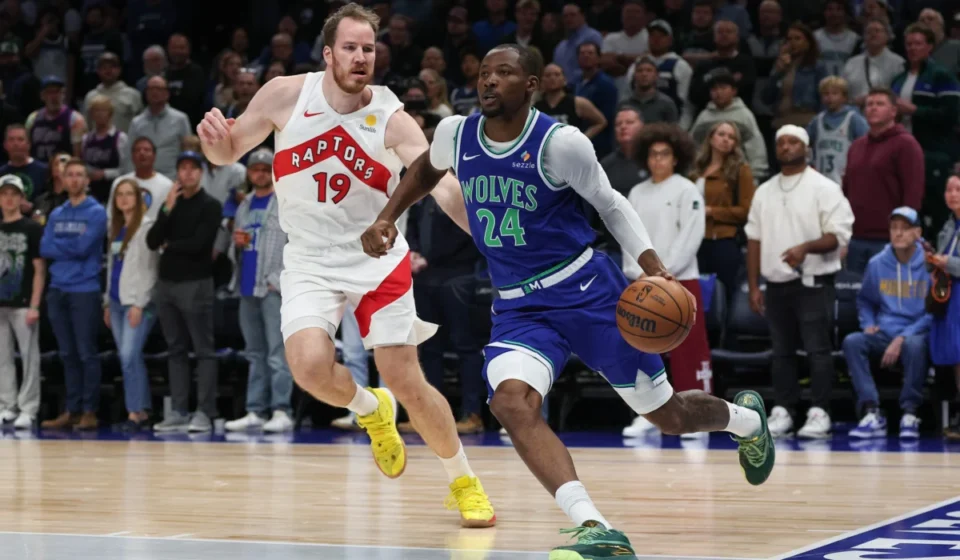
A Shift in the Timber: Timberwolves Face Early Season Adversity as Anthony Edwards Heads to Surgery

The Minnesota Timberwolves entered the 2026-27 NBA season under the banner of "audacious transformation." Following a summer of aggressive roster surgery that saw the departures of Julius Randle and Naz Reid, the franchise signaled a pivot toward a high-pace, high-cohesion identity. Through the first four games, that vision appeared fully realized, with the Wolves dismantling opponents with a level of synchronicity rarely seen in the early weeks of an NBA calendar.
However, the team’s momentum hit a significant, albeit calculated, speed bump on Tuesday evening. The franchise confirmed that superstar Anthony Edwards will undergo arthroscopic surgery on his right knee, sidelining him for up to two months. This development forces the Timberwolves to pivot from a celebratory opening act to a grit-and-grind endurance test, testing the very depth and teamwork that define this new-look roster.
The Chronology: From Dominance to Diagnosis
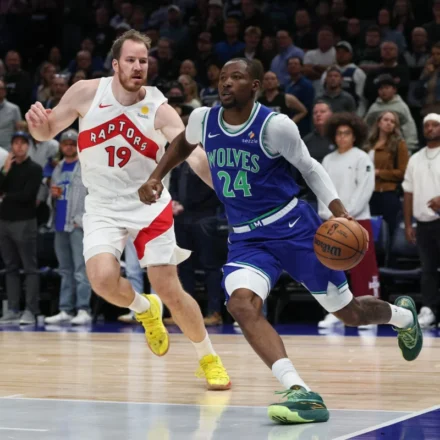
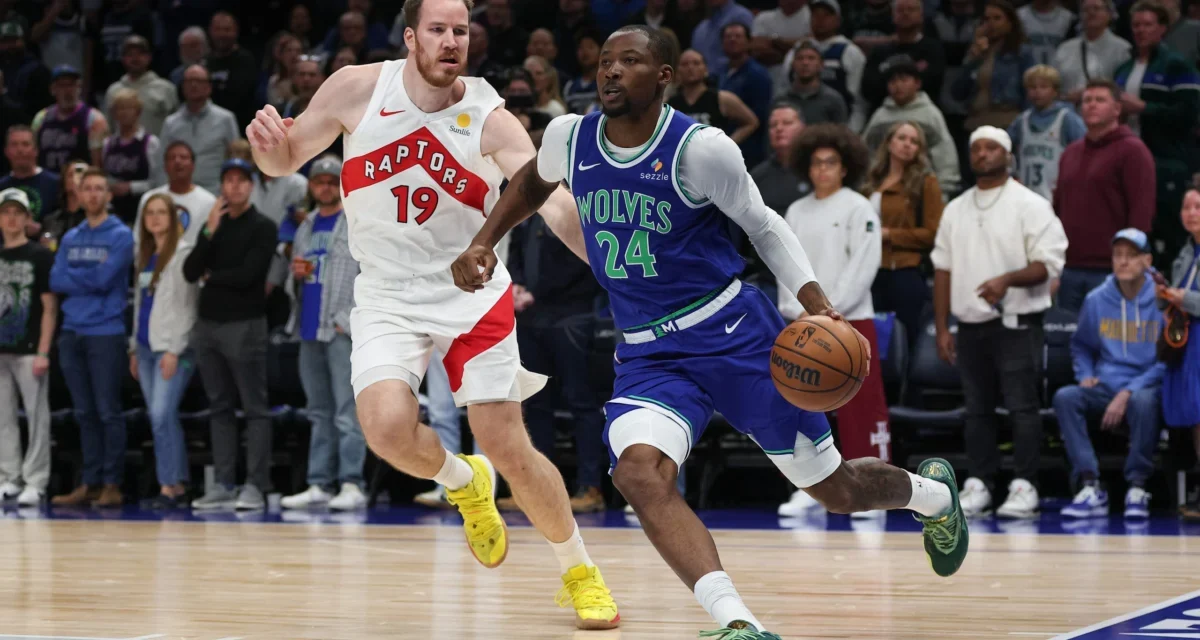
The Timberwolves’ start to the 2026-27 campaign was historic. For the first time in the franchise’s existence, the team opened the season with three consecutive games where the outcome was effectively decided before the fourth quarter. The victories over the Miami Heat, Orlando Magic, and Toronto Raptors were not just wins; they were statements of intent.
The team’s rapid chemistry was evident: a mix of "hard and soft power" that saw defensive stalwarts like Rudy Gobert joined by the high-energy, versatile arrivals of LaMelo Ball and Jonathan Kuminga.
The honeymoon phase saw its first challenge on Monday night in Cleveland. Facing a Cavaliers squad that had reached the Eastern Conference Finals just months prior, the Wolves arrived on the second night of a back-to-back. While Minnesota jumped to an early double-digit lead, fatigue and the high-caliber play of the Cavs—led by a career shooting night from Evan Mobley—eventually eroded that advantage. Despite a clutch effort from Edwards that nearly salvaged the game in regulation, the Wolves fell in overtime.
Hours later, the news of Edwards’ knee injury broke. The decision to proceed with surgery now, rather than waiting, was strategic. With the team sitting at a respectable early-season standing and the chemistry of the supporting cast validated, the front office and medical staff determined that the current roster construction provides enough cushion to remain in the playoff hunt while their centerpiece recovers.
The New Guard: Kuminga and Ball as Architects of Synergy
The primary reason for optimism—even in the wake of the Edwards injury—lies in the surprisingly seamless integration of Jonathan Kuminga and LaMelo Ball.
Kuminga, once viewed as a lightning rod for volatility in Golden State, has morphed into a paragon of selfless basketball in Minneapolis. Tasked with the "thankless" heavy lifting—defending elite opposing forwards, battling in the paint, and serving as a secondary transition threat—Kuminga has prioritized efficiency over ego. His defensive metrics are staggering; he currently ranks among the league’s most efficient defenders, working in tandem with the established defensive anchor, Rudy Gobert. His offensive discipline, highlighted by a 46.7% success rate from beyond the arc on low-usage attempts, suggests a player who has fully embraced the "first, do no harm" philosophy.

LaMelo Ball has similarly defied expectations. While his offensive brilliance was never in question, his commitment to the defensive end has been a revelation. His 6-foot-7 frame has become a catalyst for disruption, leading to deflections and forcing opponents into hurried decisions. When Ball and Kuminga share the floor, the team’s defensive rating ranks near the top of the NBA, confirming that the front office’s gamble on high-IQ athleticism is paying dividends.
Official Responses and Roster Implications
In the immediate aftermath of the injury announcement, the organization has projected a "next man up" mentality. Beat writers such as Jon Krawczynski have noted that the team’s confidence in their defensive identity and ball-movement principles is what allowed them to greenlight the surgery immediately.
The absence of Edwards creates a void in usage that the coaching staff, led by Chris Finch, must now distribute. The projected internal shift includes:
- Ayo Dosunmu: Expected to be elevated into the starting lineup to provide stability and perimeter defense.
- TJ Shannon: Slated to see an increase in playmaking responsibilities off the bench, a role he has begun to embrace during his limited early-season minutes.
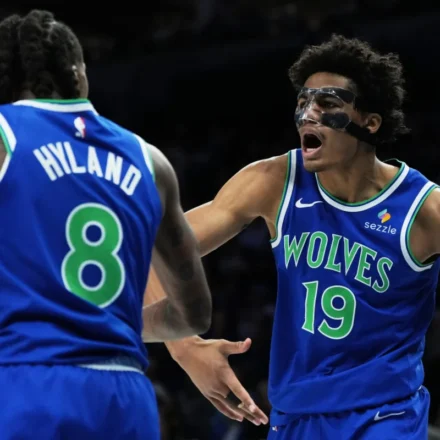
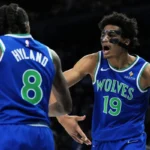
- Bones Hyland and Jaylen Clark: Anticipated to see a significant uptick in minutes within the second unit, providing much-needed perimeter scoring and energy.
- Jaden McDaniels: The "And One" newsletter highlights that McDaniels will now face the greatest pressure to increase his offensive usage, shifting from a defensive specialist to a primary scoring threat during Edwards’ absence.
The organizational stance is one of calculated patience. By performing the surgery now, the team ensures that Edwards will return well before the playoff push, potentially missing approximately 30 games but remaining available for the critical 45-game stretch that follows.
Supporting Data: The Case for Resilience
The Timberwolves’ performance over the first four games provides a statistical baseline for why the team is not hitting the panic button.
- Defensive Efficiency: The team ranks second in the NBA in fewest points allowed per possession. This is not merely a product of Gobert’s interior presence; it is a collaborative effort involving Kuminga, McDaniels, and Ball.
- Turnover Management: Despite the overtime loss to Cleveland, the team has shown a marked improvement in ball security and decision-making compared to the previous season.
- Bench Versatility: The infusion of players like Joan Beringer and the development of Shannon suggest that the team’s "giddiness"—as Coach Finch described it—is a legitimate culture shift rather than a temporary high.
Implications: A Path Through the West
The 2026-27 Western Conference is in a state of flux. With the Oklahoma City Thunder dealing with significant injuries to their starting core and the San Antonio Spurs struggling to recapture the momentum of their previous postseason run, the door to the top of the conference is slightly ajar.
For the Timberwolves, the path forward is clear but arduous. The goal is no longer just to "survive" the next two months; it is to use this period to harden their identity. If the roster can maintain its defensive standard and continue to share the ball as they have in the opening week, they will not only keep pace in the playoff chase but also return to full strength as a more battle-tested, versatile unit.
The "ruthless joy" of the first four games was a display of what this team can be. The next 30 games will determine what this team is. As the Timberwolves move into this transitionary period, the mandate remains: trust the system, embrace the sacrificial roles, and keep the gap between the highs and lows as narrow as possible. The vision of Tim Connelly and Chris Finch has been ratified—now, it must be sustained.