






































In an era defined by political polarization and social fragmentation, finding common ground has become a rarity. Yet, amidst the noise of partisan debate, Americans have coalesced around a singular, quiet consensus: the vital necessity of public parks. From the bustling corridors of New York City to the sprawling suburbs of Minneapolis, green spaces are increasingly viewed not merely as aesthetic amenities, but as the bedrock of resilient, healthy, and prosperous communities.
Recent polling data confirms this bipartisan alignment. A 2026 survey found that 88 percent of Americans visited a local park within the past year. Crucially, the support for these spaces transcends ideology; nearly 90 percent of voters who supported Kamala Harris and 80 percent of those who backed Donald Trump categorize public parks as "critical infrastructure."
Despite this overwhelming public mandate, cities often struggle to prioritize parks in the face of competing budgetary demands. However, a new report from the Trust for Public Land (TPL) provides a compelling fiscal argument for investment: for every dollar a municipality invests in parks and recreation, the community reaps $3 in annual economic benefits. As cities grapple with the pressures of housing shortages, climate change, and public health crises, the humble park is emerging as a sophisticated tool for urban survival.
The Economic Logic of Green Infrastructure
For years, parks were viewed by municipal budget committees as "nice-to-have" luxury items—the first to face the chopping block during fiscal downturns. The TPL report, titled Parks’ Undeniable ROI, seeks to dismantle this perception by quantifying the multifaceted "goodness" that parks generate.
"You really do get so much goodness out of them," says Will Klein, director of parks research at the Trust for Public Land. "People are healthier, people connect with each other. They drive business activity, especially for small businesses."
The economic ripple effect of a park is tangible. When a city invests in a greenway or a central plaza, it creates an immediate anchor for local commerce. Tourists flock to iconic spaces like Chicago’s Millennium Park or San Francisco’s Golden Gate Park, but the real economic engine lies in the local neighborhood ecosystem. Foot traffic generated by park-goers filters into nearby mom-and-pop shops, cafes, and boutiques.
Furthermore, there is a measurable impact on property values. Even for residents who never set foot on a park’s grass, the proximity to green space increases the value of their home. This appreciation supports a broader tax base, allowing cities to reinvest in municipal services. It is a virtuous cycle: the park attracts residents, increases property tax revenue, and that revenue funds the very infrastructure that sustains the park.
A Chronology of the "Third Place" Evolution
The history of the American park has evolved alongside our understanding of urban health. In the late 19th century, the "City Beautiful" movement championed parks as lungs for the industrial city, providing fresh air to offset the smog of factories. By the mid-20th century, parks became synonymous with community life—the quintessential "third place" outside of the home and the workplace.
- 1990s–2010s: The focus shifted toward urban renewal and "pocket parks" in dense cities, utilizing small, vacant lots to provide immediate relief in underserved neighborhoods.
- 2020–2022: The COVID-19 pandemic served as a global stress test for public spaces. With gyms, schools, and offices shuttered, parks became the only accessible venues for mental relief and physical movement. Usage rates spiked, permanently altering public perception of parks as essential services.
- 2025–2026: Current research now highlights the "green dividend." As we move into the latter half of the decade, the focus has shifted toward the integration of "agrihoods"—communities built around working farms—and "resilience parks," designed specifically to manage extreme weather events.
Supporting Data: Health, Wealth, and Resilience
The argument for funding parks is perhaps most robust when examining the intersection of public health and fiscal savings. The United States currently spends $5.3 trillion annually on healthcare, with physical inactivity—a major contributor to chronic cardiovascular disease—costing the nation over $200 billion per year.
"Our polling this year showed that the most popular place in America in 2025 to run around and play and exercise are parks and public spaces, much more popular than private gyms," Klein explains. The data suggests that this access provides roughly $2,000 in healthcare savings per person annually.
Beyond the physical, the mental health implications are profound. Research consistently demonstrates that proximity to nature lowers cortisol levels and mitigates the symptoms of anxiety and depression. In a time of rising loneliness—a public health crisis in its own right—parks serve as the primary stage for human interaction. Whether it is a concert in the park, a neighborhood barbecue, or simply a space for the elderly to socialize without the barrier of a cover charge, parks provide a quality-of-life dividend that is difficult to replicate through other public services.
Official Responses and Municipal Challenges
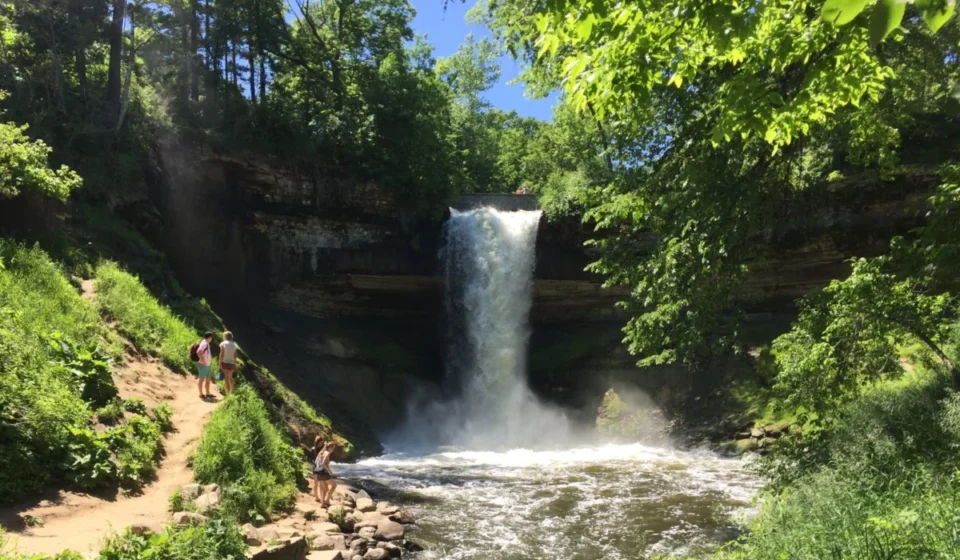
Despite these findings, many cities are currently facing a paradox. In Minneapolis, for example, the Minneapolis Park and Recreation Board faces significant budget cuts under a proposed city plan, threatening the maintenance of beloved spaces like Minnehaha Regional Park.
This disconnect between the value of parks and the funding of parks is a point of contention for urban planners. When local leaders prioritize immediate housing needs over long-term green infrastructure, they often overlook the potential for synergy. The TPL report argues that housing and parks are not mutually exclusive. Modern urbanism suggests that new developments can, and should, incorporate "pocket gardens" or communal green spaces.
"Parks are actually one of these solutions hiding under the feet of all these local leaders," Klein notes. The challenge remains in convincing fiscal committees that cutting park maintenance is, in reality, a short-sighted strategy that will increase long-term healthcare and infrastructure costs.
Implications: The Climate and Equity Frontier
As climate change accelerates, the role of the park is being redefined yet again. Extreme weather, specifically heavy rainfall, has pushed city sewer systems to their breaking point. Traditional gray infrastructure—pipes and concrete—is proving insufficient to handle modern, high-intensity storms.
Parks act as massive, natural sponges. By absorbing excess runoff, they alleviate pressure on municipal storm drains and prevent the devastating, costly flooding that plagues urban neighborhoods. In this capacity, a park is not just a place for leisure; it is a critical piece of flood-mitigation technology.
Furthermore, there is the issue of equity. For decades, green space has been distributed unevenly, with affluent neighborhoods enjoying lush, canopy-rich environments while lower-income areas often suffer from "heat islands" due to a lack of trees and vegetation. The future of urban planning lies in addressing this disparity. By ensuring that every resident, regardless of zip code, has access to a safe, well-maintained park, cities can address the root causes of systemic health inequalities.
Conclusion
The evidence is clear: the cost of inaction is far higher than the cost of investment. As cities continue to densify and the climate continues to change, the role of the park will only grow in importance. By viewing green spaces as critical infrastructure rather than aesthetic luxuries, local leaders can foster a future that is healthier, more equitable, and more economically robust.
The path forward requires a shift in political mindset. It demands that we recognize the "green dividend"—the idea that our most successful cities will be those that prioritize the lungs of the community. In the coming years, as the battle for urban space intensifies, the most successful cities will be those that understand that to invest in a park is to invest in the very survival and prosperity of its people.