


















































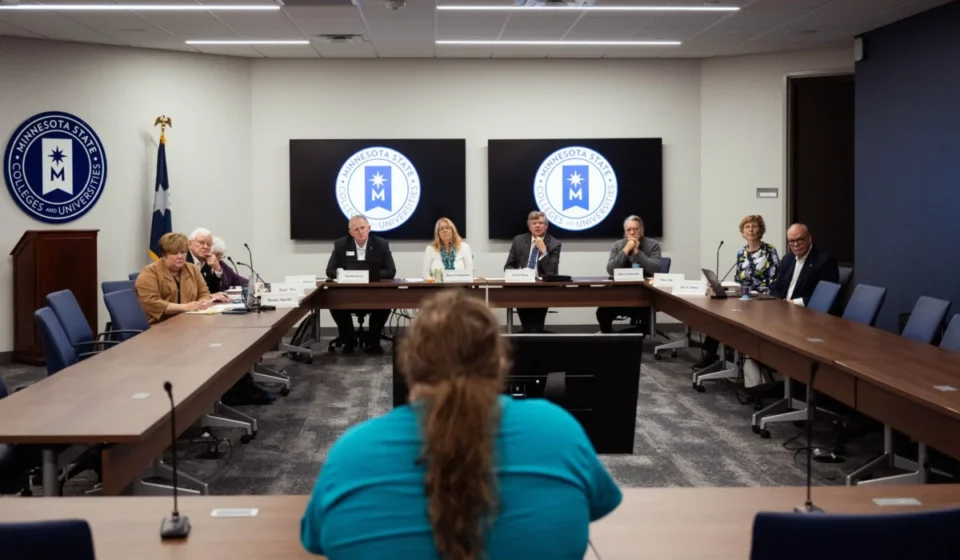
Financial Turbulence: Minnesota State Proposes Controversial Redistribution to Save Ailing Universities

By [Your Name/Journalistic Staff]
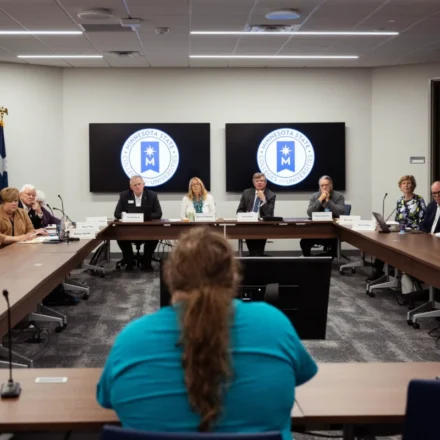
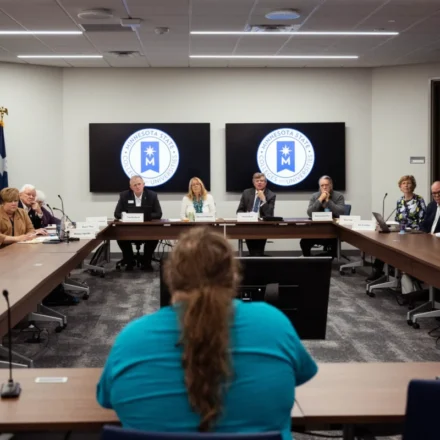
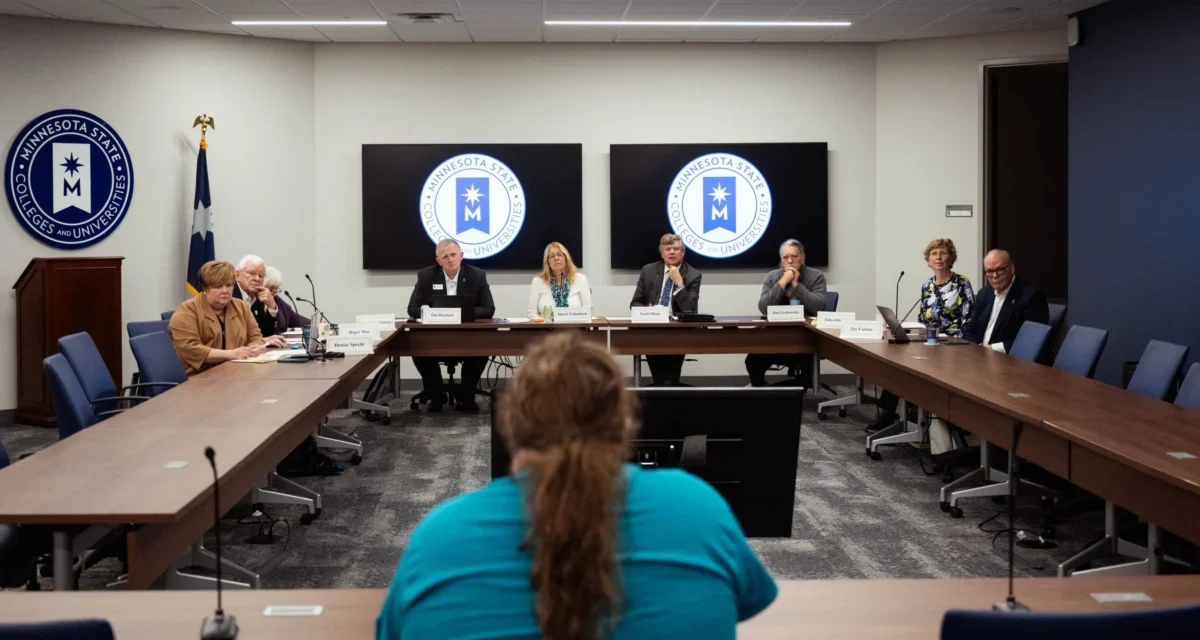
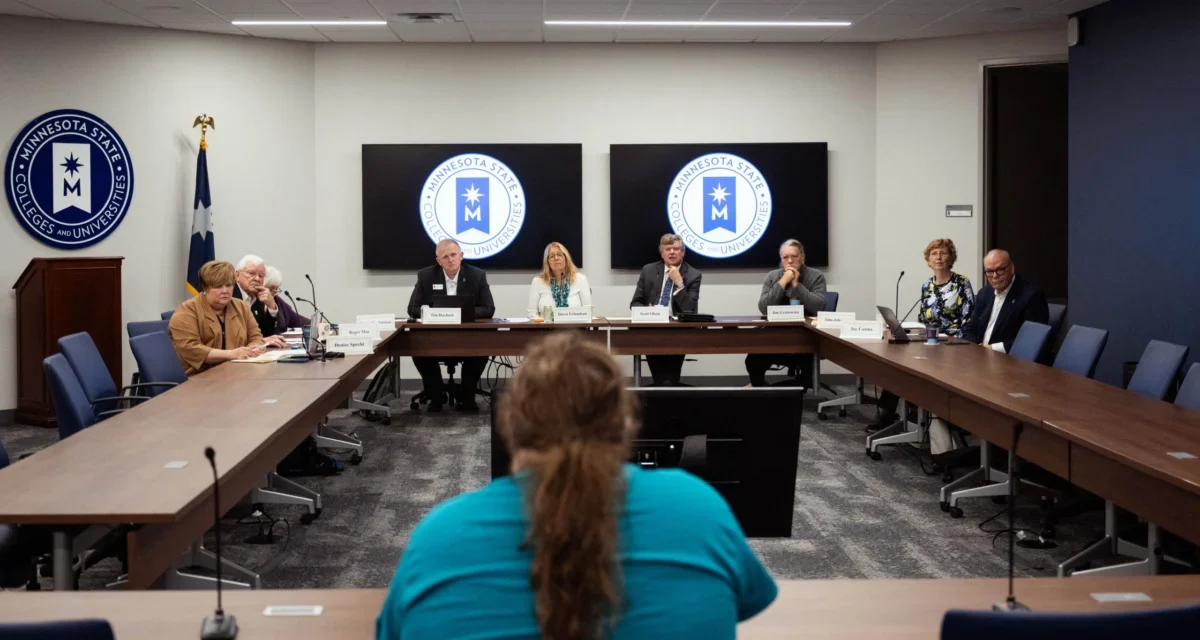
The Minnesota State system, an academic cornerstone serving 270,000 students across 26 colleges and seven universities, is currently navigating its most perilous financial chapter in three decades. As the Board of Trustees prepares for a high-stakes vote on October 14, the system is considering an unprecedented and polarizing proposal: a multi-million-dollar wealth transfer from financially stable institutions to shore up two universities currently staring into a fiscal abyss.
This “stopgap” measure, if approved, would reallocate up to $25 million annually for the next four years, with the majority of the funding pulled from two-year community and technical colleges. While system officials argue the move is a necessary intervention to prevent the collapse of major institutions, the proposal has ignited a firestorm of condemnation from faculty, students, and campus leadership who fear that cannibalizing healthy colleges to feed struggling ones is a recipe for systemic decline.
The Core Proposal: A Stopgap in a Sinking Ship
At the heart of the debate is a plan to move funds into an emergency pool for “financially challenged institutions.” Specifically, St. Cloud State University and Bemidji State University are slated to receive $10 million and $4.8 million, respectively.

The rationale provided by the system’s central office is stark: both universities are rapidly depleting their cash reserves despite years of aggressive cost-cutting. St. Cloud State, once a bustling hub of central Minnesota, has seen its enrollment plummet, losing roughly 5,400 students over the past two decades. Despite a 40% reduction in its workforce over 15 years and the suspension of nearly 200 academic programs since 2023, the university remains in a downward spiral. By this summer, the institution is expected to have completely exhausted its once-$19 million reserve fund, forcing it to rely on a $2 million emergency loan from the system office.
Bill Maki, the system’s vice chancellor for facilities and finance, has characterized the plan as an “unprecedented” but necessary evil. "Action needs to be taken," Maki stated in an interview. "This is not by any means a perfect solution. It is temporary."
A Chronology of Declining Fortunes
The current crisis did not manifest overnight; it is the culmination of a decade of warning signs that, by Chancellor Scott Olson’s own admission, were largely ignored.
- 2005–2015: The system previously shifted $5.5 million to assist struggling schools. Unlike the current proposal, this money did not come from the operating budgets of peer institutions, but rather from system-level reserves.
- 2016: A landmark internal report explicitly warned that the Minnesota State system faced a "financially unsustainable" future. It cited declining enrollment, an overabundance of physical buildings, and eroding state support as primary drivers. The report urged immediate action, noting: "We cannot and must not wait… or we will only compound the challenges."
- 2023–2024: Financial pressure intensified. St. Cloud State began shuttering hundreds of majors, and institutions across the state entered a cycle of hiring freezes and deferred maintenance.
- June 2026: The Board of Trustees first floated the idea of inter-institutional transfers. The response from stakeholders was immediate and overwhelmingly negative.
- September 2026: Chancellor Olson announced a massive, systemwide redesign—including the potential for campus closures and mergers—to be presented in January.
- October 2026: The Board of Trustees is scheduled to cast the final vote on the $25 million annual reallocation proposal.
Supporting Data: The Cost of Survival
The scale of the financial hole is daunting. The system is currently grappling with a $31.5 million deficit that, without structural intervention, is projected to triple by the summer of 2028.

The burden of the proposed bailout falls disproportionately on two-year colleges. According to a recent analysis, these institutions would contribute roughly three times as much to the emergency fund as their four-year university counterparts. For institutions like St. Cloud Technical and Community College, where 80% to 85% of the operating budget is tied up in personnel costs, even a 5% reduction in funding is not merely a bookkeeping exercise—it is a threat to the institution’s ability to function.
"Those places work really hard to stay afloat and to serve their communities," said Kevin Lindstrom, president of the Minnesota State College Faculty. "They don’t have a margin for error, and this will impact them disproportionately."
Furthermore, the system is considering a secondary, even more invasive proposal: a $24.3 million extraction from all institutions through 2032 to fund the demolition of "excess facilities." Because schools typically use these funds to purchase equipment for technical training, such as welding or automotive technology, this move would strike directly at the core of the state’s workforce development pipeline.
Official Responses and Stakeholder Outcry
The atmosphere at public meetings and town halls has been tense. During a recent town hall at Century College, a faculty member went so far as to suggest that St. Cloud State’s financials were “screaming for closure.”

Chancellor Olson, while acknowledging the severity of the situation, pushed back against the notion of abandoning the university. "Given their scale, given what they mean to the economy of central Minnesota, I guess I believe it’s worth another try at saving them," Olson said. "Not everybody agrees with that."
Lori Kloos, president of St. Cloud Technical and Community College, has been a vocal critic of the plan, arguing that the board is putting the cart before the horse. She contends that taking money from healthy institutions before establishing a long-term strategic plan for the system’s survival creates an environment of uncertainty and resentment.
University presidents, meanwhile, are caught in a precarious middle ground. Kenneth Janz, representing university leadership, noted that while they support the reallocation because it acknowledges the “seriousness of the current condition,” they are quick to emphasize that "we cannot cut our way to sustainability."
The Implications: A System at a Crossroads
The implications of the upcoming vote extend far beyond the balance sheets of a few struggling colleges.

1. The Erosion of Trust: By forcing healthy, community-focused colleges to subsidize the deficits of larger, failing universities, the system risks fracturing its internal unity. The move has sparked fears of a "zero-sum" culture, where colleges are forced to compete for resources rather than collaborate on regional workforce needs.
2. The Looming Specter of Consolidation: The urgency of this financial crisis has accelerated plans for a broader, more painful restructuring. With Chancellor Olson aiming to present campus closure and merger options in January, the $25 million transfer is increasingly viewed as a "stay of execution" rather than a cure.
3. Impact on Students: The uncertainty is already impacting students. With legislative inaction on financial aid and the constant threat of campus closures, students are facing a landscape where their chosen programs may disappear or their campuses may be shuttered entirely. The recent decision to close the Detroit Lakes campus of Minnesota State Community and Technical College serves as a harbinger of the "new normal" for the system.
4. The Legislative Challenge: The system’s path forward is heavily dependent on the state legislature. The Board is seeking $25 million in one-time funding for struggling schools and another $25 million for infrastructure demolition. Whether lawmakers are willing to bail out a system that has, by its own admission, failed to act on decade-old warnings remains a major open question.

As the October 14 vote approaches, the Minnesota State Board of Trustees faces a defining moment. They must decide whether to continue the tradition of internal redistribution—hoping to buy time for a systemic overhaul—or to force a more radical, and perhaps more painful, reorganization of the entire state higher education infrastructure. Whatever the decision, the consensus among stakeholders is clear: the status quo is no longer an option. The "temporary" fix of today may well be the first step in a complete transformation of how Minnesota provides higher education for generations to come.