

























































For the past two decades, the global smartphone ecosystem has been defined by a singular paradigm: the "App Store" model. From the inception of the iPhone and the subsequent rise of Android, the user experience has been tethered to a grid of icons—static portals into isolated silos of functionality. However, a seismic shift is currently underway in China, one that threatens to render the conventional app-based interface obsolete. While Apple and Google focus on layering AI features onto existing frameworks, Chinese smartphone manufacturers are aggressively pivoting toward "agentic AI," effectively replacing the app-centric model with fluid, goal-oriented intelligence.
The Paradigm Shift: From Apps to Agents
The traditional smartphone experience is transactional: a user decides which app to open, navigates through its specific interface, and performs a task. The new wave of Chinese handsets—led by companies like ZTE, StepFun, and Honor—is dismantling this hierarchy. These devices are built on the premise that the operating system itself should be an AI-driven agent capable of orchestrating actions across disparate services without the user ever needing to touch a traditional app icon.
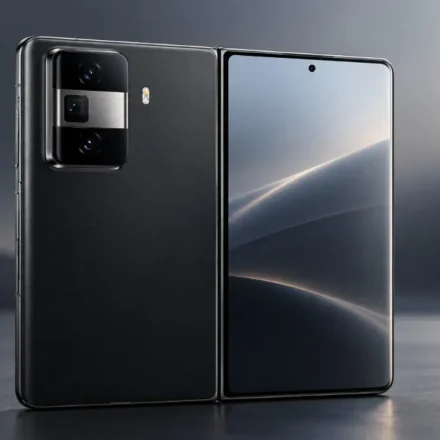
ZTE’s Nubia NaviX Ultra serves as a primary case study. By integrating ByteDance’s Doubao AI agent at the kernel level, the device effectively abandons the classic home screen. Instead of managing a collection of disparate apps, users interact with the device through voice or dedicated physical inputs, allowing the AI to execute complex, multi-step requests.
Similarly, the StepX Neo, developed by StepFun—a startup founded by former Microsoft vice president Jiang Daxin—introduces a proprietary operating system, Step AOS. This system categorizes mobile utility into four distinct "primitives": communication, applications, files, and system tools. When a user states a goal, the "Step Amoo" agent dynamically recombines these primitives to achieve the outcome, bypassing the friction of manual app switching.
Chronology of an Emerging Trend
- 2023: Jiang Daxin founds StepFun, signaling a push toward a new mobile architecture that moves beyond standard Android constraints.
- March 2026: Initial reports emerge regarding the "Attachment Economy," highlighting how hardware manufacturers are beginning to design devices with personality and emotive gestures.
- Early 2026: Market data from organizations like Measurable AI indicates a significant 40% decline in mobile in-app purchases, reflecting a broader consumer transition away from traditional app subscriptions and toward unified AI-driven services.
- August 2026: Honor prepares for the global debut of its "Robot Phone," a device that fuses advanced AI agentic capabilities with physical, robotic movement, marking a departure from static hardware design.
- August 3, 2026: Industry analysts confirm that key Chinese OEMs are utilizing Anthropic’s Model Context Protocol (MCP) to achieve the system-level access necessary for these AI agents to function across app boundaries.
Supporting Data and Market Dynamics
The economic implications of this transition are profound. For Silicon Valley giants, the app economy is not merely a feature—it is a core revenue pillar. Apple retains 15% to 30% of app revenue, while Google’s Play Store has historically generated between 17% and 26% of the company’s operating income.
Because the traditional economic logic of iOS and Android is fundamentally tied to the "app-store-as-gatekeeper" model, these companies face an "innovator’s dilemma." They are hesitant to embrace an agentic layer that could effectively dissolve the app model, as doing so would cannibalize their most lucrative revenue streams. Conversely, Chinese OEMs, having never built their business models around a closed-loop global app store, are uniquely positioned to "blow up" the current system in favor of vertical integration.
The decline in in-app purchases is perhaps the strongest signal that the consumer is ready for this change. As users migrate toward subscription-based AI services, the "vibe-coded" app market is struggling to maintain relevance. This is forcing a transition where the operating system—not the individual app—becomes the primary value proposition.
Official Perspectives and Technical Underpinnings
While these innovations are currently exclusive to the Chinese market, their technological backbone is surprisingly international. The integration of Anthropic’s Model Context Protocol (MCP) by ZTE, StepFun, and Honor allows these AI agents to interface with system data in a way that was previously impossible. By providing these agents with standardized access, the developers have moved beyond the "chatbot in a box" phase of AI, enabling the phone to act as an autonomous assistant that manages files, communications, and system settings simultaneously.

Honor, a company with deep roots in Huawei’s engineering culture, has taken this integration further by collaborating with Alibaba to develop the YOYO Intelligent Agent. This agent is now a standard feature across their MagicOS 10 lineup, effectively creating a unified ecosystem that mirrors the deep integration once promised—but never fully realized—by early Western smartphone pioneers.
The Rise of the "Robot Phone"
Perhaps the most radical development is the emergence of "robot phones." The Honor Robot Phone, which features a gimbal-mounted 200-megapixel camera, is not merely a piece of hardware; it is a manifestation of the "Attachment Economy."
By using AI to control physical components, the phone can track subjects, stabilize video autonomously, and perform emotive gestures—such as nodding or shaking its "head"—to establish a psychological rapport with the user. This represents a significant shift in industrial design: the phone is no longer a "static pane of glass," but a device with a physical presence and a perceived personality.
Implications for the Global Market
The divide between the US-centric app-based model and the Chinese agentic-AI model creates a fork in the road for the future of mobile technology. If these agentic devices succeed in China, they will likely be exported to international markets.
This presents a strategic challenge for the West. An influx of Chinese agentic phones would carry with them not only hardware but also a new, vertically integrated software stack. This stack would likely include proprietary financial services, information streams, and AI models that reflect the values and socio-political frameworks of their country of origin.
Furthermore, as we move into the era of AI wearables—smart glasses and watches that tether to our phones—the importance of the phone as an "intelligence hub" will only increase. The device that controls the agent, and by extension, the information flow between our wearables and the digital world, will hold the ultimate power.
We are currently witnessing the end of the "Smartphone Era" as we have known it for two decades. Whether the world ultimately prefers the US model of curated, app-based ecosystems or the Chinese model of autonomous, agentic, and even robotic hardware remains the defining question of the next decade. As these devices begin to "converse" with our personal AI models, the values and biases embedded within those systems will define how we interact with technology—and, by extension, how we interact with each other.