














































In the landscape of professional sports, the narrative of the "mellowing veteran coach" is a trope as tired as it is inaccurate. It suggests a decline in edge, a softening of standards, or a retreat from the very intensity that built a dynasty. For Cheryl Reeve, the head coach and president of basketball operations for the Minnesota Lynx, the label is not just reductive—it is entirely antithetical to her identity.
As she approaches her 60th birthday this September, Reeve remains the most successful coach in WNBA history. She is a product of her roots—the daughter of an Air Force family, forged in the competitive crucibles of South Jersey and Philadelphia. To suggest she has "mellowed" is to ignore the reality of a leader who still demands perfection from herself, her staff, and her players with an unwavering, often brutal, honesty.
A Standard of Excellence That Never Sleeps
Reeve’s philosophy is simple: basketball is a game of standards, and those standards are non-negotiable. This was on full display following a recent 101-93 victory over the Portland expansion team. Despite the win, Reeve was visibly incensed by her team’s defensive lapses. During a post-game ceremony honoring Naismith Hall of Famer Sylvia Fowles, Reeve pivoted from nostalgia to critique, famously remarking that the retired legends in attendance could have played better defense than her current roster.
For a team boasting the league’s best record, such public criticism might seem jarring. Yet, for those inside the locker room, it is the bedrock of the Lynx culture. "Cheryl is going to be honest," says All-Star guard Courtney Williams. "She’s going to coach you hard, and if you’re built for it, you’re built for it. The ones that aren’t, they can’t play for Cheryl because she’s a straight shooter."
Williams, in her third season with the organization, views this intensity as a gift. "She has one of the greatest basketball minds I’ve ever been around," Williams notes. "She holds everyone accountable, from the best player to the ball kids. She has a standard, and she wants everyone to be at that standard."
The Evolution of a Dynasty: A Chronology of Growth
Reeve’s path to the pinnacle of the sport was far from linear. She spent nine grueling years as an assistant across three different WNBA franchises—Cleveland, Charlotte, and Detroit—two of which eventually folded. During this time, while earning a bachelor’s degree in computer science and an MBA from La Salle University, she faced external pressure to leave basketball for the corporate world. She persisted, driven by an unshakeable belief in the league’s viability.
Her big break came in 2010 when, backed by the recommendation of former Detroit Shock coach Bill Laimbeer, she was hired by the Minnesota Lynx. She inherited a team that had made the playoffs just twice in its 11-year history. Her opening gambit was bold: she told management that "making the playoffs" was a goal for losers; the only acceptable expectation was a championship.
The early days were rough. A 2-9 start in 2010 invited heckling and skepticism. In a moment of raw, professional honesty that terrified the front office’s ticket sales department, Reeve told reporters that her team was, quite simply, "bad." It was a watershed moment. That brutal clarity eventually transformed the culture of the Target Center. By 2011, with the acquisition of Maya Moore, the "Reeve Era" truly began, yielding four championships and six finals appearances in seven years.
Supporting Data: The Resume of a Legend
The statistics supporting Reeve’s legacy are staggering. On July 8, she secured her 380th regular-season victory, surpassing Mike Thibault to become the winningest coach in WNBA history. Her trophy case is overflowing:
- WNBA Championships: 6 (4 as head coach, 2 as an assistant)
- WNBA Coach of the Year: 4 times
- Executive of the Year: 2 times
- All-Star Head Coach: 5 appearances
- Hall of Fame: Inducted into the Women’s Basketball Hall of Fame in 2024
These accolades are not merely historical footnotes; they are the byproduct of a relentless ability to retool. When the league shifted toward perimeter shooting, Reeve adapted her offensive schemes. When the roster changed, she evolved her leadership style. As she noted during the press conference celebrating her career win record, "The coach that Lindsay Whalen played for is very different than the coach Olivia Miles is currently playing for."
The Human Element: Managing Spirit and Strategy
While Reeve maintains her legendary intensity, her growth as a mother and wife has introduced a layer of wisdom to her management. She is more discerning today about which mistakes are learning opportunities for rookies like Miles and which deficiencies require a more heavy-handed approach.
However, the "sharp edges" remain. Reeve is quick to admit to her own fallibility. She candidly discussed an incident last season where she pushed a player too hard, admitting that she "broke the spirit" of Courtney Williams. While the specifics remain private, the fact that a coach of her stature acknowledges such a failure reflects a profound level of self-awareness. Williams confirms that they navigated the conflict and emerged stronger, a testament to the mutual respect that defines their relationship.
Official Perspectives and Peer Respect
Reeve’s impact transcends the Minnesota organization. Sandy Brondello, head coach of the Toronto Tempo and a long-time rival, holds Reeve in the highest regard. "Cheryl’s the G.O.A.T.," Brondello stated. "She’s one of the coaches I admire most in this league. It’s the toughness of her teams, the way she prepares them—it’s a credit to the identity she wants them to play with."
This sentiment is echoed by the Lynx ownership. In an era where coaching longevity is rare—as evidenced by Brondello’s own departure from the Liberty shortly after winning a title—the stability provided by the Taylor family and the consistent performance of the Lynx under Reeve remains the gold standard for WNBA operations.
Broader Implications: More Than a Coach
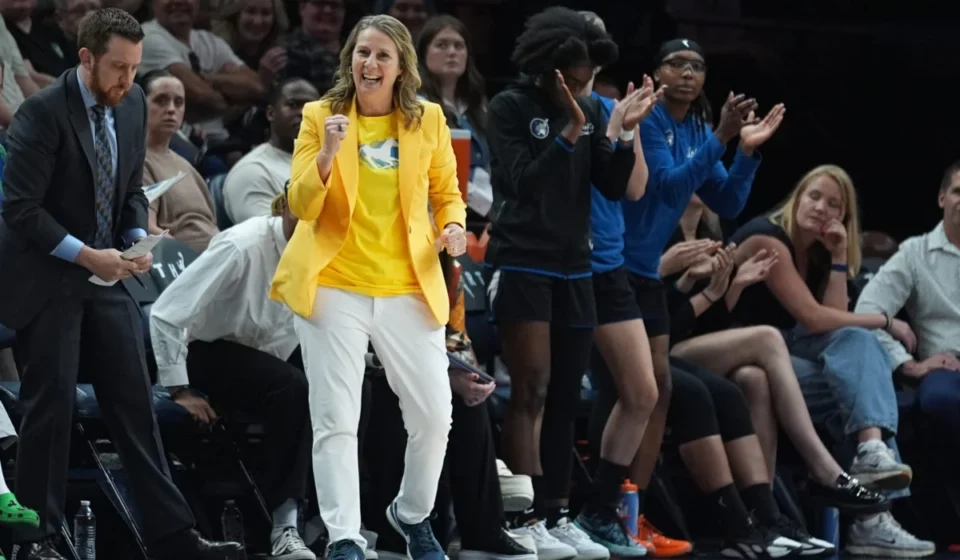
Reeve’s influence extends well beyond the hardwood. She has utilized her platform to champion social causes, from advocating for women’s rights to supporting the growth of women’s soccer via her investment in the Minnesota Aurora. Her pre-game wardrobe, often featuring shirts with bold social statements, is a visual reminder that her influence is intended to reach into the community.
As she looks toward the future, her motivation remains clear: the pursuit of the next ring. "Courtney Williams has never won a championship," Reeve says, her eyes fixed on the goal. "I want it for them. Every day."
In the end, Cheryl Reeve has not "mellowed" in the sense of losing her fire. Instead, she has refined it. She has moved from being a coach who merely demands results to a mentor who manages human potential. For the Minnesota Lynx, the trajectory remains unchanged: under the watchful, demanding, and brilliant eye of Cheryl Reeve, the only acceptable outcome is greatness. As she prepares for her next chapter, the rest of the league continues to chase the standard that she—and only she—has set.