
























































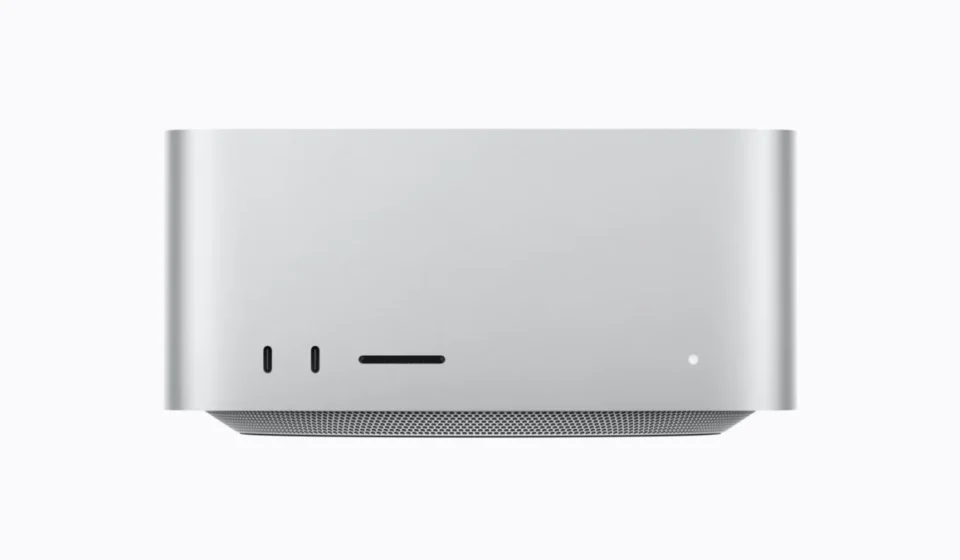

In the fast-evolving landscape of enterprise technology, rumors often serve as the first tremors of a tectonic shift. The latest buzz—a whisper originating from industry insiders and reported by The Information—suggests that Apple is contemplating a bold re-entry into the server market. While the tech giant has spent the better part of a decade distancing itself from dedicated enterprise hardware, the current era of generative AI and sovereign data mandates may be forcing a strategic pivot.
The irony of this speculation is that Apple never truly left the server business. It simply moved its operations behind the curtain, refining its hardware to fuel its own ecosystem rather than selling it to the public. As the world pivots toward localized, private AI, the question is no longer whether Apple can build servers, but whether it should scale that infrastructure into a commercial offering.
The Chronology: From Xserve to Private Cloud Compute
To understand why Apple’s potential return to the server market is being taken so seriously, one must look at the company’s complex relationship with enterprise infrastructure.
The Xserve Era (2002–2011)
At the dawn of the millennium, Apple was a different beast. In 2002, the company introduced the Xserve, a rack-mount server designed to handle the heavy lifting required by the creative, music, and film production industries. It was a niche product, meticulously engineered for performance in workflows that demanded high-speed data throughput. However, as Apple’s focus shifted aggressively toward the consumer revolution—the era of the iPod, iPhone, and iPad—the Xserve became an outlier. In 2011, Apple officially discontinued the line, citing a shift in strategic focus.
The Hidden Infrastructure
While the "Xserve" name faded, Apple’s server-grade silicon continued to evolve. For years, companies like MacStadium have successfully built businesses by racking Mac minis and Mac Studios in data centers. These deployments proved that Apple hardware was not only capable of 24/7 uptime but was also extraordinarily efficient.
The Birth of Private Cloud Compute (PCC)
The most significant development occurred recently with the launch of Apple’s Private Cloud Compute (PCC). To power its "Apple Intelligence" features without compromising user privacy, Apple built its own server clusters from the ground up using custom Apple Silicon. Today, these servers are already churning through massive computational tasks, hidden within Apple’s own data centers. Apple is not just "thinking" about servers; it is currently operating one of the most efficient, privacy-focused server architectures in the world.
Supporting Data: The Apple Silicon Advantage
The primary catalyst for this renewed speculation is the sheer, undeniable dominance of Apple’s custom silicon. The leap from the M1 to the upcoming M5 and M7/M8 Ultra chips has fundamentally changed the economics of high-performance computing.
Performance-per-Watt Metrics
The latest benchmarks for the M5 Ultra chip indicate multi-core performance scores exceeding 52,000. In a traditional data center, power consumption is the single largest variable cost. As MacStadium’s CTO, Chris Chapman, has previously noted, Apple Silicon is so efficient that it often defies traditional data center capacity planning—it simply doesn’t draw enough power to satisfy the "power-per-square-foot" density models that cloud providers rely on to turn a profit.
The Cost of Innovation
Estimates suggest that running a high-end Mac Studio at full capacity costs roughly 8 cents per hour. If scaled to a server farm, this price-to-performance ratio is disruptive. When compared to the massive, power-hungry GPUs used by competitors for AI training and inference, Apple’s unified memory architecture offers a compelling alternative for tasks that require high-speed, local processing.
Implications for the Enterprise
If Apple were to pivot from an internal-only server strategy to an enterprise-facing product line, the implications for the broader tech industry would be seismic.
Sovereign and On-Premises AI
The modern enterprise is increasingly wary of the "frontier models"—the massive, opaque AI systems run by Big Tech incumbents. There is a growing demand for "sovereign AI," where companies control their own data and infrastructure. Apple’s architecture, which is built on the foundation of the Secure Enclave and a hardened OS, could offer the most secure, turnkey "private AI" solution on the market. By providing a rack-mountable, Apple Silicon-powered server, Apple could allow enterprises to run powerful LLMs entirely on-premises.
The "iCloud Ultra" Concept
Perhaps the most logical path for Apple is not to sell hardware, but to sell "cloud-as-a-service." If Apple were to expand its current PCC infrastructure, it could offer a premium, enterprise-grade cloud tier—a hypothetical "iCloud Ultra." This would allow developers to rent compute time on Apple’s proprietary server silicon to build and test applications that require the unique capabilities of the M-series architecture, bypassing the need for third-party cloud providers who lack native macOS or iOS virtualization support.
Official Responses and Industry Skepticism
Despite the compelling technical arguments, skepticism remains high. The transition from a consumer-first company to an enterprise-hardware vendor is fraught with operational challenges.
The Support and Service Hurdle
Todd Dailey, a former Apple product marketing executive, has been vocal about the logistical nightmares such a move would entail. "Apple is far more focused on consumer markets than enterprise," he notes. The server business requires a level of support that is antithetical to Apple’s current model. Enterprise clients expect same-day replacement guarantees, 24/7 dedicated support lines, and a flexible approach to OS updates that allows for long-term legacy support. Apple’s current ecosystem is built on rapid, forced cycles of software updates—a practice that often frustrates enterprise IT departments.
Strategic Distraction
There is also the "opportunity cost" argument. Apple’s primary revenue engines—the iPhone, the App Store, and services—are performing at historic levels. Developing, manufacturing, and supporting a dedicated server line would require a massive diversion of talent and capital. Does the potential revenue from a server line outweigh the risks of diluting the company’s focus on its core consumer products?
The Verdict: A Strategic Evolution
The rumors surrounding Apple’s return to the server market should be viewed as an extension of the company’s recent trajectory, not a sudden departure. Apple is no longer just a hardware maker; it is an AI company. As it scales "Apple Intelligence," the demand for its own, proprietary server infrastructure will only increase.
Whether Apple decides to sell these servers as standalone hardware, or merely uses them to expand its own cloud services, is the million-dollar question. If they opt for the latter, they effectively neutralize the need to become a traditional server vendor while still capturing the enterprise market.
Ultimately, if Apple can offer a private, secure, and incredibly efficient way to process enterprise data—leveraging the same chips that have made the Mac a household staple—they may find that the server market is not just a legacy they left behind, but the frontier they are destined to conquer. The rumors may be speculative today, but in the world of high-end silicon, the math is already pointing toward a new, powerful reality.