



















































Defiance in Albert Lea: City Council Rejects Cannabis License in Direct Challenge to Minnesota State Law

In a move that sets the stage for a high-stakes legal showdown between local governance and state authority, the Albert Lea City Council has voted to deny a business license to the city’s first prospective cannabis dispensary. The decision, reached during a tense session on Monday night, represents a direct act of defiance against Minnesota’s newly established cannabis statutes and has left city officials, legal experts, and the business community bracing for significant financial and judicial repercussions.
By a narrow 4-3 margin, the council rejected the registration of "The Smoking Tree," a micro-retail cannabis establishment owned by local entrepreneur Jacob Schlichter. The denial came despite warnings from the city’s own legal counsel and administration that the move violates state law and could trigger hundreds of thousands of dollars in penalties and litigation costs.
Main Facts: A Collision of Ideology and Statute
The central conflict in Albert Lea revolves around the interpretation of the 2023 Minnesota law that legalized adult-use cannabis. While the law grants municipalities some oversight regarding zoning and public health, it explicitly limits their ability to prohibit state-licensed businesses from operating within their jurisdictions.
The Vote and the Business
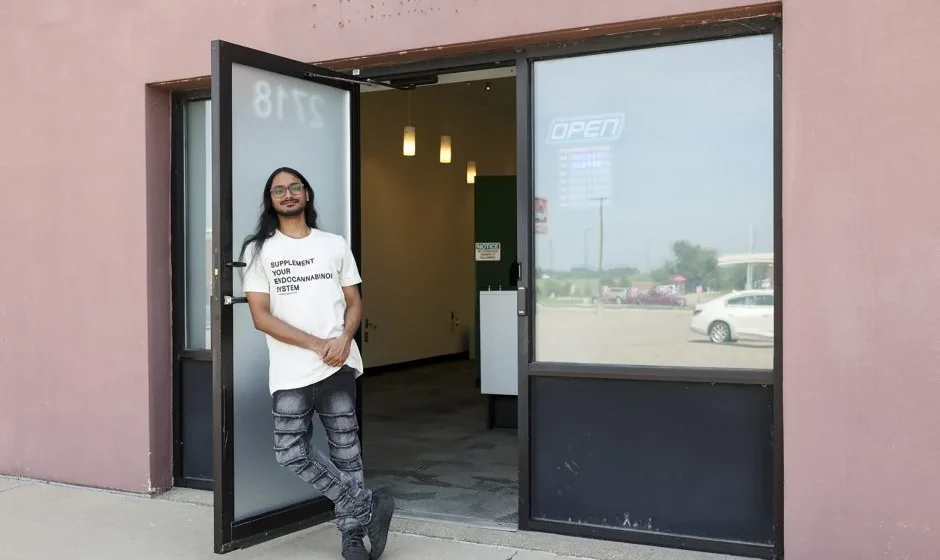
The Smoking Tree was poised to become the first retail cannabis shop in Albert Lea. Its owner, Jacob Schlichter, had already cleared the rigorous hurdles set by the Minnesota Office of Cannabis Management (OCM), becoming the first micro-retail applicant in the state to pass a state licensing inspection in June.
Monday’s council meeting was intended to be the final administrative "rubber stamp" for local registration. Schlichter had planned a soft opening for Tuesday. Instead, the council’s 4-3 vote—led by Mayor Rich Murray and Councilors Larry Baker, Rachel Christensen, and Keith Van Beek—effectively shuttered the business before its doors could open. Those voting in favor of the license were Councilors Brian Anderson, Jason Howland, and Reid Olson.
The Legal Framework
Under Minnesota Statute 342.13, local governments are required to register cannabis businesses that have received state licensure and meet local zoning requirements. The law stipulates that cities must allow at least one cannabis retail registration for every 12,500 residents. For a city of Albert Lea’s size (approximately 18,000 residents), the state mandate requires the registration of at least two such businesses.
While cities can implement "reasonable" restrictions on the time, place, and manner of operation—such as keeping shops a certain distance from schools, daycares, or parks—they do not have the legal authority to issue a blanket denial to a qualified applicant.
Chronology: From State Approval to Local Standoff
The path to Monday’s confrontation began over a year ago with the passage of the state’s cannabis legalization bill, but the local timeline accelerated rapidly in the summer of 2025.
- May 2025: The Albert Lea City Council approved a local ordinance outlining the registration process for cannabis businesses. This ordinance established a "first-come, first-served" system based on the timestamp of state licensure from the OCM.
- June 2025: Jacob Schlichter and his business, The Smoking Tree, made headlines by becoming the first micro-retail cannabis applicant in Minnesota to successfully pass a state licensing inspection.
- July 18, 2025: Following his state success, Schlichter completed his local registration paperwork with Albert Lea city staff. According to City Manager Ian Rigg, the application met every requirement set forth by both the state and the city’s own May ordinance.
- August 2025 (Pre-Meeting): The registration for The Smoking Tree was placed on the City Council’s "consent agenda." Items on the consent agenda are typically considered routine, non-controversial matters that are approved in a single block vote without discussion.
- Monday, August 2025: In a departure from typical procedure, the item was pulled from the consent agenda for individual discussion and a vote. Despite a blunt warning from City Attorney Joel Holstad regarding the illegality of a denial, the council majority voted to reject the license.
Supporting Data: The Financial Risks of Defiance
The decision to deny the license is not merely a political statement; it carries quantifiable financial risks that could impact Albert Lea’s taxpayers for years to come. City administrators provided the council with a grim breakdown of the potential costs associated with their "principled stand."
Legal Fees and Litigation
City Attorney Joel Holstad was explicit in his assessment of the city’s legal standing. He informed the council that a "legitimate defense" of a lawsuit brought by either the State of Minnesota or the business owner would cost the city upwards of $100,000. Furthermore, he characterized the chances of the city winning such a case as "highly unlikely," suggesting that the city would eventually be forced to comply after wasting significant public funds.
Local Government Aid (LGA) Penalties
The more devastating blow could come from the state’s control over Local Government Aid (LGA). Albert Lea is heavily dependent on this funding, which accounts for roughly one-third of its general fund revenue.
- Total LGA Received: Over $6 million annually.
- Potential Penalty: City Manager Ian Rigg noted that the state could impose a 5% penalty on LGA for non-compliance with state law.
- Immediate Impact: A 5% reduction would result in a $300,000 annual loss to the city’s budget—a figure Rigg described as a penalty that would accrue "before the lawsuits even start."
Compliance Ratios
The state’s 1:12,500 resident ratio means Albert Lea is legally obligated to host two dispensaries. By rejecting the very first applicant—one who had already met all state and local criteria—the city has placed itself in a position of 0% compliance with the mandatory minimums.
Official Responses: A House Divided
The debate during Monday’s meeting highlighted a profound philosophical divide between those who prioritize the rule of law and fiscal responsibility, and those who view the state’s cannabis mandate as an infringement on municipal sovereignty.
The Opposition: "A Matter of Principle"
Mayor Rich Murray and Councilor Larry Baker emerged as the primary voices against the license. Their arguments focused on "local control," a concept in Minnesota politics that suggests cities should have the ultimate say in what businesses operate within their borders.
"I do not like the way the state Legislature and the governor has rammed this down our throats with very little say in the process, all because they’re hungry for more revenue," Mayor Murray stated. He expressed a personal preference that Albert Lea should have "zero" cannabis businesses, regardless of state law.
Councilor Baker framed the vote as a stand against "creeping" government overreach. "At some point people have to start saying no to the state and federal government taking power away from cities," Baker said. He argued that if the council didn’t stand its ground now, the state might eventually dictate other local issues, such as zoning for high-rise buildings in residential neighborhoods. "It’s just a matter of principle," he added, dismissing concerns about the $300,000 penalty or legal fees.
The Pragmatists: "We Have Our Orders"
Conversely, City Manager Ian Rigg and Councilor Brian Anderson argued that the city was fighting a battle it had already lost at the legislative level.
"Local control is important and we need to be vocal about it, but until it’s restored or it’s preserved, we do have our—I hate to say it—we have our orders," Rigg told the council.
Councilor Anderson pointed out that the city’s role in the process had become purely ministerial. "I think it’s up to me sitting up here to do the responsible thing and actually say that this is going to happen whether we want it to or not," Anderson said. "I think we need to embrace it and make the best of it."
The Entrepreneur’s Perspective
For Jacob Schlichter, the denial is a personal and professional blow. After navigating the complex state bureaucracy to become a pioneer in the industry, he finds himself a casualty of a political feud.
"Whether or not you agree with cannabis, we can all agree that this is a bad use of our tax money," Schlichter said following the vote. "The law is the law." He expressed a deep reluctance to litigate against his own community but admitted he was weighing his legal options. "The last thing I want to do is sue my own city and cause us to use taxpayer dollars on that… I don’t know what other options there are."
Implications: A Precedent for Minnesota?
The Albert Lea decision is being closely watched by the Minnesota Office of Cannabis Management and municipal leaders across the state. The outcome of this standoff will likely define the boundaries of local authority in the post-legalization era.
Potential for State Intervention
If Albert Lea persists in its refusal, the State of Minnesota may be forced to intervene to ensure the uniform application of the law. This could involve the Attorney General’s office filing for an injunction to compel the city to issue the license. A victory for the state would not only force the opening of The Smoking Tree but would also set a legal precedent that would discourage other "rebel" cities from attempting similar bans.
Economic Impact on the City
If the city loses its LGA funding and incurs six-figure legal bills, the burden will fall squarely on Albert Lea property owners. A $400,000 budgetary hole (penalty plus legal fees) would necessitate either a significant property tax hike or deep cuts to essential services like public safety, road maintenance, or parks.
The Future of Retail Cannabis in Greater Minnesota
Many rural communities in Minnesota have expressed skepticism toward cannabis legalization. However, most have opted to use their limited zoning powers to tuck dispensaries into industrial zones or outskirts. Albert Lea’s decision to flatly deny a compliant applicant is the most aggressive challenge to the state’s authority yet.
If the courts or the state government do not act swiftly, other cities may feel emboldened to follow suit, potentially creating a "patchwork" of legality that the 2023 legislation was specifically designed to avoid. For now, the "soft opening" of The Smoking Tree remains on indefinite hold, and the City of Albert Lea enters a period of profound legal and financial uncertainty.