






















































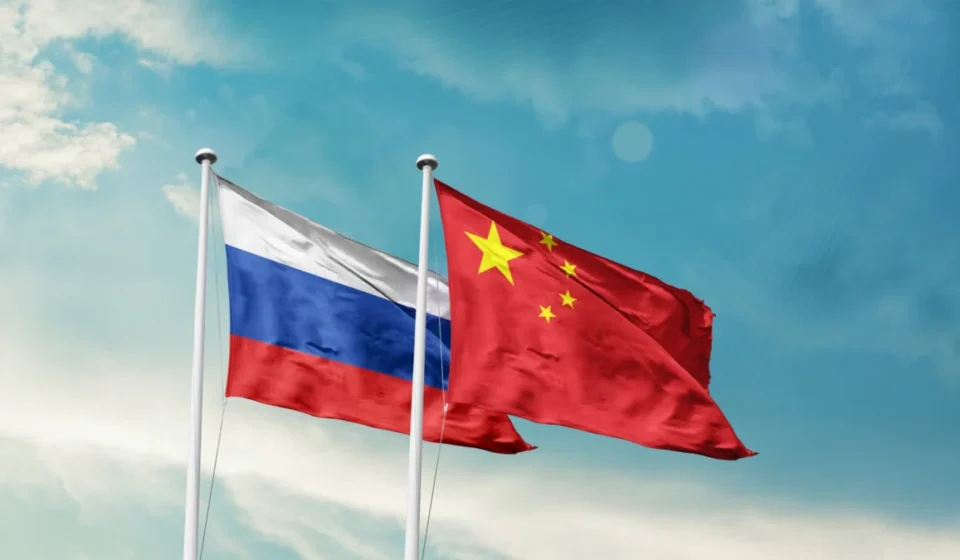

As the race for artificial intelligence supremacy accelerates, a new geopolitical fault line has emerged—one that threatens to bifurcate the technological landscape for decades to come. On July 16, 2026, China officially inaugurated the World Artificial Intelligence Cooperation Organization (WAICO) in Shanghai, a move that signals a paradigm shift in how global standards for machine intelligence are set. While the United States continues to debate the merits of domestic versus international governance, the formation of WAICO suggests that the window for Washington to dictate the global rules of the road is rapidly closing.
The Dawn of a New Governance Architecture
The establishment of WAICO marks the formalization of a "non-aligned" approach to AI governance. With 29 founding member states—including China, Russia, and Brazil—the organization represents a significant segment of the Global South and Eurasian bloc. Notably, the United States, the European Union, the United Kingdom, Japan, and South Korea were absent from the signing ceremony.
WAICO is not merely a diplomatic forum; it is a strategic effort to establish universal guidelines for AI development that operate independently of Western-centric norms. For years, Western policymakers have operated under the assumption that they would set the global "gold standard" for AI, effectively creating a framework that the rest of the world would be forced to adopt to remain interoperable. WAICO flips this narrative, offering a platform where membership is open to any sovereign state, regardless of their political system or human rights record.
Chronology of a Geopolitical Pivot
The emergence of WAICO was not an overnight development, but the culmination of a multi-year effort to break the Western monopoly on AI discourse.
- 2023–2024: China accelerates its investment in "open-weight" and open-source AI models, aiming to bypass U.S. export controls and capture market share in developing nations.
- Early 2025: Research papers and policy white papers from Beijing begin outlining a "multilateralist" approach to AI, contrasting sharply with the "values-based" approach championed by the U.S. and the EU.
- Mid-2026: Leading up to the July 16 inauguration, diplomatic channels are quietly utilized to court non-Western nations, framing WAICO as a solution to the "global capability divide."
- July 12, 2026: Google DeepMind CEO Demis Hassabis issues a high-profile public call for the U.S. to take the lead in global regulation, warning that current efforts are fragmented and lack the necessary oversight.
- July 16, 2026: WAICO is formally established in Shanghai, formalizing the alternative regulatory bloc.
Supporting Data: The Capability Gap and the Open-Source Threat
The rise of WAICO is intrinsically tied to the narrowing of the AI capability gap between the U.S. and China. For years, the U.S. lead was considered insurmountable. However, Chinese enterprises have pivoted toward three critical domains that have fundamentally altered the competitive landscape.
1. The Open-Weight Model Market
By focusing on open-weight models, Chinese firms have provided an accessible alternative to proprietary, closed-source models maintained by American giants. This strategy has gained significant traction in emerging markets where local enterprises prioritize cost-efficiency and localized deployment over the restrictive licensing agreements typical of Silicon Valley.
2. AI Cyber Protection
As the global threat landscape evolves, cyber resilience has become the new frontier of AI competition. Chinese firms have integrated advanced defensive AI capabilities into their cloud infrastructure, positioning these tools as essential security layers for states wary of relying solely on Western technology stacks.
3. Open Source and Global Standard-Setting
The U.S. commission on AI development has repeatedly warned that China’s aggressive use of open-source AI is eroding American competitive advantages. By contributing to open-source repositories and participating in the technical committees that underpin WAICO, China is effectively embedding its architectural preferences into the backbone of global AI infrastructure.
Official Responses and the "Too Little, Too Late" Dilemma
The formation of WAICO has ignited a fierce debate within Western policy circles. The timing of the inauguration—occurring mere days after Demis Hassabis’s urgent plea for U.S.-led regulation—has been widely interpreted as a rebuke of Western hesitation.
In his appeal, Hassabis argued that the U.S. is "well-positioned to take the first step" in developing a framework. He proposed a Standards Body modeled after a public-private partnership, similar to the Financial Industry Regulatory Authority (FINRA). The goal, according to Hassabis, is to create a board of independent technical experts and open-source representatives who can manage the risks of AI development without stifling innovation.
However, critics of the Hassabis approach argue that such a model is fundamentally inward-looking. "By the time the U.S. establishes a domestic regulator, let alone an international one, the world will have already adopted the standards set by WAICO," says one analyst. "The U.S. has spent years debating the ethics of AI, while the rest of the world has been busy building the infrastructure to control it."
Implications: A Fragmented Future
The implications of a world where AI standards are set by two competing, non-interoperable blocs are profound.
The Death of Universal Interoperability
If WAICO successfully establishes a suite of technical standards for AI interoperability, we risk the creation of a "Splinternet" for artificial intelligence. Systems trained under Western regulatory frameworks—which prioritize data privacy, safety audits, and human-in-the-loop requirements—may find themselves incompatible with systems developed within the WAICO ecosystem, which may prioritize rapid deployment and state-level security integration.
The Diplomacy of Technology
For nations in the Global South, the choice between the U.S. and WAICO is becoming a core diplomatic dilemma. These countries are now being asked to align with one of two competing visions of the digital future. The U.S. approach offers high-end innovation but comes with stringent geopolitical conditions. The WAICO approach offers accessibility and a focus on closing the development gap, but potentially entails deeper integration with Chinese technology stacks.
The Erosion of Western Hegemony
Perhaps the most significant long-term implication is the loss of "normative power." For decades, the U.S. has influenced global governance by writing the rules of the international order. WAICO demonstrates that when the U.S. fails to provide a cohesive global framework, other powers will step into the vacuum. The "too little, too late" critique is not merely about the speed of regulation; it is about the fundamental loss of the ability to define what constitutes a "responsible" AI.
Conclusion: The Path Forward
The establishment of WAICO represents a critical inflection point. If the United States and its allies continue to view AI regulation primarily through the lens of domestic oversight and restrictive export controls, they will continue to lose ground in the battle for global influence.
To remain a leader in the AI era, Washington must move beyond the rhetoric of "values-based" regulation and engage in the messy, pragmatic work of global diplomacy. This means recognizing that the capability gap is closing, that the open-source movement is an unstoppable force, and that international organizations—even those led by rivals—are the new arenas where the future of the human-machine relationship will be decided.
The era of American exceptionalism in AI governance is effectively over. The question now is not how the U.S. can prevent the fragmentation of the AI world, but how it can navigate a reality where its own standards are no longer the only ones that matter. As WAICO begins its work, the global community is watching to see if the U.S. can transition from a lone hegemon to a constructive participant in a multi-polar technological order. If it cannot, the next decade of AI development will be defined in Shanghai, not Silicon Valley.