






















































Apple Escalates Legal Battle: OpenAI Employees Served with Preservation Orders Amid Trade Secret Allegations

By Jonny Evans | July 17, 2026
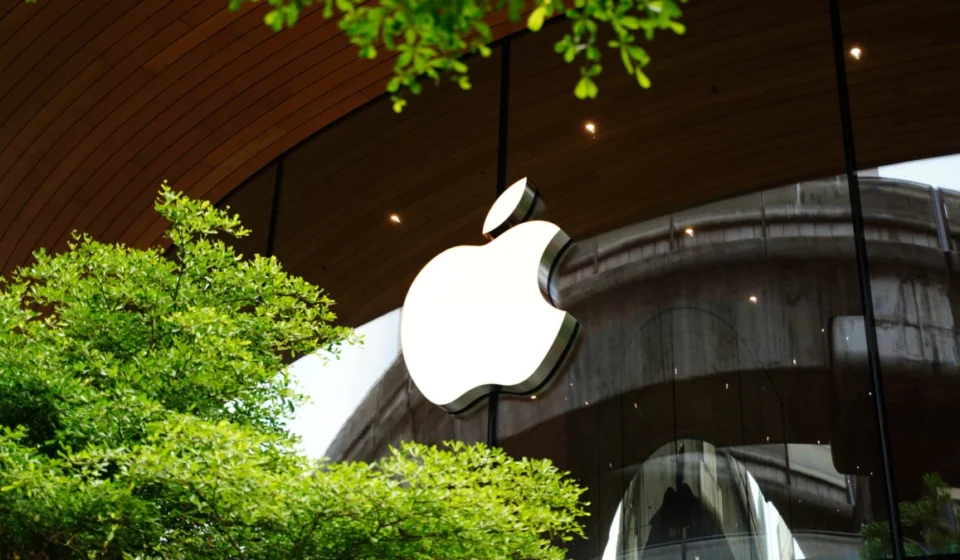
In an aggressive expansion of its legal campaign against OpenAI, Apple has reportedly issued formal document preservation orders to approximately 40 former employees who have transitioned to the AI powerhouse. These legal directives represent a significant escalation in a high-stakes trade secrets battle, signaling that Apple intends to move beyond mere accusations and into a deep forensic investigation of its intellectual property’s potential migration.
The legal maneuver, first reported by the Financial Times, mandates that these former Apple staffers—now part of the OpenAI workforce—retain all emails, documents, messages, and communications that could be deemed relevant to Apple’s ongoing litigation. The move is a classic, yet powerful, pre-discovery tactic: by issuing these notices, Apple has effectively criminalized the destruction of any relevant digital trail, overriding standard corporate data-retention policies.
The Anatomy of the Conflict: A Case of "Systemic Misappropriation"
At the heart of the dispute is Apple’s explosive lawsuit, which alleges a coordinated, systemic effort by OpenAI to "poach" talent specifically to exfiltrate proprietary data. Apple’s complaint claims that OpenAI did not merely hire individuals for their expertise but leveraged them to systematically extract confidential project code names, manufacturing strategies, and internal product-roadmap details during the interview and onboarding processes.
The lawsuit highlights the defection of former Apple Vice President Tang Tan as a primary focal point. Tan, who spent 24 years at Apple, now serves as the Chief Hardware Officer at OpenAI. Apple characterizes his departure—and the subsequent movement of other engineers—as a calculated strategy by OpenAI to bypass the immense R&D costs associated with building advanced hardware by "stealing" the blueprint for success directly from the source.
Apple’s counsel has described the evidence presented thus far as the "tip of the iceberg," suggesting that the company is prepared to expose a wider culture of intellectual property theft that it believes is baked into OpenAI’s aggressive hardware ambitions.
Chronology: From Recruitment to Litigation
To understand the severity of the current situation, one must look at the timeline of the tension between the two Silicon Valley giants:
- The Talent Drain (2023–2025): Throughout this period, OpenAI significantly ramped up its recruitment of hardware specialists, many of whom were high-level engineers and product managers at Apple.
- Internal Red Flags: Sources indicate that Apple began noticing patterns of behavior among departing staff that suggested a breach of confidentiality agreements, leading to internal security audits.
- The Initial Inquiries (Early 2026): Apple reportedly reached out to OpenAI to raise concerns regarding the potential misappropriation of trade secrets. OpenAI claimed that these inquiries were missed due to an "email mix-up," a defense that Apple clearly found insufficient.
- The Lawsuit (Mid-2026): Apple formally filed its lawsuit, alleging trade secret misappropriation, breach of contract, and unfair competition.
- The Preservation Orders (July 2026): Apple served legal notices to approximately 40 employees, requiring them to preserve evidence and, in many cases, meet with Apple’s legal counsel.
The Complexity of "Knowledge" vs. "Trade Secrets"
The legal battle raises a fundamental question for the modern tech industry: Where is the line between an employee’s professional experience and a company’s trade secrets?
In the context of hardware development, this distinction is notoriously murky. Modern hardware design involves more than just a CAD drawing or a schematic; it encompasses deep-seated institutional knowledge regarding supplier relationships, manufacturing assumptions, physical limitations, and long-term product roadmaps.
If Apple successfully convinces the courts that this "accumulated insight" constitutes a protectable trade secret, it could fundamentally alter how Silicon Valley companies compete for talent. If knowledge of a manufacturing process or a specific supply-chain optimization is legally tethered to the employer, the mobility of top-tier engineers could be severely restricted by non-compete concerns and the threat of litigation. This is not just a dispute about specific files; it is a battle for the right to control the "know-how" that drives the next generation of consumer electronics.
The "Jony Ive" Factor
While not a defendant in the lawsuit, the legendary designer Jony Ive looms large over the proceedings. As OpenAI has entered into a high-profile partnership with Ive to develop its own hardware, the potential for cross-contamination of design philosophy and process is immense.

Apple is clearly hyper-vigilant about whether the design language, supply-chain strategies, or R&D workflows established during Ive’s decades-long tenure at Apple are being replicated within the walls of OpenAI. By serving preservation orders to such a large cohort of employees, Apple is likely casting a wide net to determine if the "Ive-OpenAI" collaboration is utilizing Apple’s proprietary playbooks to accelerate its entry into the device market.
Official Responses and Stance
OpenAI has maintained a position of firm denial regarding the allegations. In a statement, spokesperson Drew Pusateri asserted that the company is "not aware of any evidence" that the lawsuit holds merit.
"We have no interest in other companies’ trade secrets," Pusateri said. "We remain focused on building innovative technology that empowers people everywhere."
OpenAI’s legal representatives have attempted to frame the situation as a misunderstanding, pointing to the aforementioned "email mix-up" regarding initial correspondence. However, Apple’s decision to move to formal, legally binding preservation orders suggests that they have lost patience with informal resolutions and are now treating OpenAI as a hostile entity in a court of law.
The Stakes: A Defining Moment for Tech
The implications of this lawsuit extend far beyond the two companies involved. For OpenAI, a discovery process that uncovers evidence of unauthorized data usage could be catastrophic, potentially resulting in court-ordered injunctions that halt their hardware progress, substantial financial damages, and a significant blow to their corporate reputation—especially as they eye future public offering plans.
For Apple, the goal is clear: they are protecting the "blueprints for the future." As the company looks toward life after the iPhone—exploring AI-integrated hardware, wearables, and ambient computing—it cannot afford to have its R&D advantages neutralized by a competitor using its own intellectual property to leapfrog the development cycle.
Implications for the Industry
The outcome of this case will likely set a precedent for the next decade of Silicon Valley hiring. We are currently witnessing a shift where hardware and AI are converging, and as talent flows between legacy giants like Apple and disruptors like OpenAI, the legal frameworks governing that transition are being stress-tested.
If Apple wins, we may see a significant cooling in the aggressive poaching tactics that have become common in the AI gold rush. Companies will be forced to be more cautious about hiring from direct competitors, and engineers may find their career mobility hampered by an increasingly restrictive interpretation of what constitutes a "trade secret."
Conversely, if the courts rule that the information in question is merely the "general skill and knowledge" of the employees, the victory would provide a green light for even more aggressive talent acquisition strategies.
As the legal discovery phase looms, the tech world will be watching closely. This is more than a lawsuit; it is a fundamental clash between the old guard of hardware manufacturing and the new vanguard of artificial intelligence. In the high-stakes game of global technology, Apple has served notice that its intellectual property is not just a collection of files, but the bedrock of its competitive advantage—and it is prepared to go to war to defend it.